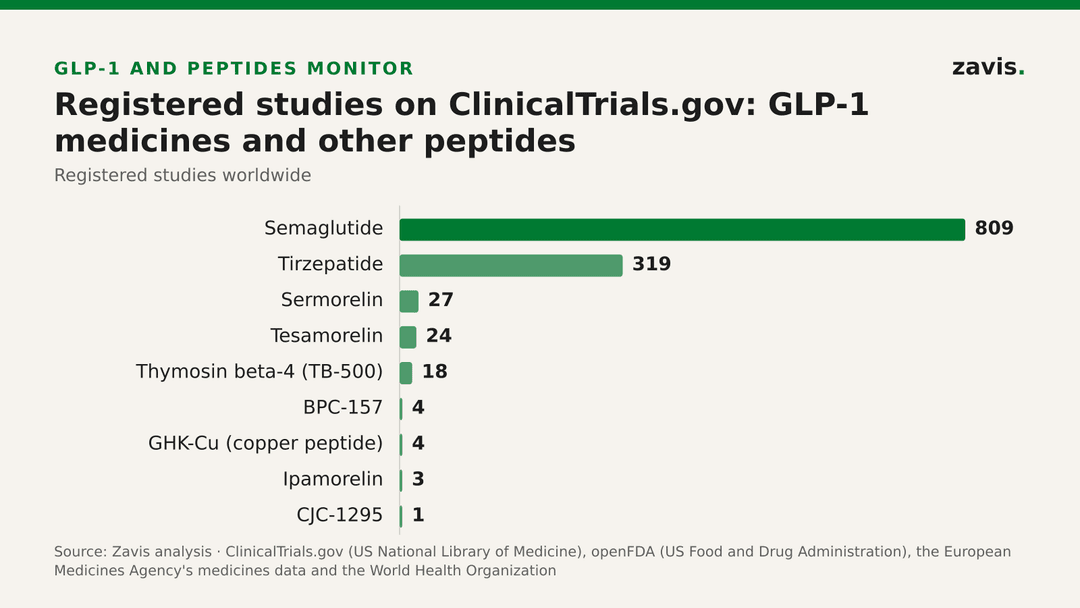
Five peptides with no US approval on record have 30 registered studies, against 809 for semaglutide
Of 15 studies of GLP-1 and related medicines with a UAE site, 1 is recruiting or active now, the Zavis GLP-1 and Peptides Monitor shows.
How Zavis verifies this coverage
Editorial standards, source rules, methodology, and review provenance are public.
Key findings
- Five peptides with no US approval on record have 30 registered studies worldwide combined
- Semaglutide has 809 registered studies worldwide
- 1 of 15 GLP-1 studies with a UAE site is recruiting or active now
- The US FDA lists 9 GLP-1 presentations as current shortages
- 31.6% of UAE adults had obesity in 2024, per WHO figures
The UAE's drug regulator has banned social media influencers from promoting medical products, according to news reports.
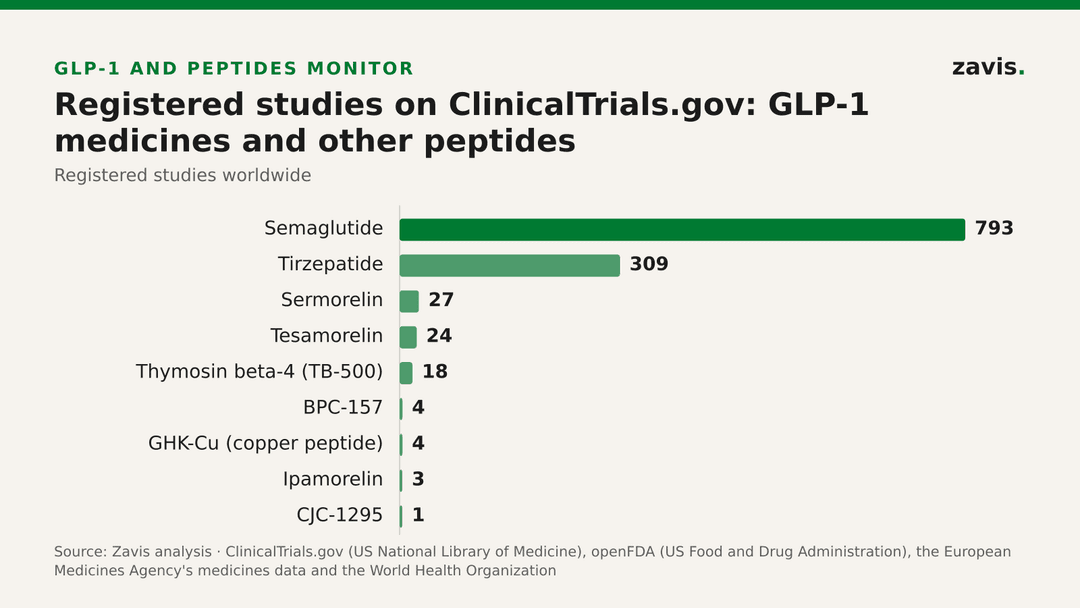
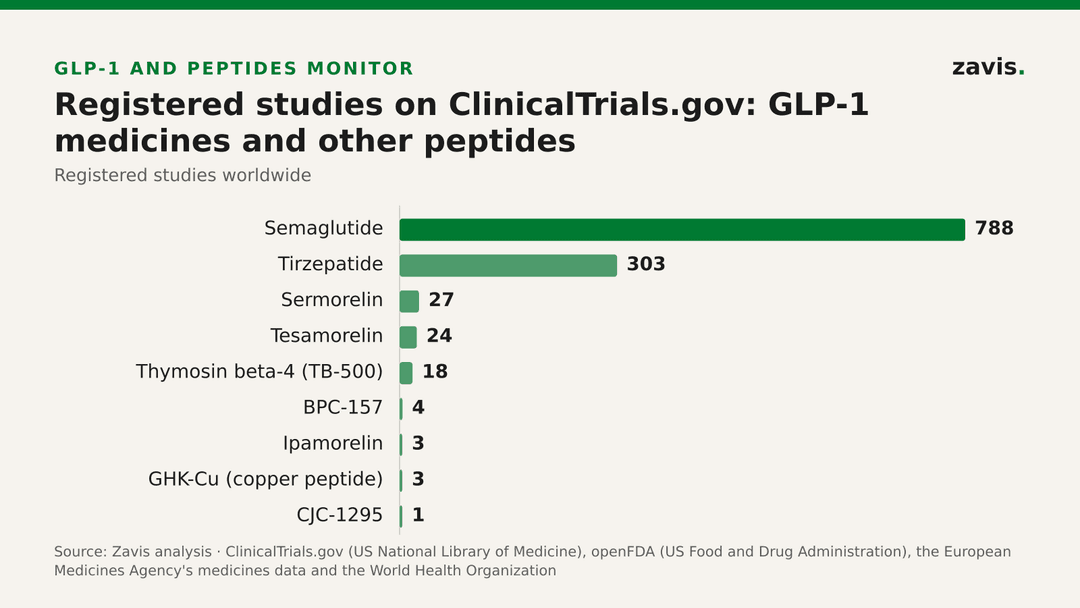
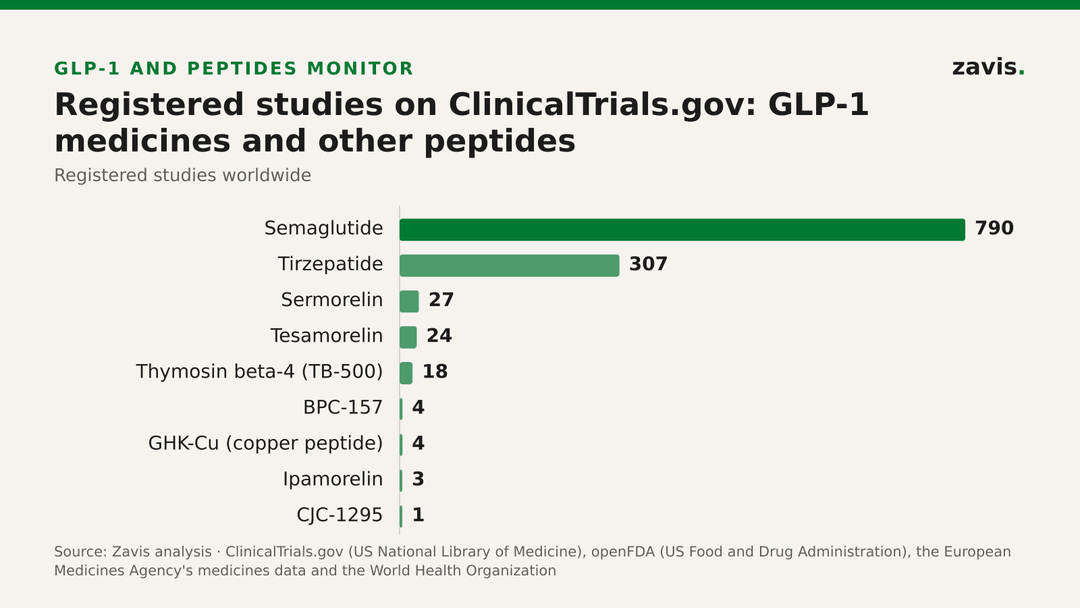
Five peptides with no US approval on record have 30 registered studies worldwide between them, Zavis analysis of the US National Library of Medicine's trial registry shows. Semaglutide alone has 809. For clinics, pharmacies and insurers, the gap shows how thin the public research record is for some products compared with approved GLP-1 medicines.
What the data shows
The Zavis GLP-1 and Peptides Monitor read the registries on 19 November 2026. It counts registered studies for thymosin beta-4 (TB-500), BPC-157, ipamorelin, GHK-Cu and CJC-1295. Thymosin beta-4 has 18 registered studies, 8 with results posted. BPC-157, ipamorelin, GHK-Cu and CJC-1295 have no registered studies with results posted. Semaglutide has 112 with results posted and tirzepatide has 48 out of 319.
| Substance | Registered studies worldwide | With results posted | US approval on record (Drugs@FDA) |
|---|---|---|---|
| Semaglutide | 809 | 112 | Yes |
| Tirzepatide | 319 | 48 | Yes |
| Tesamorelin | 24 | 10 | Yes |
| Sermorelin | 27 | 11 | Yes |
| Thymosin beta-4 (TB-500) | 18 | 8 | No |
| BPC-157 | 4 | 0 | No |
| Ipamorelin | 3 | 0 | No |
| GHK-Cu (copper peptide) | 4 | 0 | No |
| CJC-1295 | 1 | 0 | No |
A registered study is not evidence that a medicine works or is safe. It shows research activity. Peptides can also be sold under names that differ from those registered.
In the Gulf, the monitor counts 37 registered studies of GLP-1 and related incretin medicines with a site in a GCC country. Of these, 12 are recruiting or active now and 7 are recruiting. The UAE has had 15 studies with a local site, but only 1 is recruiting or active now. That study is a Phase 3 orforglipron study sponsored by Eli Lilly and Company, with sites in the UAE and Saudi Arabia. Saudi Arabia has 17 studies, 7 of them recruiting or active now.
| Country | Studies (all time) | Recruiting or active now |
|---|---|---|
| United Arab Emirates | 15 | 1 |
| Saudi Arabia | 17 | 7 |
| Qatar | 2 | 1 |
| Kuwait | 8 | 4 |
| Bahrain | 0 | 0 |
| Oman | 0 | 0 |
In the US, the Food and Drug Administration approved 7 submissions for GLP-1 medicines in the last 90 days. Of these, 3 were efficacy supplements, meaning new or changed uses, covering 2 medicines: Mounjaro and Zepbound, both tirzepatide. There were 0 original generic approvals. The FDA shortage list shows 9 GLP-1 presentations as current shortages, all liraglutide injection, and 5 as to be discontinued. That list describes the US market, not supply in the UAE.
In the EU, 13 GLP-1 and related medicines are authorised through the centralised procedure, 4 of them first authorised in the last 12 months. One more, Foundayo (orforglipron), has a committee opinion awaiting a decision.
World Health Organization figures put adults with obesity in the UAE at 31.6% in 2024, against 42% in Qatar.
| Country | Adults with obesity (%) | Year |
|---|---|---|
| Qatar | 42 | 2024 |
| Kuwait | 40.4 | 2024 |
| Saudi Arabia | 40.1 | 2024 |
| Bahrain | 34.9 | 2024 |
| United Arab Emirates | 31.6 | 2024 |
| Oman | 30.5 | 2024 |
What it means
The ban targets promotion of medical products. The Zavis data does not show who sells, promotes or uses any of the five peptides, and this brief makes no claim about that. What the public record does show is a clear split. Approved GLP-1 medicines have hundreds of registered studies and posted results. The five peptides have few, and four have no results posted.
For clinic and pharmacy operators, the record gives a simple check: does a product have a US or EU approval on record, and does it have registered studies with results posted? Insurers reviewing claims can use the same public sources. For investors, the UAE's 1 recruiting or active GLP-1 study, set against a 31.6% adult obesity rate, points to limited local research activity in a large patient group.
Patients should take decisions about any medicine with a licensed doctor, not on the strength of a social media post.
Sources
Zavis Intelligence Team
Editorial Desk
The Zavis Intelligence Team byline is used for news data briefs from the Zavis Intelligence Desk. Each brie...