Just 1 of 6 new substances from US and EU regulators in October had a Gulf trial site
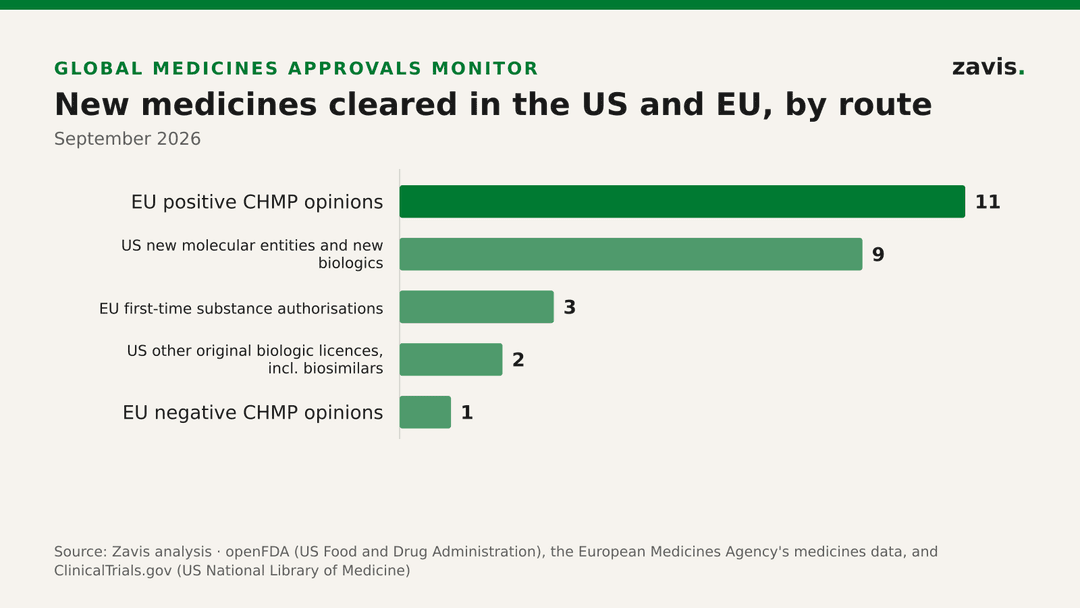
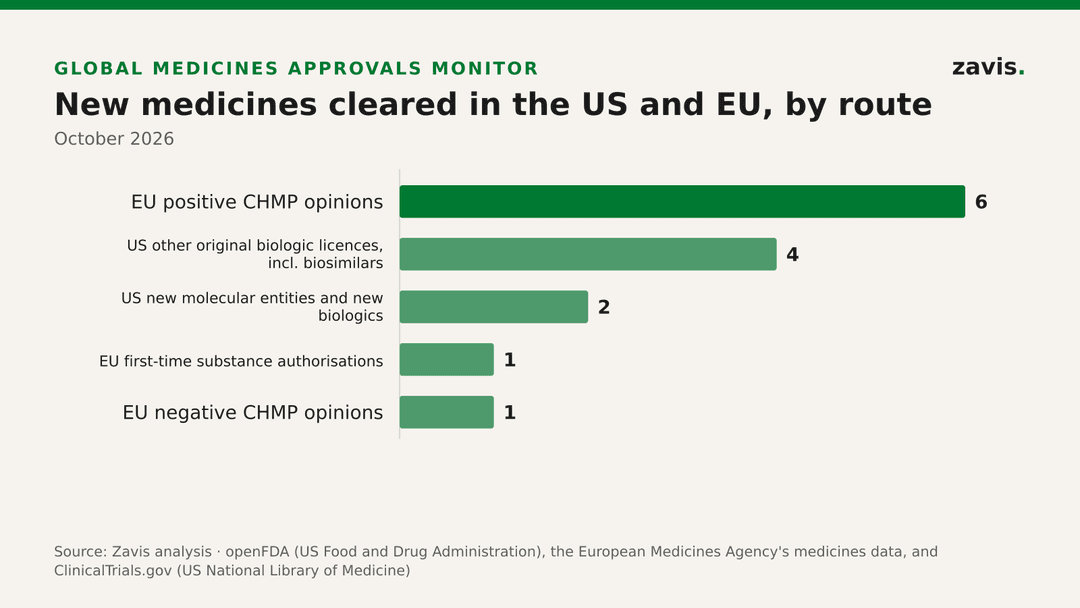
US approvals of new molecular entities and new biologics fell to 2 in October from 9 in September, and the EU authorised 1 substance for the first time.
How Zavis verifies this coverage
Editorial standards, source rules, methodology, and review provenance are public.
Key findings
- 1 of 6 matched new substances had a registered study with a GCC site
- US new molecular entities and new biologics fell to 2 in October from 9 in September
- EU central marketing authorisations fell 83.3% to 1
- Positive CHMP opinions for orphan medicines rose 200% to 3
- Original US generic drug approvals fell 12% to 44
Only 1 of the 6 new substances that US and EU regulators approved or recommended in October 2026 had a registered study with a site in a Gulf Cooperation Council (GCC) country, according to the Zavis Global Medicines Approvals Monitor. That substance is orforglipron. It has one Phase 3 study, listed as Recruiting, with sites in the United Arab Emirates and Saudi Arabia.
Trial sites give Gulf hospitals and clinics early experience with medicines before those medicines reach local formularies. When most new substances are tested elsewhere, local clinicians and patients have less access to them during development. Insurers also have less local evidence when they decide on cover.
The Zavis analysis counts three things: US new molecular entities and new biologics, EU first-time authorisations, and positive opinions from the European Medicines Agency's human medicines committee (CHMP) for substances new to EU central authorisation. It then matches each substance by name to studies registered on ClinicalTrials.gov, the public trial registry run by the US National Library of Medicine. All 6 new substances were matched this month, so the GCC count uses all 6 as its base. The other 5 had no registered study at a GCC site.
New substances fell 70% from September
The number of new substances fell 70% from the last edition, which covered decisions dated September 2026. In the US, the Food and Drug Administration approved 2 new molecular entities and new biologics in October, against 9 in September, down 77.8%. Both were approved under priority review.
Other original US biologic licences, including biosimilars, rose 100% to 4. Original US generic drug approvals fell 12% to 44. These approvals add volume but no new substances.
In the EU, central marketing authorisations for human medicines fell 83.3% to 1. That one was the first EU central authorisation of its substance. There were 0 generic or biosimilar authorisations. The CHMP adopted 6 positive opinions, down 45.5%, and 1 negative opinion, the same as in September. Positive opinions for orphan medicines rose 200% to 3.
| Route | October 2026 | September 2026 |
|---|---|---|
| US new molecular entities and new biologics | 2 | 9 |
| US other original biologic licences, incl. biosimilars | 4 | 2 |
| EU first-time substance authorisations | 1 | 3 |
| EU positive CHMP opinions | 6 | 11 |
| EU negative CHMP opinions | 1 | 1 |
Two US approvals, neither tested at a GCC site
The two US approvals were Hovilpri (pritelivir) from Aicuris Anti-Infect and Hibsago (bepirovirsen) from GlaxoSmithKline. HSV Infection is the condition named most often in pritelivir's registered studies. For bepirovirsen it is Hepatitis B.
The Zavis analysis found 7 registered studies for pritelivir and 13 for bepirovirsen. None of them had a GCC site. The condition named most often in a medicine's registered studies is not its approved indication.
| Medicine | Sponsor | Review | Condition most named in its registered studies | Registered studies | Studies with a GCC site |
|---|---|---|---|---|---|
| Hovilpri (pritelivir) | Aicuris Anti-Infect | Priority | HSV Infection | 7 | 0 |
| Hibsago (bepirovirsen) | GlaxoSmithKline | Priority | Hepatitis B | 13 | 0 |
Europe authorised one substance and recommended a short list
The EU's only first-time authorisation in October was Lynavoy (linerixibat), held by GlaxoSmithKline Trading Services. Its therapeutic area is listed as Liver Cirrhosis, Biliary; Pruritus, and it carries an orphan designation. The Zavis analysis found 10 registered studies for linerixibat, and none had a GCC site.
The CHMP gave positive opinions to Foundayo (orforglipron), Yuviwel (navepegritide) and Rasonque (daraxonrasib). Each is listed as a substance new to EU central authorisation. Yuviwel and Rasonque carry orphan designations. The committee also gave a positive opinion to Kizfizo (temozolomide), an already authorised substance with an orphan designation, and to the biosimilars Fovlussea (ranibizumab) and Neuzafy (filgrastim). It adopted a negative opinion on Yartemlea (Narsoplimab), which is also listed as a substance new to EU central authorisation.
| Medicine | Active substance | Opinion | Type | Designations |
|---|---|---|---|---|
| Foundayo | Orforglipron | Positive | Substance new to EU central authorisation | None |
| Yuviwel | Navepegritide | Positive | Substance new to EU central authorisation | Orphan |
| Rasonque | Daraxonrasib | Positive | Substance new to EU central authorisation | Orphan |
| Kizfizo | temozolomide | Positive | Substance already authorised | Orphan |
| Fovlussea | ranibizumab | Positive | Biosimilar | None |
| Neuzafy | filgrastim | Positive | Biosimilar | None |
| Yartemlea | Narsoplimab | Negative | Substance new to EU central authorisation | None |
The Gulf link comes down to one study
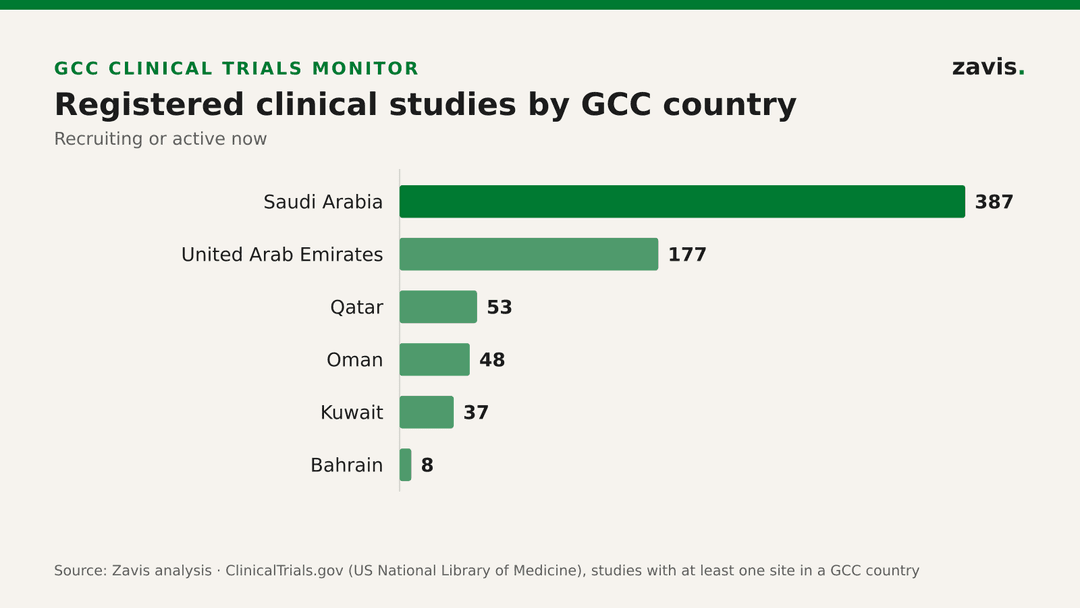
October's only Gulf link is NCT07613307, a Phase 3 study of orforglipron listed as Recruiting, with sites in the United Arab Emirates and Saudi Arabia. Orforglipron is the 1 matched new substance with a registered study in the UAE. No registered study of October's new substances listed a site in Qatar, Kuwait, Bahrain or Oman.
The number of matched new substances with a GCC site was 1, unchanged from the last edition. The number with no GCC site fell 72.2% to 5. That fall appears to reflect the smaller month rather than more research moving to the region.
Zavis matches substances by name. Studies registered only under a code name, or only in other registries, are missed. The GCC count may therefore understate how much of this research involved Gulf sites.
| Country | Studies | Substances tested there |
|---|---|---|
| United Arab Emirates | 1 | orforglipron |
| Saudi Arabia | 1 | orforglipron |
| Qatar | 0 | None |
| Kuwait | 0 | None |
| Bahrain | 0 | None |
| Oman | 0 | None |
What it means
For hospital and clinic operators, October offers few chances to take part in research on new medicines. The Zavis analysis found a single recruiting study with sites in the UAE and Saudi Arabia, and none in the other four GCC countries.
For insurers, most new substances this month were developed without registered studies at Gulf sites. When these medicines come up for cover decisions, local evidence for them is likely to be limited.
For patients, the orforglipron study appears on ClinicalTrials.gov under NCT07613307. Anyone interested should check the listing for site and eligibility details and discuss it with their own doctor. A US approval or a positive EU opinion does not tell you whether a medicine is available locally, so check with your doctor or pharmacy.
Sources
Zavis Data Science Desk
Data & Analytics
The Zavis Data Science Desk publishes the monthly Zavis indices at zavis.ai/intelligence/data. They are bui...