
What to know about asthma
Updated
Short answer
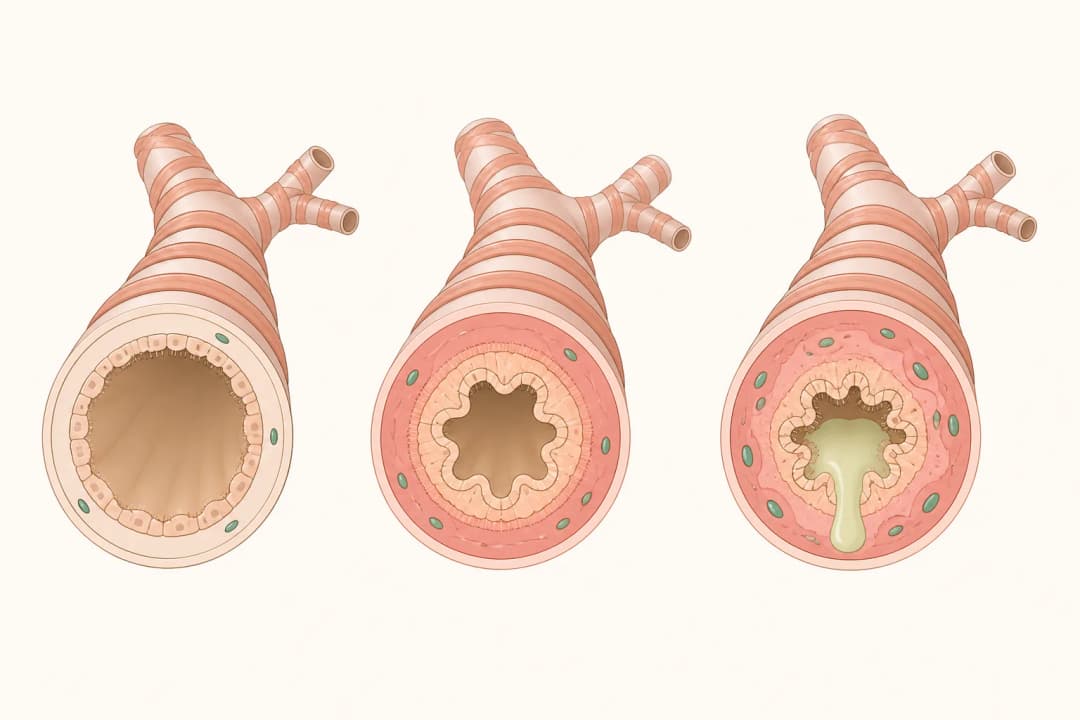
Asthma is a condition in which sensitive airways can narrow and become inflamed, causing episodes of wheeze, cough, breathlessness or chest tightness.
This answers one question. It is not a diagnosis and does not replace an assessment by a licensed doctor.
At a glance
- Affected area
- The airways in the lungs
- Plan ahead
- Keep a personalised asthma action plan
How asthma can feel
Symptoms may fluctuate, with some people feeling well between episodes. Wheezing, cough and chest tightness are common presentations of asthma, but these symptoms can also have other causes. Triggers vary and may include respiratory infections, smoke, exercise, cold air, strong scents or allergens. Allergic rhinitis and house dust mite allergy can aggravate upper-airway symptoms and may be relevant to asthma control. A chronic cough needs assessment rather than being assumed to be asthma.
Managing asthma day to day
Use inhalers exactly as prescribed and ask a clinician or pharmacist to check technique, because poor technique can reduce how much medicine reaches the lungs. Keep an up-to-date written action plan that says what to do as symptoms increase. Notice personal triggers and reduce exposure where practical, especially tobacco smoke. If a reliever inhaler is needed more often, sleep is interrupted by symptoms, or usual activity becomes harder, contact the clinician managing the asthma plan.
When breathing needs urgent care
Get urgent medical help for severe breathlessness, difficulty speaking in full sentences, marked chest tightness, worsening wheeze that does not settle with the prescribed reliever plan, drowsiness, confusion or blue lips. Do not drive yourself if breathing is severely affected. A nebuliser treatment may be used in a clinical setting when a healthcare professional decides it is appropriate, alongside assessment of the attack.
Questions to bring to an appointment
Ask which inhaler is for prevention and which is for rapid symptom relief, how to use each device, and what changes should trigger urgent care. Ask whether allergies, reflux, nasal symptoms or another cause of cough could be contributing to the pattern.
Find care
General Clinics & Polyclinics in Dubai
That answer is general. If you want it applied to your own case, these are licensed general clinics & polyclinics listed in Dubai.
The Court Residence, 39B Street, Jumeirah 1, Dubai
Accepts: Tabby, Tamara
Elite Business Bay Residence - Shop 03 & 04, 34 Marasi Dr - Business Bay - Dubai - United Arab Emirates
Accepts: Tabby
Airport View Building, Al Garhoud, Dubai
Accepts: Daman, Thiqa, AXA, Cigna +25 more
IBIS Building, 5th Floor, Unit 5003, Deira, Dubai
Accepts: AXA, Cigna, MetLife, Allianz Care +18 more
Ordered by verification status and how complete each clinic's public record is, then alphabetically. This is a directory listing, not a ranking — Zavis does not rate or recommend providers.
A factual listing drawn from the UAE health regulators' public licence registers. It is not a referral, an endorsement, or advice that any of these providers is right for you.
Questions people ask
Can asthma symptoms appear only at night?
They can. Night-time cough, wheeze or breathlessness should be discussed with the clinician managing the condition.
Should I stop a preventer inhaler when I feel well?
Do not stop or change prescribed asthma medicine without clinical advice, because prevention treatment is intended to reduce airway inflammation over time.
Keep reading
Medical disclaimer. This page is general health information, not medical advice, and it cannot diagnose you. Always consult a licensed healthcare provider about your own symptoms and treatment. In an emergency in the UAE, call 998 for an ambulance.