
What should you know about smoking and asthma?
Short answer
Smoking can irritate and narrow the airways, trigger asthma symptoms, and make asthma harder to control with the usual treatment plan.
This answers one question. It is not a diagnosis and does not replace an assessment by a licensed doctor.
At a glance
- Common smoke effects
- More airway irritation, cough, wheezing, and chest tightness.
- Review signal
- Needing a reliever more often or waking at night.
What smoke does to asthma
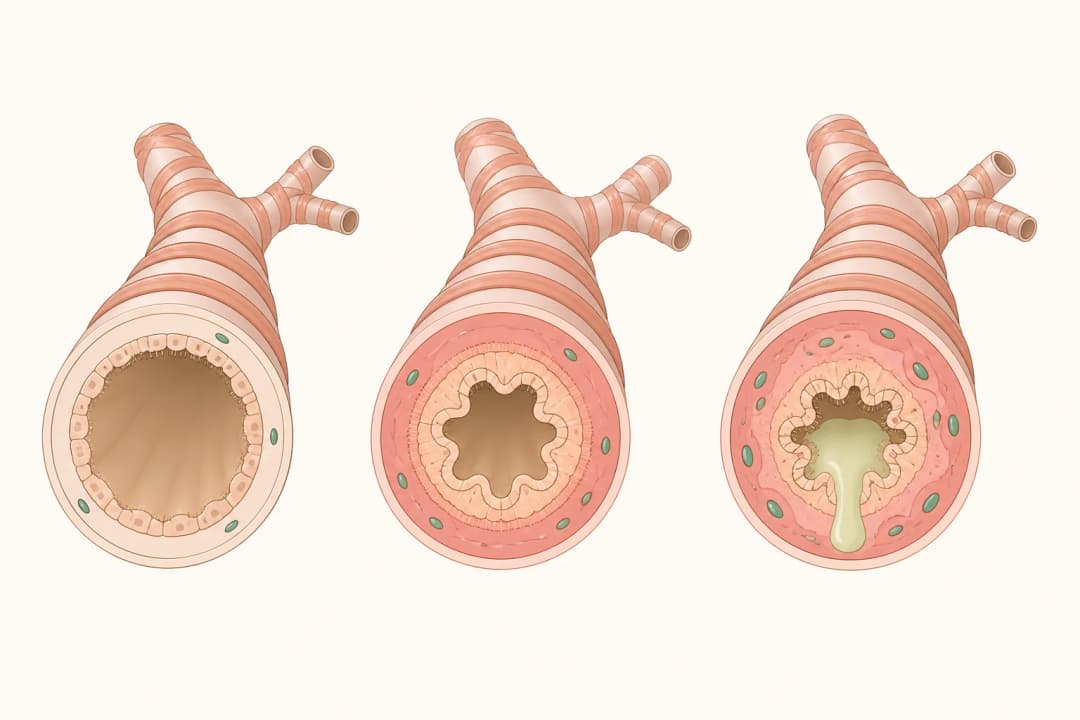
Asthma causes airways to become sensitive and narrow in response to triggers. Tobacco smoke and second-hand smoke can add irritation, increase coughing, and provoke wheezing or chest tightness. Smoke can also make it harder to recognise which symptoms come from asthma and which come from another problem such as allergic rhinitis or a chronic cough.
Asthma symptoms may vary from day to day. Night waking, symptoms during activity, or needing a reliever inhaler more often can suggest that control needs review. Smoking does not prove that every cough or tight chest sensation is asthma; a clinician may need to assess breathing and triggers.
Protecting your breathing
Stopping smoking and avoiding second-hand smoke are central steps. Keep prescribed inhalers available, use them with the technique taught to you, and follow your written asthma action plan. Do not stop a preventer inhaler because symptoms improve unless the prescriber advises a change.
Ask for an inhaler technique check if medicine seems less effective. Reduce exposure to known triggers such as dust, strong fumes, and smoke. A clinician can review symptoms, peak-flow readings if used, and whether treatment should change.
When to seek care
Call emergency services if breathing is severely difficult, you cannot speak comfortably, your lips look blue or grey, or your reliever is not helping as directed in your action plan. Sit upright and follow the plan while waiting for help.
Seek prompt review for increasing wheezing, chest tightness, night symptoms, reduced activity, or repeated need for a reliever. Urgent assessment may include inhaled treatment or nebuliser treatment when clinically appropriate.
Questions for your doctor
Ask how smoking is affecting your control, whether your inhaler technique is correct, what your personal action plan says during a flare, and which stop-smoking support will work with your asthma medicines.
Find care
General Clinics & Polyclinics in Abu Dhabi
That answer is general. If you want it applied to your own case, these are licensed general clinics & polyclinics listed in Abu Dhabi.
27 Ar Ruwwad St - Shakhbout City - MSH4 - Abu Dhabi - United Arab Emirates
Accepts: Daman, Thiqa, Cigna, MetLife +20 more
Al Ruwais, Al Dhafrah
Accepts: Daman, Thiqa, AXA, Cigna +16 more
Al Bahyah - Al Bahyah Old - Abu Dhabi - United Arab Emirates
Accepts: Daman, Thiqa, Cigna, Allianz Care +18 more
Abu Dhabi
Accepts: Daman, Thiqa, AXA, Cigna +27 more
Ordered by verification status and how complete each clinic's public record is, then alphabetically. This is a directory listing, not a ranking — Zavis does not rate or recommend providers.
A factual listing drawn from the DHA, DOH and MOHAP licence registers. It is not a referral, an endorsement, or advice that any of these providers is right for you.
Questions people ask
Can second-hand smoke affect asthma?
Yes. Smoke in the surrounding air can irritate sensitive airways and trigger symptoms even when you do not smoke yourself.
Should I use a nebuliser instead of my inhaler?
Not automatically. Follow your asthma plan and seek clinical advice; nebuliser treatment is used in selected situations.
Keep reading
Medical disclaimer. This page is general health information, not medical advice, and it cannot diagnose you. Always consult a licensed healthcare provider about your own symptoms and treatment. In an emergency in the UAE, call 998 for an ambulance.