
What should you know about mold and asthma?
Short answer
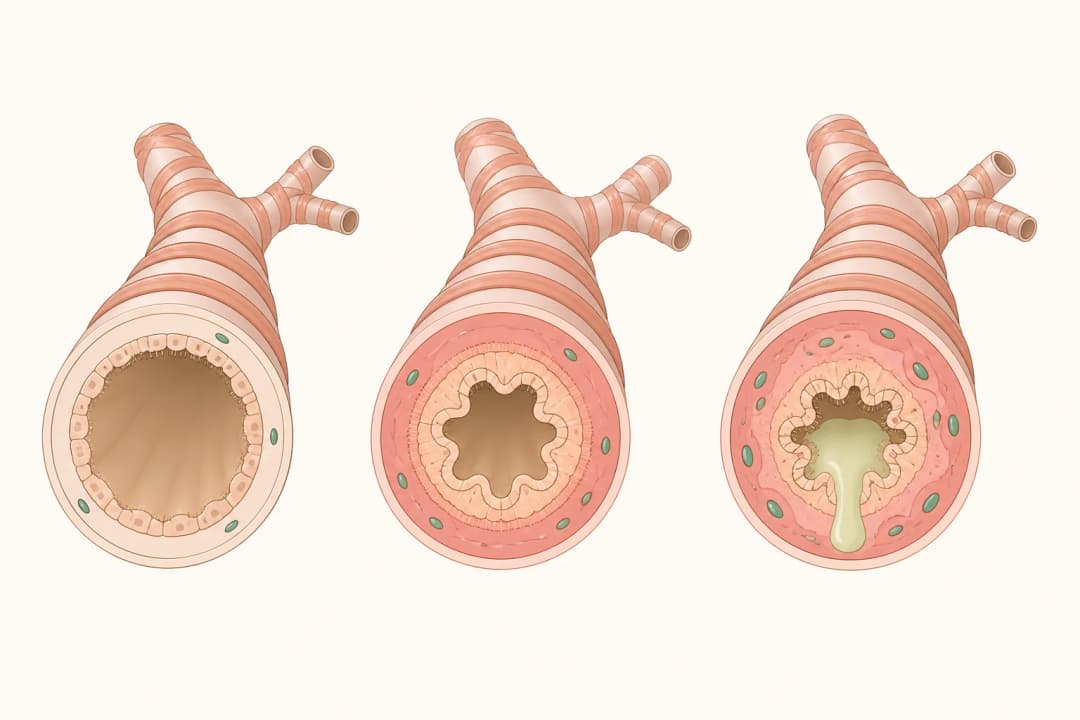
Mold can irritate or trigger inflamed airways, so people with asthma may develop more cough, wheezing, or chest tightness around damp or moldy areas.
This answers one question. It is not a diagnosis and does not replace an assessment by a licensed doctor.
At a glance
- Possible triggers
- Spores, dampness, poor ventilation, and allergens
- Symptoms to track
- Cough, wheezing, chest tightness, and breathlessness
- Priority action
- Follow the prescribed asthma action plan
How mold affects asthma
Mold releases tiny particles and spores into the air. In a sensitive person, these can irritate the airways or provoke an allergic response. Asthma may then present with cough, wheezing, chest tightness, or shortness of breath. Symptoms can be worse in rooms with visible mold, musty smells, leaks, condensation, or poor ventilation, but symptoms can also have other triggers.
Mold exposure does not prove that asthma is the cause of every cough. Allergic rhinitis, a house dust mite allergy, infection, or another airway problem can produce overlapping symptoms. A clinician can compare timing, examination findings, and response to treatment.
Reducing exposure and controlling symptoms
Fix leaks, dry damp surfaces promptly, improve ventilation, and keep indoor humidity comfortable. Do not scrape or brush extensive mold yourself; cleaning can release particles. Ask someone without asthma to clean small areas using suitable protection, or arrange professional remediation for widespread growth.
Continue your prescribed asthma controller and reliever plan. Keep a record of where symptoms occur and how quickly they improve after leaving the area. Do not stop preventer medicine simply because mold has been removed.
When to seek care
Seek emergency help if breathing is very difficult, speech is limited by breathlessness, lips look blue or grey, or a reliever inhaler is not helping according to your action plan. Arrange prompt review for nighttime symptoms, repeated reliever use, worsening wheeze, or cough that continues after leaving the damp environment.
Questions for your doctor
Ask whether your symptoms fit asthma, whether allergy testing could help, and how to adjust your written action plan during an exposure. Ask when nebuliser treatment is appropriate and how to distinguish an asthma flare from infection.
Find care
General Clinics & Polyclinics in Abu Dhabi
That answer is general. If you want it applied to your own case, these are licensed general clinics & polyclinics listed in Abu Dhabi.
27 Ar Ruwwad St - Shakhbout City - MSH4 - Abu Dhabi - United Arab Emirates
Accepts: Daman, Thiqa, Cigna, MetLife +20 more
Al Ruwais, Al Dhafrah
Accepts: Daman, Thiqa, AXA, Cigna +16 more
Al Bahyah - Al Bahyah Old - Abu Dhabi - United Arab Emirates
Accepts: Daman, Thiqa, Cigna, Allianz Care +18 more
Abu Dhabi
Accepts: Daman, Thiqa, AXA, Cigna +27 more
Ordered by verification status and how complete each clinic's public record is, then alphabetically. This is a directory listing, not a ranking — Zavis does not rate or recommend providers.
A factual listing drawn from the DHA, DOH and MOHAP licence registers. It is not a referral, an endorsement, or advice that any of these providers is right for you.
Questions people ask
Does mold cause asthma in everyone?
No. Mold can aggravate airway symptoms in some people, especially those with asthma or allergy, while others may notice no respiratory effect.
Should I leave a moldy room during symptoms?
Move to cleaner air and follow your asthma action plan. Get urgent help if breathing remains difficult, symptoms escalate, or reliever treatment is not helping.
Related
Related reading
Keep reading
Medical disclaimer. This page is general health information, not medical advice, and it cannot diagnose you. Always consult a licensed healthcare provider about your own symptoms and treatment. In an emergency in the UAE, call 998 for an ambulance.