
Having regular periods with PCOS
Short answer
Having regular periods with PCOS can be reassuring, but regular bleeding does not always prove that ovulation occurs each cycle.
This answers one question. It is not a diagnosis and does not replace an assessment by a licensed doctor.
At a glance
- Regular bleeding
- Does not always confirm ovulation
- Track
- Timing, flow, pain, and spotting
- Pregnancy plans
- Change which evaluations and treatments may help
What regular periods can mean
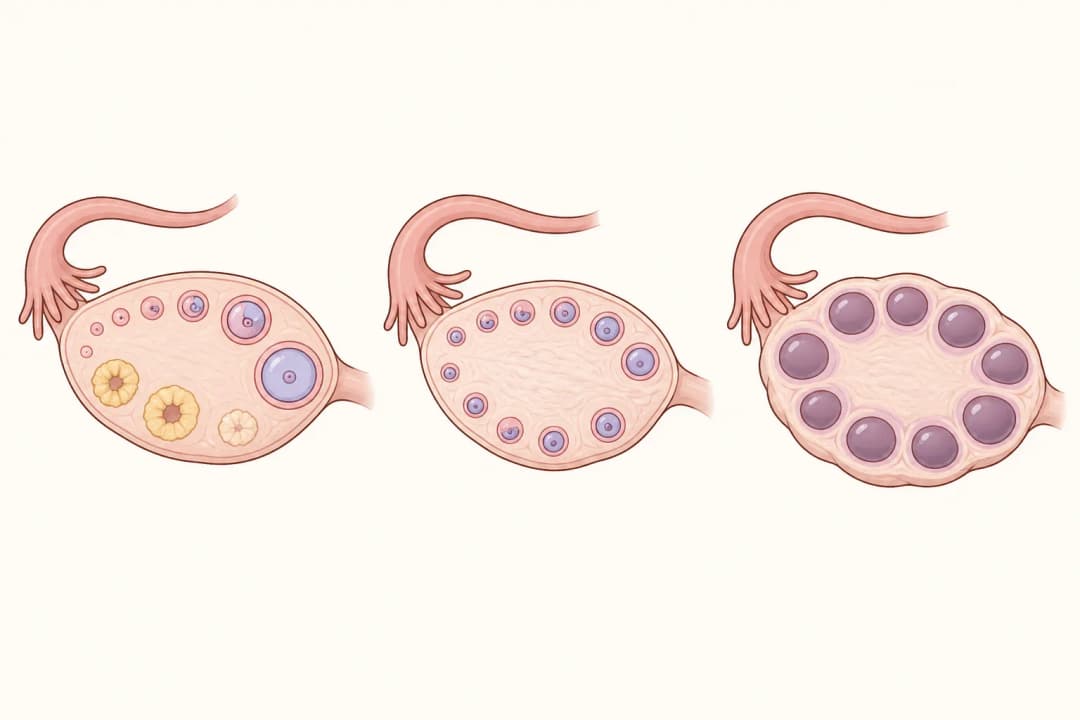
PCOS affects hormone signalling and ovulation in different ways. Some people with PCOS continue to release an egg regularly, while others bleed on a predictable schedule without ovulating every time. Bleeding caused by hormone changes can look like a period, so cycle timing alone cannot confirm ovulation.
If pregnancy is a goal, regular cycles are useful information but do not settle questions about fertility. A clinician can consider your cycle pattern alongside signs such as acne, excess hair growth, or difficulty conceiving. PCOS is also associated with changes in the womb lining when ovulation is infrequent; [Anovulation](/conditions/anovulation/) explains this mechanism.
Practical next steps
Track the first day of bleeding, how long it lasts, flow changes, pain, and any spotting. Bring this record to an appointment. If you are trying to conceive, ask whether ovulation assessment is appropriate. If you do not want pregnancy, discuss contraception even when periods arrive regularly; the [Combined Pill](/treatments/contraception-and-family-planning/combined-pill/) is one option that may also make bleeding more predictable.
Continue care for PCOS as a whole rather than judging it by periods alone. Treatment choices may address symptoms, fertility plans, or protection of the womb lining. Learn more about [Polycystic Ovary Syndrome](/conditions/polycystic-ovary-syndrome/).
When to seek care
Arrange a medical review if your cycle pattern changes, bleeding becomes very heavy, periods stop, or you develop persistent pelvic pain. Seek prompt help for faintness, severe pain, or bleeding that feels difficult to control. New [Heavy Periods](/symptoms/heavy-periods/) or [Periods Stopped](/symptoms/periods-stopped/) deserve assessment even when you have an established PCOS diagnosis.
Questions for your doctor
Ask: How can we tell whether I am ovulating? Do I need protection for the womb lining? Which plan fits my pregnancy goals? Could another cause explain a new cycle change?
Find care
General Clinics & Polyclinics in Abu Dhabi
That answer is general. If you want it applied to your own case, these are licensed general clinics & polyclinics listed in Abu Dhabi.
27 Ar Ruwwad St - Shakhbout City - MSH4 - Abu Dhabi - United Arab Emirates
Accepts: Daman, Thiqa, Cigna, MetLife +20 more
Al Ruwais, Al Dhafrah
Accepts: Daman, Thiqa, AXA, Cigna +16 more
Al Bahyah - Al Bahyah Old - Abu Dhabi - United Arab Emirates
Accepts: Daman, Thiqa, Cigna, Allianz Care +18 more
Abu Dhabi
Accepts: Daman, Thiqa, AXA, Cigna +27 more
Ordered by verification status and how complete each clinic's public record is, then alphabetically. This is a directory listing, not a ranking — Zavis does not rate or recommend providers.
A factual listing drawn from the DHA, DOH and MOHAP licence registers. It is not a referral, an endorsement, or advice that any of these providers is right for you.
Questions people ask
Can you have PCOS and regular periods?
Yes. PCOS can occur with regular-looking bleeding, although ovulation may still be less consistent than the calendar suggests.
Do regular periods with PCOS mean fertility is normal?
No single cycle pattern confirms fertility. Ovulation, sperm factors, age, and other health factors can affect conception.
Related
Related reading
Keep reading
Medical disclaimer. This page is general health information, not medical advice, and it cannot diagnose you. Always consult a licensed healthcare provider about your own symptoms and treatment. In an emergency in the UAE, call 998 for an ambulance.