
Polycystic Ovary Syndrome (PCOS)
At a glance
- Also known as
- PCOS
- Main systems involved
- Ovulation, menstrual cycles, androgen activity and metabolic health
- Pregnancy
- Irregular ovulation can make conception harder, and treatment options are available
What is polycystic ovary syndrome?
Polycystic ovary syndrome can affect ovulation, periods, androgen-related symptoms and fertility, but treatment can be tailored to your goals.
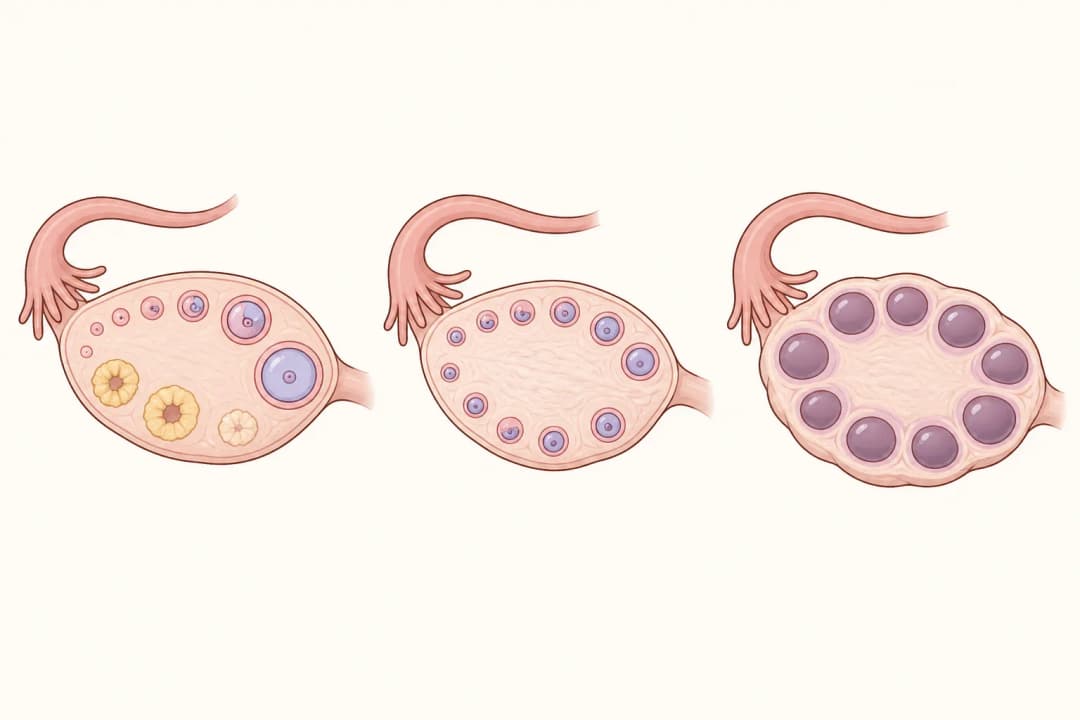
Polycystic ovary syndrome, often called PCOS, is a common hormone-related condition involving ovulation, menstrual cycles and androgen activity. Androgens are hormones present in everyone; higher activity can contribute to facial hair, acne or scalp hair thinning. The name can be misleading: some people with PCOS have ovaries with many small follicles, while others do not.
PCOS is not the same as having ovarian cysts. It can affect someone who is not trying to become pregnant as well as someone seeking fertility care. Management depends on what is troubling you, whether pregnancy is a current goal, and your longer-term health needs.
Symptoms and signs
Irregular periods are a very common presentation of PCOS, and missed periods are also common because ovulation may happen infrequently. Heavy periods can occur after a long gap between bleeds. Excess facial hair is another very common presentation, while acne or scalp hair thinning may reflect increased androgen activity. PCOS can also present as trouble getting pregnant when ovulation is irregular.
Symptoms vary, may change over time and can have other causes. A symptom alone does not establish PCOS. A clinician may ask when your periods occur, whether bleeding is heavy, and when hair or skin changes began.
What causes PCOS?
There is no single cause of PCOS. It is thought to involve inherited tendency, hormone signalling and how the body responds to insulin. Insulin helps move glucose from the blood into cells; when the body needs more insulin to achieve this, higher insulin levels may encourage androgen production and interfere with ovulation.
The condition is not caused by a personal failure or by one food. Weight, activity, sleep and stress can influence symptoms and metabolic health, but PCOS can occur across body sizes.
How PCOS can change over time
PCOS often begins around the time periods start, although recognition may come later. Menstrual regularity, hair growth and skin symptoms can shift with age, pregnancy, medication and changes in metabolic health. Fertility concerns may become more visible when someone starts trying to conceive.
Follow-up helps match care to changing priorities, such as cycle control now and pregnancy planning later. Long gaps without a period should be discussed because the uterine lining may need protection.
Factors linked with PCOS
A close family history of PCOS or type 2 diabetes may increase the chance of developing PCOS. Features of insulin resistance, sleep problems and weight gain around the middle can accompany the condition, although none is required for diagnosis. Some medicines and other hormone conditions can mimic PCOS, so they must be considered during assessment.
How PCOS is diagnosed
Diagnosis usually combines your menstrual history with examination and targeted tests. The clinician may assess signs of androgen activity, order hormone blood tests, and check glucose or cholesterol-related health. An ultrasound may examine the ovaries, but seeing follicles is not by itself enough to diagnose PCOS.
Other explanations for irregular periods or androgen-related symptoms may need to be excluded, including thyroid or prolactin disorders and pregnancy. Bring a record of bleeding dates, medicines, supplements and symptom changes to the appointment.
Treatment options for PCOS
Treatment is chosen around your goals. Lifestyle support can address movement, nutrition, sleep and stress without prescribing one ideal body size. A combined pill may regulate bleeding and reduce androgen-related symptoms for some people; a hormonal coil can protect the uterine lining and provide contraception.
Metformin for PCOS may be considered when insulin resistance or metabolic concerns are relevant. If pregnancy is desired, ovulation induction may help release an egg. Fertility care can progress to IVF when appropriate. Ovarian drilling is a surgical option for selected fertility situations. A gynaecologist or fertility specialist can explain benefits, side effects and alternatives.
Living with PCOS
Keep a simple record of periods, bleeding intensity, pain, hair or skin changes and medicines. Regular appointments can review blood pressure, glucose-related health and emotional wellbeing. If hair growth or acne affects confidence, ask about medical and non-medical options. Pregnancy plans should be raised early so treatment can be adjusted safely.
Possible health concerns
PCOS can be associated with difficulty conceiving, glucose regulation problems, high blood pressure, cholesterol changes, sleep apnoea and low mood or anxiety. Infrequent periods can allow the uterine lining to build up, so prolonged gaps between bleeds need medical review. These associations do not mean that every person with PCOS will develop them.
Can PCOS be prevented?
PCOS cannot always be prevented because family and biological factors contribute to it. Early review of irregular periods, unwanted hair growth or difficulty conceiving can identify treatable symptoms and related health concerns. Sustainable eating, regular activity, adequate sleep and support for mental health may improve wellbeing, whatever your diagnosis.
When to see a specialist
A gynaecologist can assess cycle changes, androgen-related symptoms and uterine-lining protection. A fertility specialist may help if pregnancy has not occurred and ovulation appears irregular. Seek prompt medical care for very heavy bleeding, severe pelvic pain, faintness, or bleeding during pregnancy.
Questions people ask
Does PCOS always cause ovarian cysts?
No. The name refers to a possible ovarian appearance, but PCOS can be diagnosed without that appearance.
Can I become pregnant with PCOS?
Yes. PCOS may make ovulation irregular, and a clinician can discuss ovulation induction or other fertility options when needed.
What should I do if my periods stop?
Arrange medical review, especially if the gap is prolonged, so pregnancy and other causes can be checked and the uterine lining can be protected.
Related
Related reading
Keep reading
Find care
Fertility & IVF in Dubai
Where polycystic ovary syndrome (PCOS) is assessed depends on what is causing it. These are licensed fertility & ivf listed in Dubai.
Allahbadia Fertility Clinic - Best Fertility Doctor in Dubai | IVF Doctor in Dubai | ICSI | IUI | Family Balancing
Accepts: Daman, Thiqa, AXA, Cigna +22 more
Dubai Healthcare City, Dubai
Accepts: Daman, Cigna, Allianz Care, Aetna International +17 more
Al Razi Building 64, Block C - Unit 1017 1st Floor - أم هرير الثانية - Dubai Healthcare City - دبي - United Arab Emirates
Accepts: Daman, AXA, Cigna, MetLife +20 more
Jumeira St - Umm Suqeim Third - Umm Suqeim 3 - Dubai - United Arab Emirates
Accepts: Daman, Thiqa, AXA, Cigna +17 more
Ordered by verification status and how complete each clinic's public record is, then alphabetically. This is a directory listing, not a ranking — Zavis does not rate or recommend providers.
A factual listing drawn from the DHA, DOH and MOHAP licence registers. It is not a referral, an endorsement, or advice that any of these providers is right for you.
Medical disclaimer. This page is general health information, not medical advice, and it cannot diagnose you. Always consult a licensed healthcare provider about your own symptoms and treatment. In an emergency in the UAE, call 998 for an ambulance.