
Fraxel laser procedure: what to know
Short answer
A Fraxel laser procedure treats selected skin columns to support renewal, followed by a period of redness and careful barrier care.
This answers one question. It is not a diagnosis and does not replace an assessment by a licensed doctor.
At a glance
- Technology
- Fractional laser energy
- Treatment pattern
- Microscopic columns with untreated skin between them
- Recovery focus
- Calm, moisturise, and protect the skin barrier
What happens during the procedure
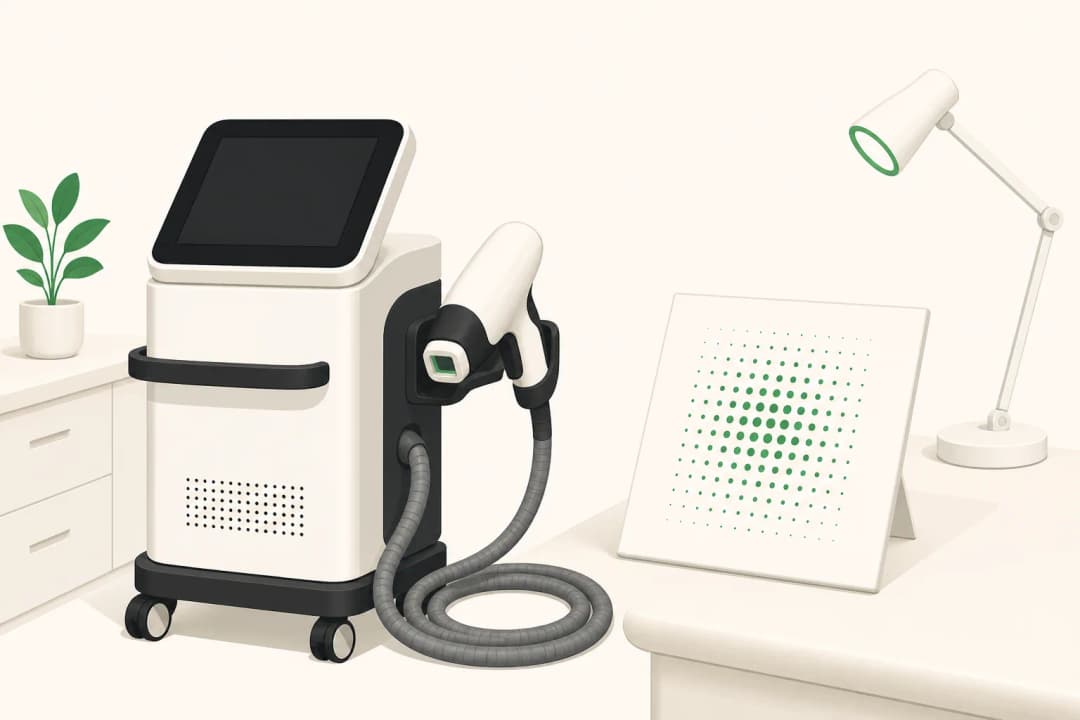
A clinician first checks the concern, skin tone, medical history, recent sun exposure, medicines, and history of pigment change or cold sores. The skin is cleansed, and comfort measures are chosen. The fractional handpiece then delivers energy in a pattern of microscopic columns, leaving untreated skin between them. This can stimulate repair while limiting the treated surface. The procedure may be considered for fine lines, uneven texture, selected scars, or sun-related changes. It does not suit every lesion, and it does not remove deep folds, reshape facial structures, or guarantee a particular cosmetic result.
How to prepare and recover
Follow instructions about sun avoidance, retinoids, exfoliants, and shaving. Mention active infection, eczema, acne, pregnancy, medicines, allergies, and previous troublesome healing. After treatment, warmth, redness, swelling, dryness, and a rough texture are possible. Use the recommended gentle cleanser, moisturiser, and sun protection. Avoid picking, scrubbing, swimming, intense heat, and fragranced products until the clinic says the barrier has recovered. Keep follow-up appointments so settings or the next session can be based on how your skin responded.
When to seek medical advice
Contact the clinic if discomfort is escalating, swelling is severe, blisters appear, or redness becomes spreading and hot. Urgent care is appropriate for breathing difficulty, facial swelling affecting the throat, eye pain, or vision change. Persistent pigment alteration, pus, or delayed healing needs review before any further treatment.
Questions for your doctor
Ask which concern is realistically treatable, which laser mode and settings are planned, what recovery signs are expected, how pigment risk is reduced, and when normal skincare can resume.
Find care
General Clinics & Polyclinics in Abu Dhabi
That answer is general. If you want it applied to your own case, these are licensed general clinics & polyclinics listed in Abu Dhabi.
27 Ar Ruwwad St - Shakhbout City - MSH4 - Abu Dhabi - United Arab Emirates
Accepts: Daman, Thiqa, Cigna, MetLife +20 more
Al Ruwais, Al Dhafrah
Accepts: Daman, Thiqa, AXA, Cigna +16 more
Al Bahyah - Al Bahyah Old - Abu Dhabi - United Arab Emirates
Accepts: Daman, Thiqa, Cigna, Allianz Care +18 more
Abu Dhabi
Accepts: Daman, Thiqa, AXA, Cigna +27 more
Ordered by verification status and how complete each clinic's public record is, then alphabetically. This is a directory listing, not a ranking — Zavis does not rate or recommend providers.
A factual listing drawn from the DHA, DOH and MOHAP licence registers. It is not a referral, an endorsement, or advice that any of these providers is right for you.
Questions people ask
Is a Fraxel procedure the same as a full-surface peel?
No. Fractional laser treats microscopic columns rather than applying one continuous treatment across the whole surface.
How should I choose a provider?
Choose a qualified medical clinician who assesses your skin, explains alternatives and risks, and provides specific aftercare and follow-up.
Related
Related reading
Keep reading
Medical disclaimer. This page is general health information, not medical advice, and it cannot diagnose you. Always consult a licensed healthcare provider about your own symptoms and treatment. In an emergency in the UAE, call 998 for an ambulance.