
Fractional Laser Treatment
Updated
At a glance
- Treatment type
- Energy-based skin resurfacing
- Main target
- Selected texture and scar concerns
- Aftercare focus
- Gentle healing and sun protection
Find care
General Clinics & Polyclinics in Dubai
Licensed general clinics & polyclinics listed in Dubai. Appearing here means a provider holds a UAE licence in this category — not that it offers fractional laser treatment, which is worth confirming with the clinic before you book.
The Court Residence, 39B Street, Jumeirah 1, Dubai
Accepts: Tabby, Tamara
Elite Business Bay Residence - Shop 03 & 04, 34 Marasi Dr - Business Bay - Dubai - United Arab Emirates
Accepts: Tabby
Airport View Building, Al Garhoud, Dubai
Accepts: Daman, Thiqa, AXA, Cigna +25 more
IBIS Building, 5th Floor, Unit 5003, Deira, Dubai
Accepts: AXA, Cigna, MetLife, Allianz Care +18 more
- Aarna Elite Medical CenterVerified
Madeira Building, Shop 1 & 2, Al Jadaf, Dubai, UAE
- 515 Medical & Training ClinicVerified
Villa 991, Al Wasel Road, next to J3 Mall, Al Manara, Dubai, United Arab Emirates
Accepts: Thiqa, AXA, Cigna, Allianz Care +12 more
Ordered by verification status and how complete each clinic's public record is, then alphabetically. This is a directory listing, not a ranking — Zavis does not rate or recommend providers.
A factual listing drawn from the UAE health regulators' public licence registers. It is not a referral, an endorsement, or advice that any of these providers is right for you.
How fractional laser treatment works
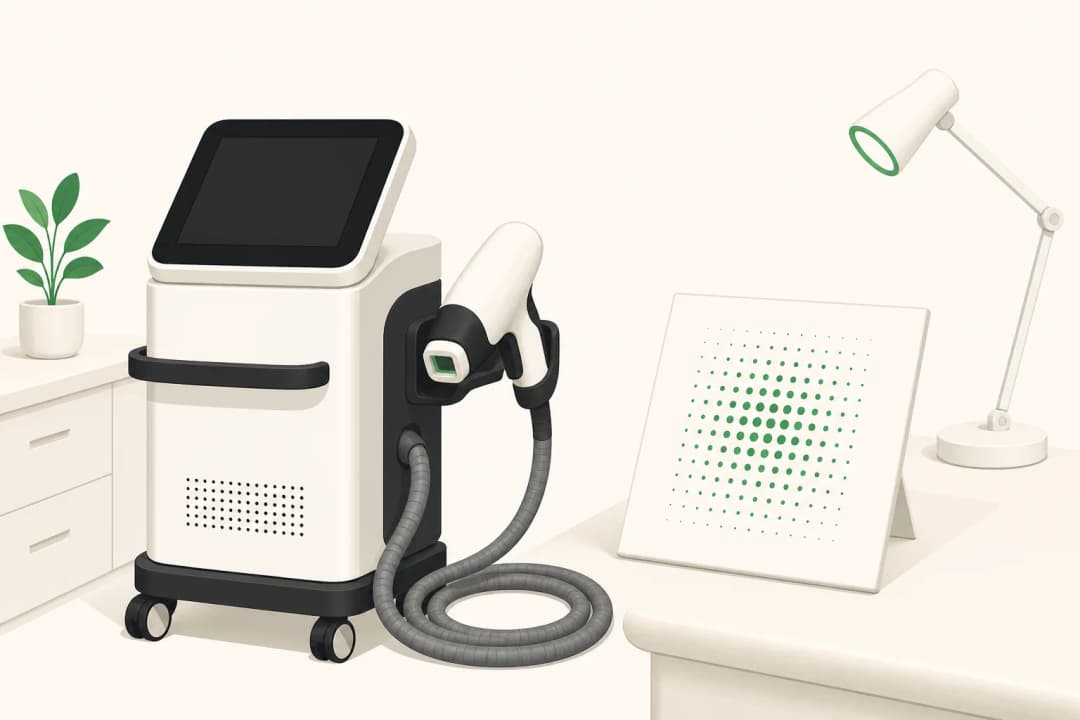
Fractional laser treatment delivers controlled columns of energy to selected areas of skin while leaving surrounding skin untreated.
The treated columns trigger a healing response that can support gradual changes in texture and tone. Different devices and settings target different depths, so a consultation should define the concern, skin type, previous pigment changes, and acceptable recovery. Treatment is commonly considered for selected scars, fine lines, sun-related texture changes, and stretch marks.
Does it hurt?
Most people notice heat, prickling, or a snapping sensation during treatment. A topical numbing product, cooling, or another comfort measure may be used depending on the device and treatment area. Skin can feel warm afterwards, similar to sun exposure. Tell the clinician if you have had difficulty with numbing agents, cold sensitivity, or distress during previous procedures.
Is it safe?
Fractional laser treatment has risks that need individual screening. Temporary redness, swelling, dryness, flaking, and pigment change can occur. Infection, scarring, persistent colour change, or acne-like breakouts are less common but possible. The clinician should review active infections, cold sores, medicines that affect healing, a history of abnormal scars, and previous pigment changes before selecting settings.
How long do results last?
Skin remodelling develops over time after treatment. The durability of visible improvement varies with the condition being treated, the laser plan, skin ageing, sun exposure, and skincare habits. A scar may soften without disappearing, and a line may become less noticeable without being erased. Your clinician can explain whether a course of treatment, maintenance, or another approach is reasonable.
Key facts before booking
A device called fractional laser is not a single uniform treatment. The wavelength, energy, density, and whether the laser is ablative or non-ablative change both the intended effect and recovery.
Who may consider fractional laser
It may be considered for appropriate sun-damaged skin, crow's feet, stretch marks, or selected scars after an in-person assessment. Keloid scars and hypertrophic scars require special caution because they reflect altered scar behaviour. A burn scar may need reconstructive planning, and a skin graft can be more relevant when there is substantial tissue loss or contracture.
What happens at treatment
The appointment starts with cleansing and protective eye shields when treating the face. The clinician applies the agreed comfort measure, performs measured passes with the laser, then gives cooling and aftercare advice. You will receive instructions on cleansing, moisturising, sun avoidance, and when to resume active skincare products. Do not pick peeling skin.
Healing and aftercare
The exact recovery pattern depends on the device depth and treatment location. Keep skin protected from sun and follow the aftercare plan closely, because heat, irritation, and friction can worsen inflammation.
When to seek advice
Contact the clinic for increasing pain, spreading redness, pus, blisters, fever, or a new widespread rash. Let the clinician know before treatment if you use prescription retinoids, have frequent cold sores, or have recently tanned. Exogenous ochronosis is a distinct pigment condition and requires a specialist assessment rather than assuming laser is suitable.
Alternatives to discuss
Microneedling may be considered for some texture and scar concerns with a different energy approach. CO2 laser resurfacing is another resurfacing option that has its own recovery profile. The appropriate choice depends on the diagnosis, skin tone, scar type, and the degree of change you want.
Choosing a provider
Choose a licensed clinician with experience treating your skin type and concern using the specific device proposed. Ask about the planned laser type, the expected healing appearance, pigment precautions, and how to reach the team if you have a problem after treatment.
Questions people ask
Can fractional laser remove a scar completely?
It may improve aspects of selected scars, but a scar can soften or become less noticeable without disappearing.
Will my skin peel after treatment?
Dryness or flaking can occur. Follow the aftercare plan and do not pick or scrub the treated skin.
Who should postpone treatment?
People with an active skin infection, recent tanning, or an unresolved skin condition should be assessed before proceeding.
Related
Related reading
Keep reading
Medical disclaimer. This page is general health information, not medical advice, and it cannot diagnose you. Always consult a licensed healthcare provider about your own symptoms and treatment. In an emergency in the UAE, call 998 for an ambulance.