
What should you know about fraxel dermatology?
Short answer
In dermatology, Fraxel usually describes fractional laser treatment that creates controlled microscopic zones to improve selected skin concerns.
This answers one question. It is not a diagnosis and does not replace an assessment by a licensed doctor.
At a glance
- Meaning of Fraxel
- A commonly used term for fractional laser treatment
- Possible concerns
- Fine lines, texture, acne-scar changes, and sun-related changes
- Main variable
- Device type and settings determine depth, downtime, and aftercare
What Fraxel treatment does
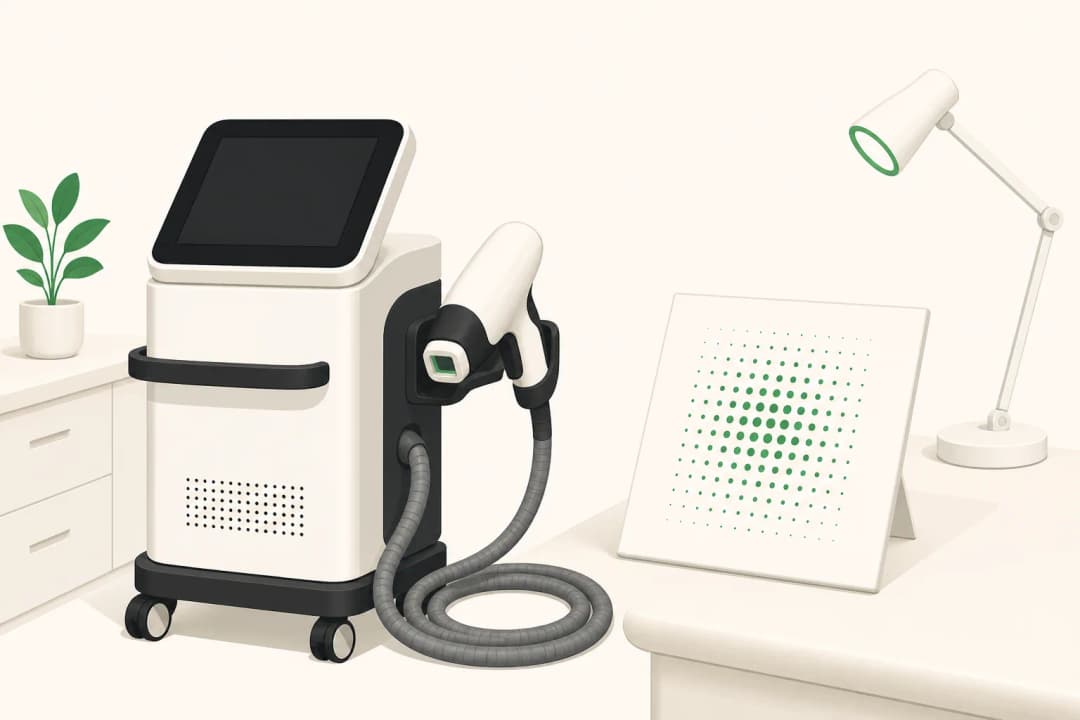
Fraxel is commonly used as a name for fractional laser treatment. Rather than treating every millimetre of the surface in one pass, the device delivers energy in microscopic columns, leaving nearby skin untreated. That pattern can support repair while addressing fine lines, uneven texture, some acne-scar changes, and sun-related skin changes.
Different fractional devices may be ablative or non-ablative, and settings can be adjusted for the body area and concern. Redness, warmth, swelling, sensitivity, dryness, and temporary roughness are possible. A consultation should include your skin tone, recent tanning, active conditions, medicines, and past pigment or scarring responses.
Making the treatment safer
Before a session, disclose cold sores, eczema, acne, infection, recent procedures, light-sensitive medicines, and a tendency to develop dark marks or raised scars. Avoid tanning and use sun protection. Follow the clinic's instructions about retinoids, acids, waxing, and other irritating products.
After treatment, cleanse gently and use the recommended moisturiser or barrier ointment. Protect the area from sunlight, avoid picking or scrubbing, and postpone swimming, heat exposure, and irritating skincare until advised. Texture changes may appear gradually as the skin repairs, so judge progress at the follow-up rather than immediately after treatment.
Signs that need review
Contact the clinic if discomfort or swelling is getting worse, or if you notice blisters, burns, increasing heat, spreading redness, or discharge. Seek urgent assessment for fever, eye pain, vision changes, or facial swelling that affects breathing. Ask for review of pigment changes that persist or continue to spread.
What to discuss before booking
Ask which fractional device is proposed, whether it is ablative or non-ablative, and how the settings match your concern and skin tone. Discuss expected recovery, sun protection, alternatives such as microneedling or CO2 resurfacing, and how the clinician will handle pigment change or delayed healing.
Find care
General Clinics & Polyclinics in Abu Dhabi
That answer is general. If you want it applied to your own case, these are licensed general clinics & polyclinics listed in Abu Dhabi.
27 Ar Ruwwad St - Shakhbout City - MSH4 - Abu Dhabi - United Arab Emirates
Accepts: Daman, Thiqa, Cigna, MetLife +20 more
Al Ruwais, Al Dhafrah
Accepts: Daman, Thiqa, AXA, Cigna +16 more
Al Bahyah - Al Bahyah Old - Abu Dhabi - United Arab Emirates
Accepts: Daman, Thiqa, Cigna, Allianz Care +18 more
Abu Dhabi
Accepts: Daman, Thiqa, AXA, Cigna +27 more
Ordered by verification status and how complete each clinic's public record is, then alphabetically. This is a directory listing, not a ranking — Zavis does not rate or recommend providers.
A factual listing drawn from the DHA, DOH and MOHAP licence registers. It is not a referral, an endorsement, or advice that any of these providers is right for you.
Questions people ask
Is Fraxel a single laser?
Fraxel is a brand-associated term used broadly for fractional laser treatment; the exact device and settings should be confirmed with the clinic.
Can Fraxel treat acne scars?
Fractional laser may soften the appearance of selected acne scars, but suitability depends on scar type, skin condition, and the risk of pigment change.
Related
Related reading
Keep reading
Medical disclaimer. This page is general health information, not medical advice, and it cannot diagnose you. Always consult a licensed healthcare provider about your own symptoms and treatment. In an emergency in the UAE, call 998 for an ambulance.