
FEV1/FVC Ratio and Asthma: What the Result Means
Short answer
The FEV1/FVC ratio compares air blown out quickly with the total air blown out and can help show airflow obstruction associated with asthma.
This answers one question. It is not a diagnosis and does not replace an assessment by a licensed doctor.
At a glance
- Test
- Spirometry measures how much and how quickly you breathe out.
- Interpretation
- The ratio is one part of an asthma assessment, not a diagnosis on its own.
- During symptoms
- Severe breathing difficulty needs urgent care rather than a routine test appointment.
What the ratio tells you
The FEV1/FVC ratio compares air blown out quickly with the total air blown out and can help show airflow obstruction associated with asthma. FEV1 is the amount exhaled during the first part of a forceful breath; FVC is the full amount exhaled after filling the lungs. Spirometry records both values and calculates their relationship.
How it fits an asthma assessment
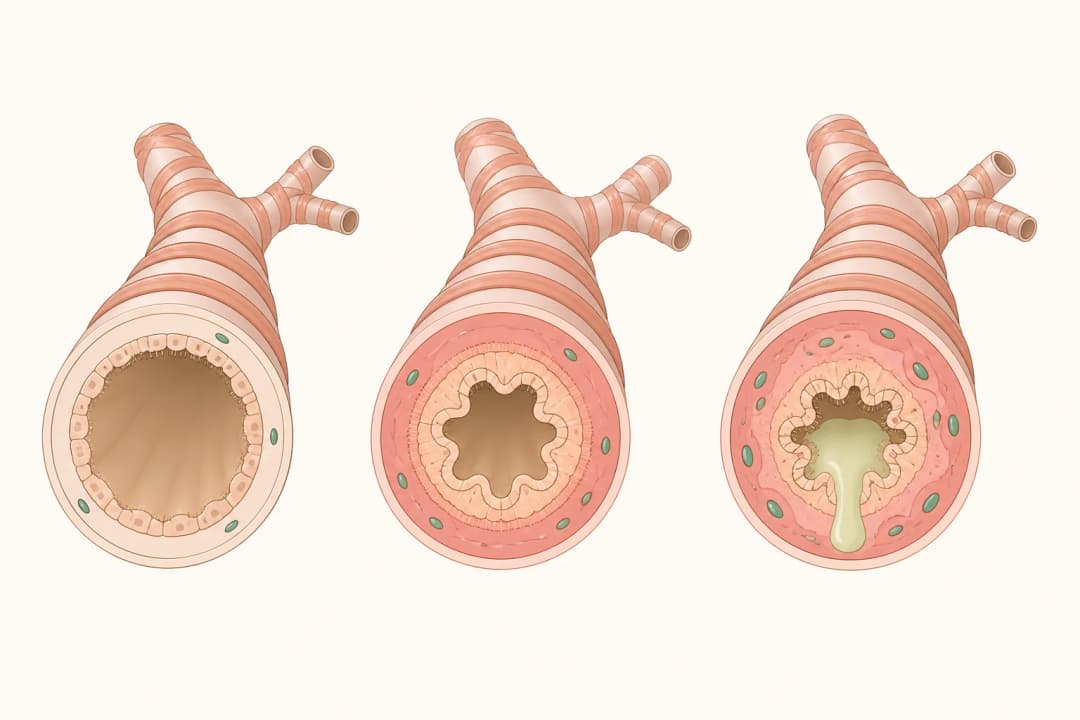
Asthma can narrow the airways, so less air may leave quickly compared with the total amount that can be exhaled. A lower-than-expected ratio may support airflow obstruction, but it does not diagnose asthma by itself. Results are interpreted alongside your age, symptoms, examination, and the quality of the breathing manoeuvre.
Asthma symptoms can vary from day to day. A single spirometry result may therefore be less informative when symptoms are quiet. Your clinician may compare testing before and after a reliever medicine, repeat spirometry, or consider other breathing tests. A normal result does not dismiss ongoing symptoms; it may mean that further assessment is needed.
What to do after the result
Ask which values were measured, whether the test was technically satisfactory, and how the result compares with the expected range for you. Tell the clinician when you notice cough, wheezing, chest tightness, or breathlessness, including possible triggers such as exercise, smoke, pollen, or house dust. Keep using prescribed inhalers exactly as directed, and do not change a dose based only on the ratio.
If asthma is suspected, your clinician may review inhaler technique and create or update an action plan. Symptoms may also overlap with conditions such as allergic rhinitis or chronic cough, so the wider pattern matters.
When to seek care
Seek urgent medical help if breathing becomes severely difficult, you cannot speak in full sentences, your lips or face look blue or grey, you become unusually drowsy or confused, or your reliever is not easing a rapidly worsening attack. Sit upright, follow your asthma action plan if you have one, and use emergency services when advised. Do not wait for a future spirometry appointment during a severe episode.
Arrange a clinical review for recurring night symptoms, increasing reliever use, persistent wheezing, or cough that interferes with sleep or activity.
Questions for your doctor
You could ask: What do my FEV1, FVC, and ratio show together? Was the test effort reliable? Should I repeat spirometry or have testing after a reliever? Could another condition explain my symptoms? Which warning signs mean I should seek urgent help?
Find care
General Clinics & Polyclinics in Abu Dhabi
That answer is general. If you want it applied to your own case, these are licensed general clinics & polyclinics listed in Abu Dhabi.
27 Ar Ruwwad St - Shakhbout City - MSH4 - Abu Dhabi - United Arab Emirates
Accepts: Daman, Thiqa, Cigna, MetLife +20 more
Al Ruwais, Al Dhafrah
Accepts: Daman, Thiqa, AXA, Cigna +16 more
Al Bahyah - Al Bahyah Old - Abu Dhabi - United Arab Emirates
Accepts: Daman, Thiqa, Cigna, Allianz Care +18 more
Abu Dhabi
Accepts: Daman, Thiqa, AXA, Cigna +27 more
Ordered by verification status and how complete each clinic's public record is, then alphabetically. This is a directory listing, not a ranking — Zavis does not rate or recommend providers.
A factual listing drawn from the DHA, DOH and MOHAP licence registers. It is not a referral, an endorsement, or advice that any of these providers is right for you.
Questions people ask
Can the FEV1/FVC ratio confirm asthma?
No. It can support evidence of airflow obstruction, but asthma is assessed using the result together with changing symptoms, examination, and other testing when needed.
What if my ratio is normal but I still have symptoms?
Asthma-related narrowing can vary, and symptoms can have other causes. Arrange a review so your clinician can check the test quality, consider repeat or additional testing, and assess the full symptom pattern.
Should I stop my inhaler before spirometry?
Only if the clinician arranging the test gives you specific instructions. Stopping medicine without guidance can worsen symptoms and make the appointment unsafe.
Related
Related reading
Keep reading
Medical disclaimer. This page is general health information, not medical advice, and it cannot diagnose you. Always consult a licensed healthcare provider about your own symptoms and treatment. In an emergency in the UAE, call 998 for an ambulance.