
What should you know about dairy and asthma?
Short answer
Dairy does not cause asthma for most people, but a milk allergy can trigger breathing symptoms and requires a separate safety plan.
This answers one question. It is not a diagnosis and does not replace an assessment by a licensed doctor.
At a glance
- General rule
- Dairy is not a routine asthma trigger for most people
- Safety distinction
- Breathing symptoms after dairy may reflect an allergic reaction
How dairy and asthma can overlap
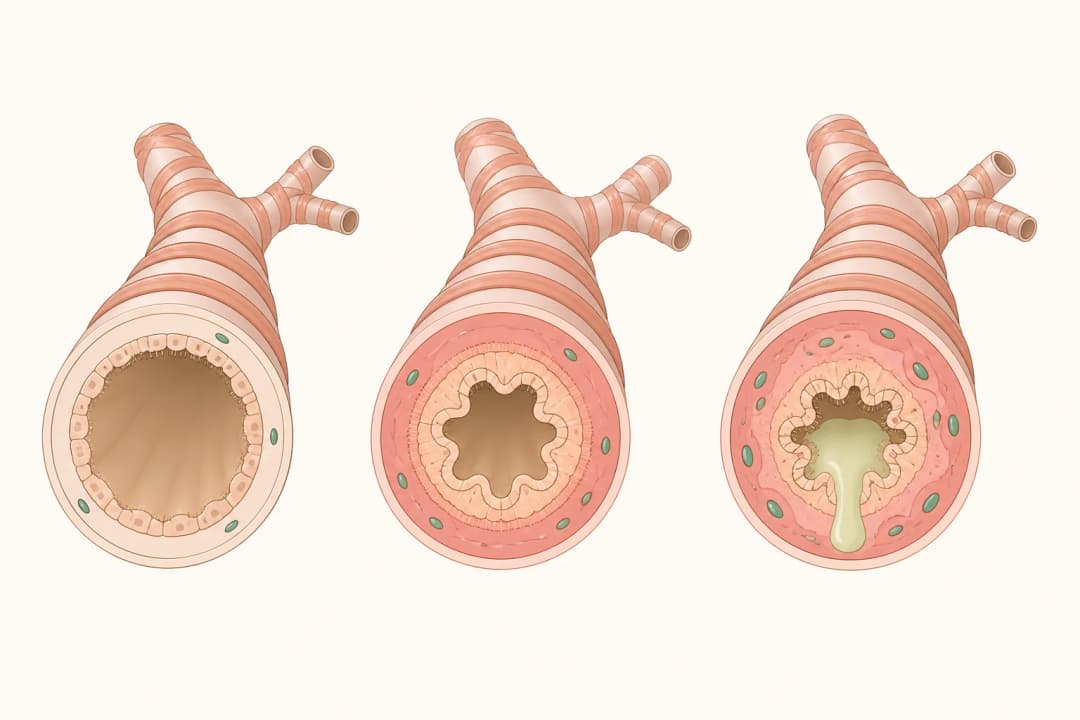
Asthma is an airway condition involving inflammation and narrowing. Dairy foods are not a routine cause of asthma, and avoiding them does not replace an asthma treatment plan. However, someone with a dairy allergy may develop wheezing, cough or chest tightness after exposure; that reaction is an allergy emergency risk rather than ordinary asthma alone.
Some people notice thicker-feeling saliva after milk, but this sensation does not mean the airways are producing more mucus. Other triggers, such as allergic rhinitis, house dust mite allergy, infections, exercise or smoke, may better explain a pattern.
Managing symptoms
Continue your prescribed preventer and reliever medicines, and use an inhaler technique reviewed by a clinician. Record foods, timing, breathing symptoms, activity and environmental exposures. Do not remove dairy solely to control asthma unless a clinician identifies an allergy or consistent trigger; unnecessary restriction can make meals harder to balance. If symptoms are not controlled, request an asthma review rather than increasing medicine yourself.
When to seek care
Get urgent help for severe breathlessness, difficulty speaking, blue or grey lips, exhaustion, confusion or a reliever that is not helping as your action plan expects. After dairy exposure, wheezing with throat swelling, widespread hives, vomiting or faintness may signal anaphylaxis and needs emergency action. A cough or chest tightness that keeps returning also deserves a clinical review.
Questions for your doctor
Ask whether your pattern suggests asthma, dairy allergy or another trigger, how to use your inhaler, whether testing is needed and what your written emergency plan should say.
Find care
General Clinics & Polyclinics in Abu Dhabi
That answer is general. If you want it applied to your own case, these are licensed general clinics & polyclinics listed in Abu Dhabi.
27 Ar Ruwwad St - Shakhbout City - MSH4 - Abu Dhabi - United Arab Emirates
Accepts: Daman, Thiqa, Cigna, MetLife +20 more
Al Ruwais, Al Dhafrah
Accepts: Daman, Thiqa, AXA, Cigna +16 more
Al Bahyah - Al Bahyah Old - Abu Dhabi - United Arab Emirates
Accepts: Daman, Thiqa, Cigna, Allianz Care +18 more
Abu Dhabi
Accepts: Daman, Thiqa, AXA, Cigna +27 more
Ordered by verification status and how complete each clinic's public record is, then alphabetically. This is a directory listing, not a ranking — Zavis does not rate or recommend providers.
A factual listing drawn from the DHA, DOH and MOHAP licence registers. It is not a referral, an endorsement, or advice that any of these providers is right for you.
Questions people ask
Should I avoid milk if I have asthma?
Not automatically. Avoidance is usually considered when a clinician finds an allergy or a reproducible personal trigger.
Can dairy mucus make asthma worse?
A thicker sensation can occur, but it does not show that asthma inflammation has worsened.
Keep reading
Medical disclaimer. This page is general health information, not medical advice, and it cannot diagnose you. Always consult a licensed healthcare provider about your own symptoms and treatment. In an emergency in the UAE, call 998 for an ambulance.