
Asthma symptoms: patterns, triggers and warning signs
Short answer
Asthma commonly presents with wheezing, cough, breathlessness or chest tightness that can vary over time and with triggers.
This answers one question. It is not a diagnosis and does not replace an assessment by a licensed doctor.
At a glance
- Typical pattern
- Symptoms vary and may share specific triggers
- Possible night sign
- Cough, wheeze or breathlessness that interrupts sleep
- Diagnosis
- Symptom history is considered with examination and breathing tests
The short answer
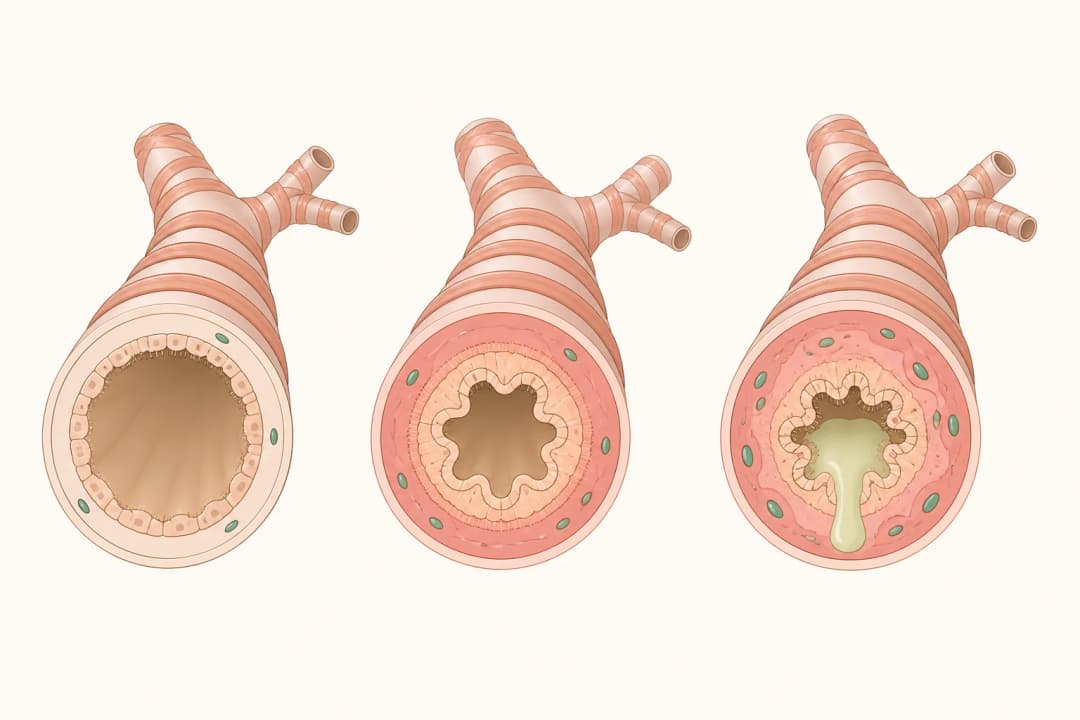
Symptoms may appear at night, with exercise, during a respiratory infection, or after exposure to smoke, dust, cold air, pollen or animals. Not everyone wheezes, and an examination can sound normal between episodes.
Patterns that help identify the problem
Clinicians look for symptoms that come and go, share recognisable triggers, disturb sleep, limit activity or improve after asthma medicine. Cough may be dry, while wheezing is often a musical sound heard mainly when breathing out.
Similar complaints can occur with infections, nasal allergy, reflux and other lung or heart problems. Symptoms indicate that assessment is needed; they do not confirm asthma on their own.
What to record and do
Note when each symptom starts, possible exposures, night waking, exercise limitation and how often prescribed reliever medicine is needed. If you have a peak-flow plan, record readings alongside symptoms because either may change first.
Follow your written asthma action plan and check inhaler technique with a clinician or pharmacist. Arrange a review if symptoms are recurring, waking you, restricting usual activity or requiring more reliever medicine than your plan allows.
Warning signs that need urgent help
Call emergency services if breathlessness is severe, speech is difficult, lips look blue or grey, you feel confused or faint, or prescribed reliever treatment is not helping. Quiet breathing in someone who is exhausted can be more concerning than loud wheezing.
Sit upright, follow the emergency steps in your action plan and do not remain alone while urgent help is being arranged.
Useful questions at a review
Ask whether your pattern fits asthma, which breathing tests are appropriate, how to distinguish poor control from an emergency, and whether nasal allergy or workplace exposures may be contributing. Request a demonstration of your inhaler technique and a written action plan.
Find care
General Clinics & Polyclinics in Abu Dhabi
That answer is general. If you want it applied to your own case, these are licensed general clinics & polyclinics listed in Abu Dhabi.
27 Ar Ruwwad St - Shakhbout City - MSH4 - Abu Dhabi - United Arab Emirates
Accepts: Daman, Thiqa, Cigna, MetLife +20 more
Al Ruwais, Al Dhafrah
Accepts: Daman, Thiqa, AXA, Cigna +16 more
Al Bahyah - Al Bahyah Old - Abu Dhabi - United Arab Emirates
Accepts: Daman, Thiqa, Cigna, Allianz Care +18 more
Abu Dhabi
Accepts: Daman, Thiqa, AXA, Cigna +27 more
Ordered by verification status and how complete each clinic's public record is, then alphabetically. This is a directory listing, not a ranking — Zavis does not rate or recommend providers.
A factual listing drawn from the DHA, DOH and MOHAP licence registers. It is not a referral, an endorsement, or advice that any of these providers is right for you.
Questions people ask
Can asthma cause cough without wheezing?
Yes. Asthma can present with cough even when wheezing is absent, but other causes of cough are possible and should be considered during an assessment.
Why are my symptoms worse at night?
Airway narrowing can vary through the day, and bedroom exposures such as dust mites may contribute. Night waking is also a reason to review whether asthma is adequately controlled.
Related
Related reading
Keep reading
Medical disclaimer. This page is general health information, not medical advice, and it cannot diagnose you. Always consult a licensed healthcare provider about your own symptoms and treatment. In an emergency in the UAE, call 998 for an ambulance.