
Airway hyperresponsiveness in asthma
Short answer
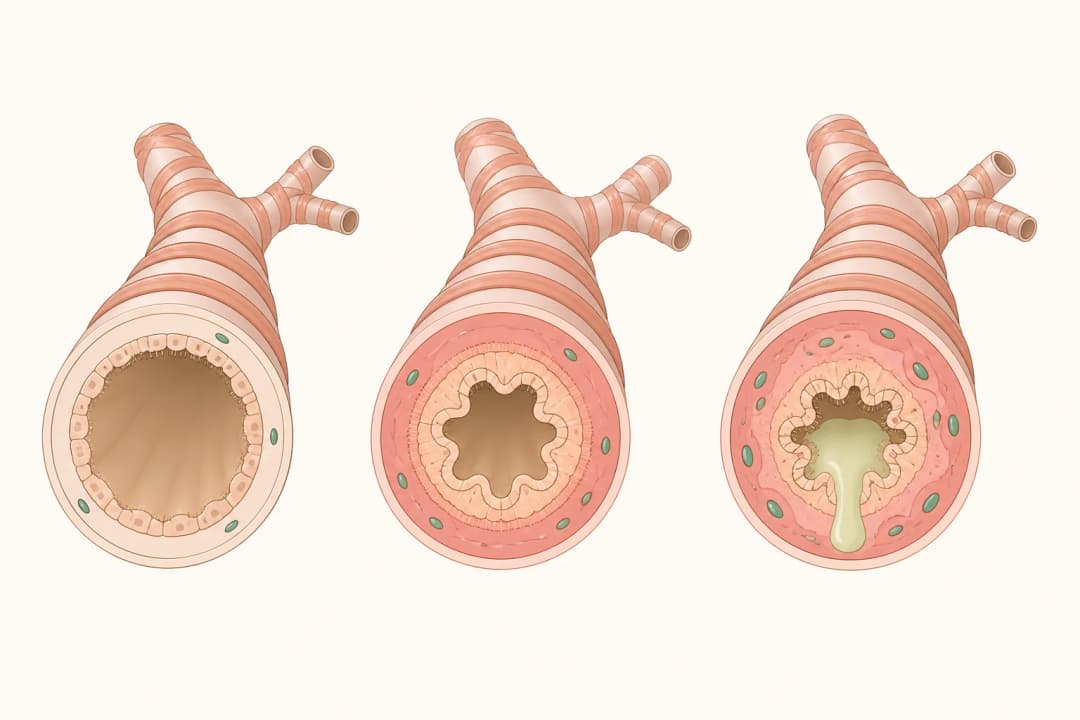
In asthma, AHR means airway hyperresponsiveness: sensitive airways narrow too readily after triggers, contributing to variable cough, wheeze, tightness, and breathlessness.
This answers one question. It is not a diagnosis and does not replace an assessment by a licensed doctor.
At a glance
- AHR
- Airway hyperresponsiveness
- Typical pattern
- Symptoms vary with time, triggers and treatment
- Daily control
- Correct inhaler use and a written action plan
The short answer
Airway inflammation and tightening of muscle around the breathing tubes both contribute. Symptoms can change over time, and a normal examination between episodes does not exclude asthma.
How sensitive airways behave
Exercise, smoke, dust, strong scents, cold air, respiratory infections and allergens can provoke narrowing in susceptible airways. Not every person has the same triggers, and not every cough or wheeze is caused by asthma.
Asthma commonly presents with wheezing, cough, chest tightness or breathlessness that varies by time, activity or exposure. Clinicians combine the history with breathing tests; sometimes they assess how airflow changes after a reliever or controlled challenge.
Controlling airway sensitivity
Use inhalers exactly as prescribed and have your technique checked, because poor positioning or timing can leave medicine in the mouth instead of reaching the lungs. A preventer reduces airway inflammation; a reliever is used according to your personal plan.
Record recurring symptoms, night waking, exercise limitation and reliever use. Reduce avoidable smoke or vapour exposure and address linked nasal allergy when advised. Keep a written action plan that explains daily treatment, signs of worsening and where to seek help.
Signs of a severe asthma attack
Call emergency services if breathlessness makes speaking or walking difficult, the lips look blue or grey, the person becomes drowsy or confused, the chest pulls in with breathing, or the prescribed reliever is not helping as directed.
Follow the emergency steps in the asthma action plan while help is coming. Sit upright and avoid lying flat. A quiet chest in someone struggling to breathe can mean very little air is moving and requires immediate emergency care.
Reviewing your asthma control
Ask for a demonstration of inhaler and spacer technique, clarification of which inhaler prevents symptoms, and a written response plan for deterioration. Discuss whether allergy, reflux, workplace exposure or chronic nasal symptoms may be contributing, and when lung-function testing should be repeated.
Find care
General Clinics & Polyclinics in Abu Dhabi
That answer is general. If you want it applied to your own case, these are licensed general clinics & polyclinics listed in Abu Dhabi.
27 Ar Ruwwad St - Shakhbout City - MSH4 - Abu Dhabi - United Arab Emirates
Accepts: Daman, Thiqa, Cigna, MetLife +20 more
Al Ruwais, Al Dhafrah
Accepts: Daman, Thiqa, AXA, Cigna +16 more
Al Bahyah - Al Bahyah Old - Abu Dhabi - United Arab Emirates
Accepts: Daman, Thiqa, Cigna, Allianz Care +18 more
Abu Dhabi
Accepts: Daman, Thiqa, AXA, Cigna +27 more
Ordered by verification status and how complete each clinic's public record is, then alphabetically. This is a directory listing, not a ranking — Zavis does not rate or recommend providers.
A factual listing drawn from the DHA, DOH and MOHAP licence registers. It is not a referral, an endorsement, or advice that any of these providers is right for you.
Questions people ask
Does AHR confirm asthma by itself?
No. Airway responsiveness is interpreted alongside the symptom pattern and breathing tests because sensitive airways can occur in other settings.
Why do asthma symptoms worsen at night?
Natural changes in airway tone, allergen exposure, nasal symptoms and reflux can contribute. Repeated night waking is a reason to review asthma control.
Can I exercise with asthma?
Many people can remain active with suitable control. Ask how to warm up, use prescribed medicine around activity and respond if symptoms begin.
Keep reading
Medical disclaimer. This page is general health information, not medical advice, and it cannot diagnose you. Always consult a licensed healthcare provider about your own symptoms and treatment. In an emergency in the UAE, call 998 for an ambulance.