

COVID outbreak math in Dubai: 5 numbers that tell emergency teams when demand changes
A practical guide to what happens when COVID cases rise in Dubai. It covers reporting, triage, testing costs and when patients need emergency care.
How Zavis verifies this coverage
Editorial standards, source rules, methodology, and review provenance are public.
For a Dubai clinic or hospital, a COVID outbreak becomes operational when 5 numbers move together: confirmed results, staff absence, triage volume, oxygen-related red flags and test turnaround time.
The highest-stakes readers are COOs and medical directors. Their first task is to keep infectious patients moving through the facility without delaying emergency care. CFOs need the same dashboard because testing, sick leave and uncompensated emergency visits hit cost lines before a public surge appears in national statistics.
What happens after one positive result
A confirmed COVID-19 case is still a communicable disease event in the UAE. Federal Law No. 14 of 2014 governs communicable disease control, and Ministerial Resolution No. 242 of 2020 added COVID-19 to the diseases requiring immediate reporting. Dubai facilities notify the Dubai Health Authority (DHA). Abu Dhabi and Al Ain facilities notify the Department of Health Abu Dhabi (DOH). Sharjah, Ajman, Ras Al Khaimah, Fujairah and Umm Al Quwain fall under the Ministry of Health and Prevention (MOHAP). The UAE Government portal describes emirate-level notification routes for private facilities in its communicable diseases guidance.
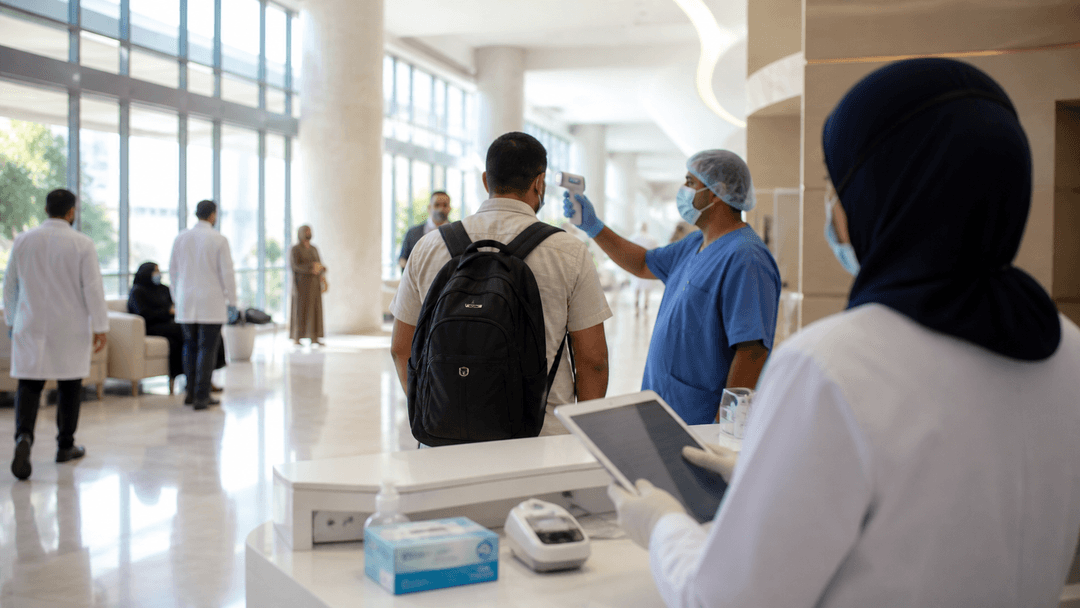
The practical sequence is narrow. The result is recorded, the case is notified through the relevant health authority channel, infection-control staff check exposure inside the facility, and operations decide whether a patient can stay in an outpatient stream or needs emergency assessment. A single result creates paperwork. Two or more linked cases inside a ward, clinic bay or staff team create a roster problem.
The numbers to watch before the waiting room changes
International COVID activity is useful only as an early warning for Dubai because Dubai has high travel flow and mixed indoor exposure during summer. The US Centers for Disease Control and Prevention said on 21 August 2026 that acute respiratory illness visits were very low, while national and regional COVID-19 activity was increasing. That pattern matters for UAE operators because demand can first appear as calls, antigen testing requests and staff sick notes, then as emergency attendances among high-risk patients.
- Same day: isolate symptomatic patients in the first clinical contact point and mask staff in close-contact assessment areas.
- 24 to 48 hours: many Dubai private providers publish PCR result windows in this range for routine testing; confirm the exact turnaround with the laboratory before scheduling travel or pre-procedure tests.
- AED 65 to AED 150: public and private published PCR prices have ranged from DOH's fixed Abu Dhabi PCR price of AED 65 to current Dubai private provider prices of about AED 150; check the provider tariff before booking.
- 998: use the UAE ambulance number for severe breathing difficulty, collapse, confusion or chest pain.
The symptom list is broad enough to confuse triage. The CDC clinical list includes fever, chills, cough, shortness of breath, fatigue, muscle aches, headache, loss of taste or smell, sore throat, congestion, vomiting and diarrhoea. The emergency signs are more useful for front-desk routing: trouble breathing, persistent chest pain or pressure, new confusion, inability to wake or pale, grey or blue lips or nail beds, according to the CDC's COVID-19 symptoms guidance.
What Dubai operators should implement
COOs should run a small daily outbreak sheet during any rise in respiratory complaints. It should show confirmed COVID results, staff absence by department, emergency respiratory triage count, PCR turnaround by lab and stock days for masks and rapid tests. A 20-bed ward with three nurses absent on the same shift has a different risk profile from a clinic that records 10 mild positives with no staff exposure.
CFOs should separate three charges in billing reviews: consultation, diagnostic test and emergency facility fee. The UAE Open Healthcare Directory lists walk-in emergency and urgent care in Dubai and cites a typical general consultation range of AED 150 to AED 300, while provider-specific PCR prices may sit outside the consultation charge. Insurance desks should confirm network status before non-emergency visits because plan rules and co-pays differ by employer policy.
Medical directors should define the escalation rule in writing. Mild respiratory symptoms can usually start in primary care or urgent care. Red-flag symptoms go to an emergency department. In Dubai, check DHA-licensed facilities first. In Abu Dhabi and Al Ain, check DOH-licensed facilities. In the northern emirates, check MOHAP-regulated facilities. For licensed emergency care providers by emirate, insurance and operating hours, use the UAE Open Healthcare Directory.
Zavis Intelligence
Healthcare Industry Desk
Contributing to UAE healthcare industry coverage
Related coverage



FAQ
What is happening in UAE healthcare industry?
A practical guide to what happens when COVID cases rise in Dubai. It covers reporting, triage, testing costs and when patients need emergency care.