

DHA outbreak response: the 7-day numbers Dubai emergency teams must track
A practical guide to what happens after a suspected plague exposure in Dubai. The focus is triage, notification, isolation and contact tracing.
How Zavis verifies this coverage
Editorial standards, source rules, methodology, and review provenance are public.
A suspected pneumonic plague exposure in Dubai is first an emergency operations problem: identify the patient, isolate respiratory risk, notify Dubai Health Authority (DHA), list contacts, and track each exposed person through the incubation window of one to seven days.
The recent Irkutsk case, where Russian authorities placed nearly 200 contacts under observation after a laboratory worker died, is useful for UAE operators as a scale model. One patient can create a contact list larger than a ward roster, and each contact needs a name, location, exposure type, symptom status, and follow-up owner.
The first 24 hours
For a Dubai hospital, the first count is the number of people who were within close respiratory range before isolation. Pneumonic plague spreads through respiratory particles, according to the World Health Organization. WHO says infected people usually develop symptoms after one to seven days, and close contacts should receive seven days of chemoprophylaxis where indicated.
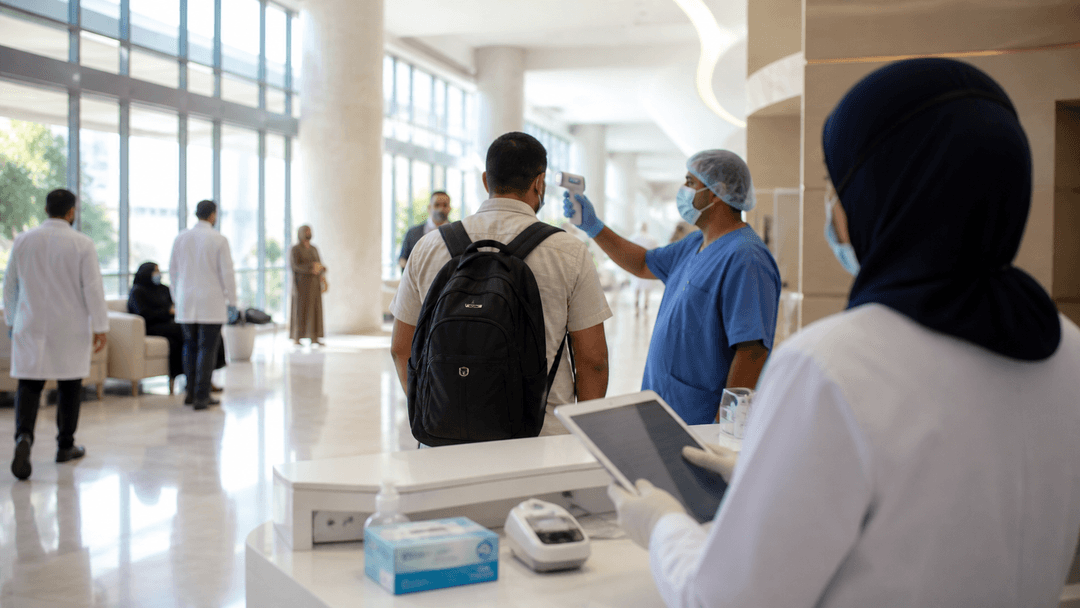
The operational trigger is suspicion, before confirmation. A patient with fever, severe pneumonia, haemoptysis or relevant travel or laboratory exposure should be moved out of the general waiting area. Staff should apply standard and droplet precautions. The medical director then needs an infectious-disease review, specimen handling instructions, and a written decision on post-exposure prophylaxis for staff and family contacts.
DHA is the relevant regulator in Dubai. Abu Dhabi and Al Ain facilities report through the Department of Health Abu Dhabi (DOH). Facilities in Sharjah, Ajman, Umm Al Quwain, Ras Al Khaimah and Fujairah fall under the Ministry of Health and Prevention (MOHAP) framework.
The numbers to run
The board-level question is simple: can the facility account for every exposed person by hour, place and risk category? The answer should be visible in an incident log.
- 0 to 1 hour: isolate the suspected case and record the exact time of isolation.
- 1 to 4 hours: generate the first contact list from triage, nursing, physician, imaging, laboratory, transport and family exposure.
- 7 days: monitor contacts through the WHO chemoprophylaxis and observation window when pneumonic plague exposure is credible.
- 48 hours: confirm whether any exposed healthcare worker develops fever, cough or pneumonia symptoms and update the regulator.
COOs should test whether access-control data, CCTV timestamps, electronic medical record audit trails and duty rosters can produce that list within the same shift. CIOs should check whether the emergency department system captures triage time, isolation time, bed movement and staff assignment without manual spreadsheet work. In Dubai, DHA emergency department data standards require licensed facilities with emergency or urgent care services to use standardised nomenclatures and code sets for emergency cases.
What costs are knowable
The direct patient bill is less predictable than the operational workload. Emergency consultation, imaging, isolation room charges, molecular testing and inpatient care depend on the facility, tariff schedule and insurance network. Operators should avoid quoting a single plague-response price to patients or corporate clients.
The actionable check is narrower. Finance teams should confirm three items with the patient's payer: emergency co-pay, in-network emergency department status, and whether isolation or infectious-disease testing requires retrospective clinical justification. Large UAE payers such as Daman, Thiqa and Sukoon publish network tools or policy documents, but individual coverage depends on the member plan.
For uninsured patients, the facility should have a written escalation route for emergency stabilisation, public-health reporting and billing consent. Federal communicable disease rules apply across the UAE, and the official UAE government portal states that MOHAP and local health authorities announce health information and publish communicable disease guidelines after approval by National Emergency Crisis and Disaster Management Authority (NCEMA).
What to do now
Emergency departments should rehearse a tabletop exercise with one suspected pneumonic plague patient and 200 contacts. The exercise should time how long it takes to isolate the patient, notify the regulator, identify exposed staff, contact family members, and document prophylaxis decisions.
The same drill applies to more likely imported infections. The disease name changes. The workflow does not. Dubai operators should keep DHA notification contacts current, Abu Dhabi operators should check DOH reporting access, and northern emirates operators should verify MOHAP and Emirates Health Services pathways.
Patients and corporate health teams looking for licensed emergency care should use the DHA Dubai Medical Registry, the DOH Abu Dhabi public facility map, and MOHAP open data, which together serve as the UAE Open Healthcare Directory for licensed emergency care providers.
Zavis Intelligence
Healthcare Industry Desk
Contributing to UAE healthcare industry coverage
Related coverage



FAQ
What is happening in UAE healthcare industry?
A practical guide to what happens after a suspected plague exposure in Dubai. The focus is triage, notification, isolation and contact tracing.