
Milia: Symptoms, Causes, Diagnosis and Treatment
At a glance
- Also called
- Milk spots
- Typical feel
- Firm and smooth
- Common sites
- Eyelids, cheeks, nose, and forehead
What are milia?
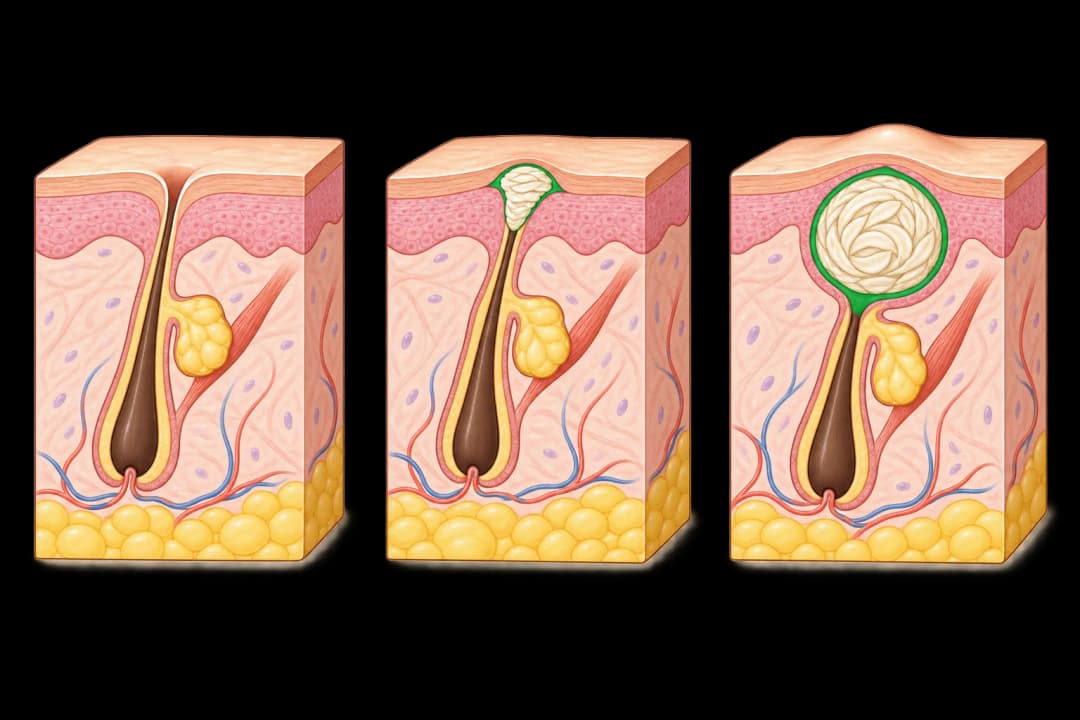
Milia are small, firm, pearly cysts formed by trapped keratin beneath the skin surface.
They often appear on the eyelids, under-eye area, cheeks, nose, or forehead. Milia are not the same as acne, although both can look like pale raised spots. They are usually harmless and are not contagious.
Milia symptoms
A typical milium is a smooth, dome-shaped bump that feels firm rather than soft. It is often white or skin-coloured and usually does not itch or hurt. Several bumps may occur together, especially around the eyes.
Milia can resemble whiteheads, but they do not contain the same type of material as an acne spot and may not open when squeezed. Compare related concerns such as skin bumps and whiteheads if the appearance is uncertain.
What causes milia?
Milia develop when keratin, a structural protein in the outer skin, becomes enclosed beneath the surface instead of shedding normally. The trapped material forms a tiny cyst.
Some milia arise without an obvious trigger. Others can follow skin irritation, a rash, an injury, or procedures that affect the surface. Heavy products or repeated rubbing may also contribute for some people, but a visible bump does not identify one definite cause.
How milia change over time
Milia may remain the same size for a period and can sometimes clear as the skin naturally sheds. They do not usually spread through the body. Persistent or clustered bumps can be removed when they are bothersome or when the diagnosis needs confirmation.
Factors linked with milia
Milia can affect people of any age. They may be more noticeable after skin inflammation, injury, blistering, or a resurfacing procedure. Delicate eyelid skin is a frequent location, and some people develop recurrent milia without a clear reason.
Tell a clinician about new skincare products, recent procedures, rashes, or trauma near the bumps. This context helps separate milia from conditions that need different care.
How milia are diagnosed
A dermatologist can often recognise milia by examining their colour, firmness, shape, and location. A handheld magnifier may help. Testing is not usually needed when the appearance is typical, but an unusual, inflamed, or changing lesion may need closer assessment.
Milia treatment options
Milia that are small, stable, and not troublesome may be observed. Do not pierce or squeeze them at home, particularly near the eye, because this can injure the skin and introduce infection.
A clinician may release an individual cyst with a sterile opening and remove its contents. Curettage and cautery may be considered for selected lesions. Topical retinoids can help alter skin-cell shedding in some situations, but they are not suitable for everyone and should be used only with professional guidance.
Living with milia
Use gentle cleansing and avoid abrasive scrubs around the eyes. Choose skincare that does not sting, and stop rubbing or picking at the bumps. If their appearance affects your confidence, a dermatologist can discuss removal while considering the thin skin in the area.
Possible problems
Milia themselves are usually harmless. The main avoidable problem is skin damage from squeezing, needles, or harsh products. Seek assessment if a bump becomes painful, increasingly red, drains fluid, bleeds, or changes quickly, because those features are not typical of an uncomplicated milium.
Can milia be prevented?
There is no reliable way to prevent every milium. Protect irritated skin, follow aftercare instructions after procedures, avoid repeated rubbing, and keep the routine around the eyes simple. Do not use strong exfoliants or retinoids there without advice.
When to see a specialist
A dermatologist is useful when bumps are persistent, numerous, close to the eyes, or difficult to distinguish from acne or another lesion. Bring a list of recent products and procedures, and mention any redness, tenderness, discharge, or rapid change.
Questions people ask
Are milia acne?
No. Milia are keratin-filled cysts beneath the surface, while acne involves blocked pores and inflammation.
Can I remove milia at home?
Avoid squeezing or piercing them. A clinician can remove a suitable lesion with sterile technique, especially near the eyes.
Related
Related reading
Keep reading
Find care
General Clinics & Polyclinics in Abu Dhabi
Where milia: symptoms, causes, diagnosis and treatment is assessed depends on what is causing it. These are licensed general clinics & polyclinics listed in Abu Dhabi.
27 Ar Ruwwad St - Shakhbout City - MSH4 - Abu Dhabi - United Arab Emirates
Accepts: Daman, Thiqa, Cigna, MetLife +20 more
Al Ruwais, Al Dhafrah
Accepts: Daman, Thiqa, AXA, Cigna +16 more
Al Bahyah - Al Bahyah Old - Abu Dhabi - United Arab Emirates
Accepts: Daman, Thiqa, Cigna, Allianz Care +18 more
Abu Dhabi
Accepts: Daman, Thiqa, AXA, Cigna +27 more
Ordered by verification status and how complete each clinic's public record is, then alphabetically. This is a directory listing, not a ranking — Zavis does not rate or recommend providers.
A factual listing drawn from the DHA, DOH and MOHAP licence registers. It is not a referral, an endorsement, or advice that any of these providers is right for you.
Medical disclaimer. This page is general health information, not medical advice, and it cannot diagnose you. Always consult a licensed healthcare provider about your own symptoms and treatment. In an emergency in the UAE, call 998 for an ambulance.