
What causes ventilator-associated pneumonia?
Short answer
Ventilator-associated pneumonia is caused by germs entering the lower airways during mechanical ventilation, with testing helping guide treatment.
This answers one question. It is not a diagnosis and does not replace an assessment by a licensed doctor.
At a glance
- Main route
- Secretions or stomach contents can enter the lower airways around the tube
- Possible germs
- Bacteria are common suspects, while other infections can resemble pneumonia
- Key tests
- Airway samples, blood tests, examination and chest imaging
How infection reaches the lungs
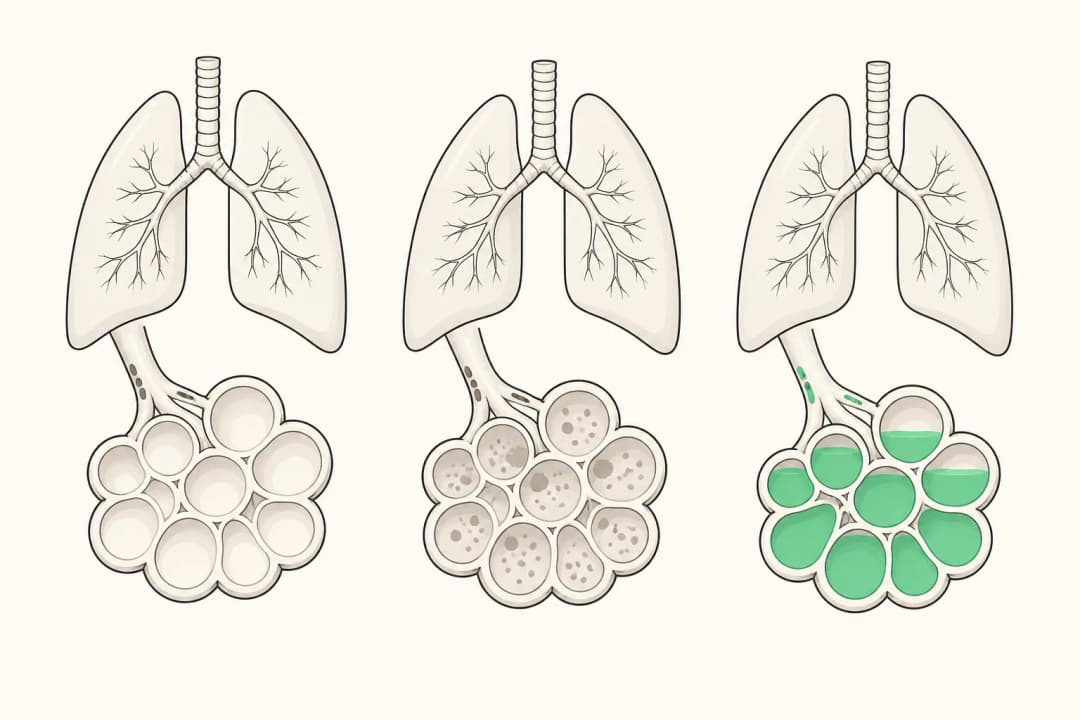
A ventilator breathing tube bypasses the nose and mouth, which normally filter particles and help clear secretions. Saliva or stomach contents can collect near the tube and be breathed into the lungs. Germs already living in the mouth or throat, or germs acquired in hospital, can then multiply in lung tissue. The original illness, reduced consciousness and weak cough can make this process more likely.
The cause is not always known immediately. Fever, chills, a change in phlegm, cough, abnormal lung sounds or increased oxygen needs can point toward infection, but fluid overload, a collapsed area of lung and viral illness can look similar. Airway samples, blood tests and imaging help the team distinguish these possibilities.
How clinicians respond
The care team may obtain a lower-airway sample before or soon after starting antibiotics, depending on the person’s condition. Initial treatment covers likely bacteria, then results and clinical response help narrow the choice. Oxygen, ventilator pressure, suctioning, positioning and fluids are adjusted to support breathing and circulation.
Prevention focuses on hand hygiene, mouth care, keeping the upper body positioned safely, reducing unnecessary sedation when appropriate, and checking each day whether the tube and ventilator are still needed. Families should report recent infections, antibiotic use and medicine allergies.
When it is an emergency
Because this condition occurs in hospital, alert the bedside team immediately when fever, chills, new phlegm, worsening cough, falling oxygen readings or increased breathing effort appears. Severe breathlessness, blue or grey lips, confusion, fainting or rapidly worsening weakness require emergency action and may indicate sepsis or another critical complication.
Questions about the cause
Which germ is suspected, and has a respiratory sample been sent? Could aspiration, a virus or another lung problem explain the findings? How will test results change the antibiotics? What steps are being used to reduce further aspiration and infection?
Find care
General Clinics & Polyclinics in Abu Dhabi
That answer is general. If you want it applied to your own case, these are licensed general clinics & polyclinics listed in Abu Dhabi.
27 Ar Ruwwad St - Shakhbout City - MSH4 - Abu Dhabi - United Arab Emirates
Accepts: Daman, Thiqa, Cigna, MetLife +20 more
Al Ruwais, Al Dhafrah
Accepts: Daman, Thiqa, AXA, Cigna +16 more
Al Bahyah - Al Bahyah Old - Abu Dhabi - United Arab Emirates
Accepts: Daman, Thiqa, Cigna, Allianz Care +18 more
Abu Dhabi
Accepts: Daman, Thiqa, AXA, Cigna +27 more
Ordered by verification status and how complete each clinic's public record is, then alphabetically. This is a directory listing, not a ranking — Zavis does not rate or recommend providers.
A factual listing drawn from the DHA, DOH and MOHAP licence registers. It is not a referral, an endorsement, or advice that any of these providers is right for you.
Questions people ask
Does ventilator-associated pneumonia always come from a hospital germ?
No. Germs from the person’s own mouth or throat can also reach the lungs; testing helps identify the likely cause.
Can aspiration contribute to this pneumonia?
Yes. Saliva or stomach contents entering the lower airways can carry germs and irritate lung tissue.
Related
Related reading
Medical disclaimer. This page is general health information, not medical advice, and it cannot diagnose you. Always consult a licensed healthcare provider about your own symptoms and treatment. In an emergency in the UAE, call 998 for an ambulance.