
Ventilator-acquired pneumonia: what to know
Short answer
Ventilator-acquired pneumonia is a lung infection that develops during mechanical ventilation and needs prompt hospital assessment and treatment.
This answers one question. It is not a diagnosis and does not replace an assessment by a licensed doctor.
At a glance
- Setting
- Occurs during mechanical ventilation, usually in intensive care
- Possible clues
- Changing phlegm, fever, chills, cough or increasing oxygen needs
- Treatment focus
- Respiratory support plus antibiotics when bacterial infection is suspected
What happens
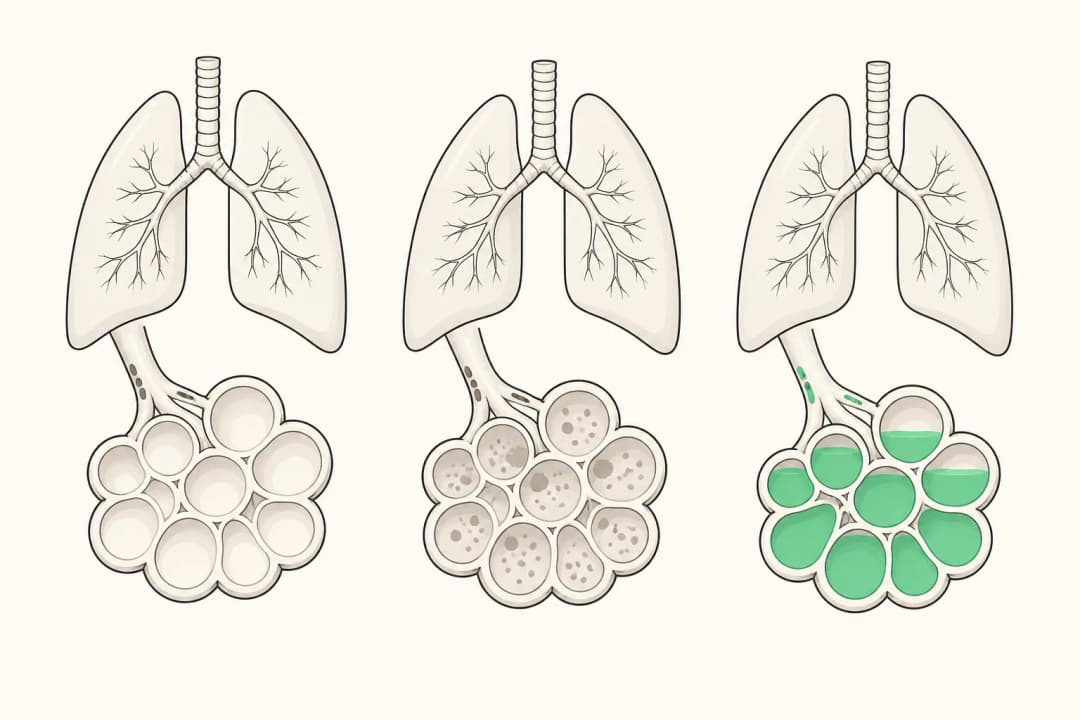
A breathing tube can reduce the normal protection provided by coughing and swallowing. Germs from the mouth or stomach can enter the lower airways, where mucus may collect around the tube. Infection can cause inflammation and fluid in the air sacs, making oxygen exchange harder.
Possible clues include a new or changing cough, thicker phlegm, fever, chills, faster breathing or increasing oxygen needs. Sedation, the original illness and the ventilator itself can make symptoms less obvious, so the intensive-care team also watches examination findings, oxygen readings and chest imaging. Pneumonia is not diagnosed from one symptom alone.
How it is managed
The hospital team may collect respiratory samples and blood tests, examine the lungs and review imaging. Antibiotics are selected according to the suspected germs and adjusted when results are available. Ventilator settings, oxygen, fluids, suctioning and positioning are tailored to the person’s breathing and circulation.
Families can help by sharing the person’s medicines, allergies and recent infections with the team. Mouth care, hand hygiene, safe positioning and reducing ventilator support when clinically appropriate are part of prevention and recovery. Do not give food, drink or medicines through the mouth unless the treating team confirms it is safe.
When urgent action is needed
A person on a ventilator is already in hospital, so tell the bedside team immediately about new fever, chills, a change in phlegm, worsening breathing, unusual sleepiness or a drop in oxygen readings. Severe breathlessness, blue or grey lips, confusion, very low blood pressure or rapidly worsening weakness may indicate a life-threatening infection such as sepsis and require emergency treatment.
Questions for the care team
What findings suggest pneumonia in this patient? Have respiratory samples been taken, and when will results guide antibiotics? How is oxygenation changing? What is being done to protect the airway and reduce further infection?
Find care
General Clinics & Polyclinics in Abu Dhabi
That answer is general. If you want it applied to your own case, these are licensed general clinics & polyclinics listed in Abu Dhabi.
27 Ar Ruwwad St - Shakhbout City - MSH4 - Abu Dhabi - United Arab Emirates
Accepts: Daman, Thiqa, Cigna, MetLife +20 more
Al Ruwais, Al Dhafrah
Accepts: Daman, Thiqa, AXA, Cigna +16 more
Al Bahyah - Al Bahyah Old - Abu Dhabi - United Arab Emirates
Accepts: Daman, Thiqa, Cigna, Allianz Care +18 more
Abu Dhabi
Accepts: Daman, Thiqa, AXA, Cigna +27 more
Ordered by verification status and how complete each clinic's public record is, then alphabetically. This is a directory listing, not a ranking — Zavis does not rate or recommend providers.
A factual listing drawn from the DHA, DOH and MOHAP licence registers. It is not a referral, an endorsement, or advice that any of these providers is right for you.
Questions people ask
Can a ventilator cause pneumonia?
Mechanical ventilation can increase the opportunity for germs to reach the lower airways, although the person’s illness and immune state also affect risk.
Is ventilator-acquired pneumonia contagious?
The pneumonia itself is not automatically contagious; spread depends on the germ, so hospital infection-control precautions are followed.
Related
Related reading
Medical disclaimer. This page is general health information, not medical advice, and it cannot diagnose you. Always consult a licensed healthcare provider about your own symptoms and treatment. In an emergency in the UAE, call 998 for an ambulance.