
What should you know about valleylab force fx electrosurgical unit?
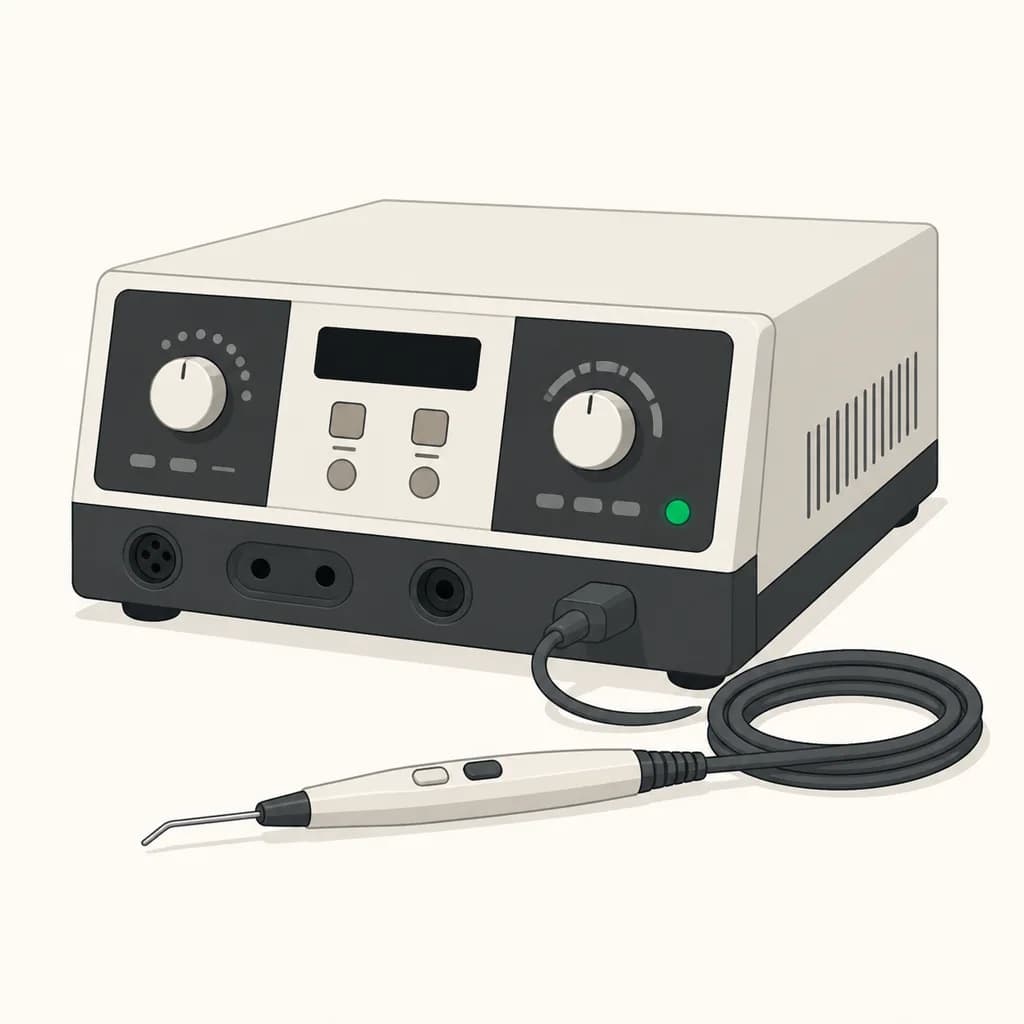
Short answer
A Valleylab Force FX electrosurgical unit is a clinical generator that delivers controlled electrical energy for selected cutting and coagulation tasks, while the treating professional manages settings and tissue safety.
This answers one question. It is not a diagnosis and does not replace an assessment by a licensed doctor.
At a glance
- Device role
- Generates controlled energy for an active electrode
- Possible procedure link
- Electrosurgery or curettage and cautery
- Safety discussion
- Mention implanted devices, medicines, and healing history
How it fits into care
The generator sends energy through an active electrode. Its chosen mode affects whether the clinician cuts tissue, uses heat to coagulate small vessels, or treats a superficial target. The model name does not by itself tell you which procedure is planned or whether the device is suitable for a particular lesion.
A dermatologist may use an electrosurgical unit as part of electrosurgery or curettage and cautery. The clinician first considers the diagnosis, location, depth, skin type, anaesthetic needs, and nearby structures. A specimen may be needed when the diagnosis is uncertain.
Before and after the procedure
Give the treatment team a complete list of medicines and disclose a pacemaker, defibrillator, neurostimulator, metal near the site, bleeding tendency, pregnancy, allergies, or previous slow wound healing. These details help the team plan precautions and decide whether another approach is more appropriate.
Afterward, follow the dressing plan exactly. Keep the site clean, avoid picking a crust, and limit friction until the surface has healed. Temporary soreness, redness, swelling, or a small amount of drainage may occur, but the appearance should gradually settle rather than worsen.
When to seek care
Contact the clinic if bleeding continues despite pressure, pain becomes stronger, redness spreads, swelling increases, pus or fever appears, or the wound separates. Seek urgent help for heavy bleeding, severe weakness, breathing difficulty, or swelling of the lips, tongue, or throat.
Questions for your doctor
What procedure will this unit support, and what tissue will be treated? Which mode is planned? Could curettage and cautery or another method provide a better fit? What precautions apply to my medicines or implanted device? How long should I expect the wound to need care?
Find care
General Clinics & Polyclinics in Abu Dhabi
That answer is general. If you want it applied to your own case, these are licensed general clinics & polyclinics listed in Abu Dhabi.
27 Ar Ruwwad St - Shakhbout City - MSH4 - Abu Dhabi - United Arab Emirates
Accepts: Daman, Thiqa, Cigna, MetLife +20 more
Al Ruwais, Al Dhafrah
Accepts: Daman, Thiqa, AXA, Cigna +16 more
Al Bahyah - Al Bahyah Old - Abu Dhabi - United Arab Emirates
Accepts: Daman, Thiqa, Cigna, Allianz Care +18 more
Abu Dhabi
Accepts: Daman, Thiqa, AXA, Cigna +27 more
Ordered by verification status and how complete each clinic's public record is, then alphabetically. This is a directory listing, not a ranking — Zavis does not rate or recommend providers.
A factual listing drawn from the DHA, DOH and MOHAP licence registers. It is not a referral, an endorsement, or advice that any of these providers is right for you.
Questions people ask
Does the Force FX name determine my treatment outcome?
No. The outcome depends on the diagnosis, treatment plan, clinician's technique, settings, tissue response, and aftercare, not the equipment name alone.
What healing changes should I watch after treatment?
Mild tenderness, redness, swelling, or crusting can occur. Worsening pain, spreading redness, pus, fever, or persistent bleeding needs medical advice.
Related
Related reading
Keep reading
Medical disclaimer. This page is general health information, not medical advice, and it cannot diagnose you. Always consult a licensed healthcare provider about your own symptoms and treatment. In an emergency in the UAE, call 998 for an ambulance.