
Electrosurgery for selected skin growths
Updated
At a glance
- Anaesthesia
- Local anaesthetic may be used.
- Treatment setting
- Usually a supervised clinic procedure.
- Main aftercare
- Keep the wound clean and protected.
Find care
Hospitals & Medical Centers in Abu Dhabi
Licensed hospitals & medical centers listed in Abu Dhabi. Appearing here means a provider holds a UAE licence in this category — not that it offers electrosurgery for selected skin growths, which is worth confirming with the clinic before you book.
Ahalia Hospital Musaffah Building - Musaffah - Musaffah Industrial - Abu Dhabi - United Arab Emirates
Accepts: Daman, Thiqa, AXA, Cigna +13 more
Al Ruwais Industrial City - Abu Dhabi - United Arab Emirates
Accepts: Daman, Thiqa, AXA, Cigna +18 more
Abu Dhabi, Abu Dhabi
Accepts: Daman, Thiqa, AXA, Cigna +21 more
Plot No. 11-12, SE 44 Khalifa City A - مدينة خليفة - جنوب شرق 44 - أبو ظبي - United Arab Emirates
Accepts: Daman, Thiqa, AXA, Cigna +16 more
7 Al Kawadir 2 St - Khalifa City - SE44 - Abu Dhabi - United Arab Emirates
Accepts: Daman, Thiqa, AXA, Cigna +13 more
Mohammed Bin Khalif Street 669, Al Mussala, Abu Dhabi, Abu Dhai - 35453 - 669 Mohammed Bin Khalifa St - Al Manhal - W15 02 - Abu Dhabi - United Arab Emirates
Accepts: Daman, Thiqa, AXA, Cigna +12 more
Ordered by verification status and how complete each clinic's public record is, then alphabetically. This is a directory listing, not a ranking — Zavis does not rate or recommend providers.
A factual listing drawn from the UAE health regulators' public licence registers. It is not a referral, an endorsement, or advice that any of these providers is right for you.
What is electrosurgery?
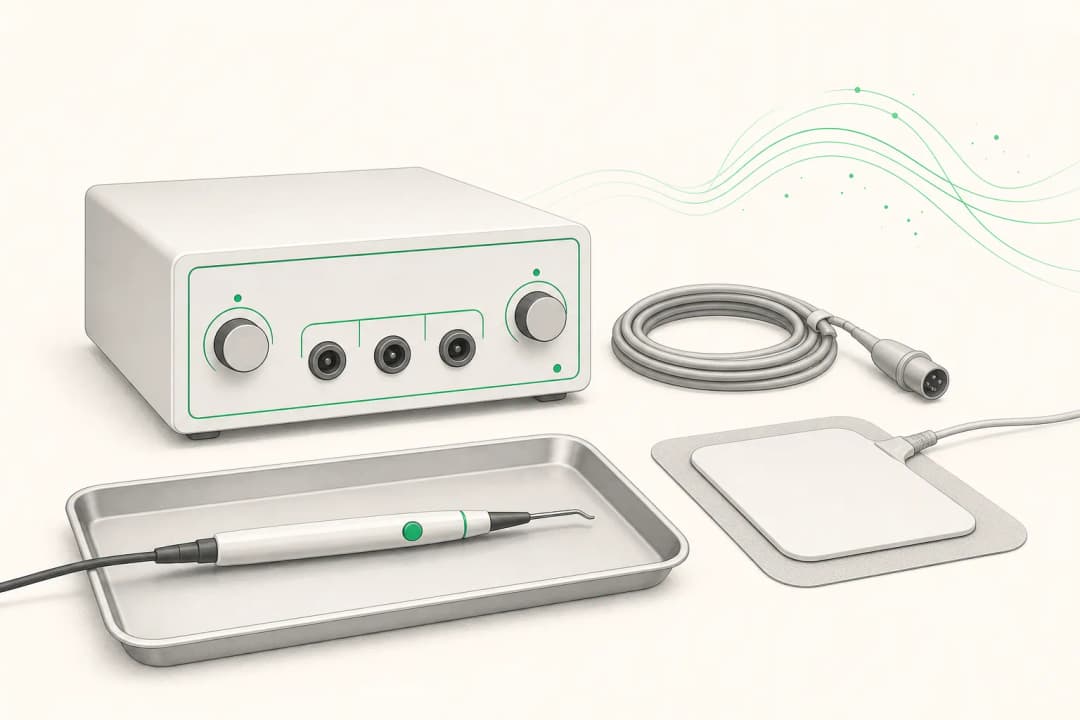
Electrosurgery, also called diathermy or hyfrecation, passes controlled electrical energy through a medical device to create heat. A dermatologist may use that heat to dry a small blood vessel, destroy a superficial growth, or remove tissue in a carefully defined area. The exact technique depends on the lesion, its depth, its location, and whether tissue needs to be sent for examination. Examples of conditions sometimes treated include [Cherry Angioma](/conditions/cherry-angioma/), [Skin Tags](/conditions/skin-tags/), [Warts](/conditions/warts/), and [Seborrheic Keratosis](/conditions/seborrheic-keratosis/). It is not a substitute for diagnosis: a changing or uncertain lesion should be assessed before treatment.
Electrosurgery uses controlled electrical energy to treat selected superficial skin growths, with local anaesthetic and short wound care afterward.
What does recovery actually involve?
The treated spot commonly feels tender, warm, or tight once the local anaesthetic wears off. It may form a dry crust or a small scab while the surface heals. Keep the area clean, follow the dressing instructions, and avoid picking the crust; rubbing can reopen the wound and affect the final mark. The clinician will explain when washing, exercise, swimming, shaving, or cosmetics can resume for that site.
What can go wrong, and how often?
Possible problems include bleeding, infection, a burn to nearby skin, delayed healing, a lighter or darker mark, and a raised or depressed scar. The chance and severity depend on the body area, lesion size, treatment depth, skin type, and medical history. Tell the clinician about poor wound healing, implanted electrical devices, medicines that increase bleeding, and any tendency to form thick scars. Seek prompt advice for spreading redness, worsening pain, pus, fever, or bleeding that does not settle with firm pressure.
Will it fix the problem, and for how long?
Electrosurgery can clear a selected superficial lesion, but the outcome depends on treating the full visible tissue and on the diagnosis. Some growths can recur, and new lesions may appear elsewhere. For viral warts, treatment removes the wart rather than guaranteeing that the virus is no longer present. For cosmetic concerns such as [Dermatosis Papulosa Nigra](/conditions/dermatosis-papulosa-nigra/), [Sebaceous Hyperplasia](/conditions/sebaceous-hyperplasia/), or [Syringoma](/conditions/syringoma/), discuss the possibility of repeat treatment and pigment change.
Key facts before treatment
A consultation confirms whether electrosurgery is suitable and whether another method would give a better diagnostic or cosmetic result. Treatment is usually performed in a clinic with eye protection and a sterile technique. A smoke extractor may be used because heated tissue can produce surgical plume. Ask which device is planned; an [Electrosurgical Unit](/technology/electrosurgical-unit/) can deliver different energy modes.
Who might be offered it?
A dermatologist may consider electrosurgery for a clinically assessed, accessible lesion where controlled heat is appropriate. It may be discussed for [Venous Lake](/conditions/venous-lake/), [Genital Warts](/conditions/genital-warts/), or [Rhinophyma](/conditions/rhinophyma/), but the method and setting vary by site. Lesions near the eye, on mucosal skin, or with uncertain features need particularly careful planning.
What happens during the procedure?
The clinician examines and marks the area, cleans the skin, and gives local anaesthetic when needed. They select an electrode and energy setting, treat the target in controlled passes, and check bleeding before applying a dressing. If tissue is removed, it may be handled according to the clinician’s diagnostic plan. You receive wound-care instructions before leaving.
Recovery timeline
Tenderness is usually most noticeable early, while the surface may remain crusted until new skin forms. A small treated area often needs simple care at home, but deeper or larger treatment can take longer. The mark may continue to change in colour and texture after the surface has closed. Keep follow-up if the clinician recommends it, especially when the diagnosis or healing needs review.
Risks and safety questions
Before treatment, ask how the site may look while healing, whether a sample is needed, and what warning signs require contact. Sun protection after healing can help reduce contrast between treated and untreated skin. Do not apply unapproved products to an open wound, and disclose allergies to dressings or antiseptics.
Possible alternatives
Depending on the diagnosis, alternatives may include cryotherapy, curettage, shave removal, surgical excision, laser treatment, or a prescription treatment. Each option differs in tissue sampling, healing pattern, pigment risk, and likelihood of needing more than one session. A dermatologist can match the method to the lesion and your priorities.
Finding a suitable provider
Choose a licensed dermatologist or appropriately trained clinician who can diagnose the lesion, explain the device and energy method, and provide wound follow-up. Bring a list of medicines, allergies, implanted devices, and previous scar or pigment reactions. For a lesion that is bleeding, rapidly changing, or uncertain, arrange assessment before requesting removal.
Questions people ask
Is electrosurgery painful?
Local anaesthetic can reduce treatment discomfort; soreness or warmth may occur afterward.
Can electrosurgery leave a mark?
A temporary colour change or scar is possible, particularly when treatment is deep or the site heals slowly.
Can every skin growth be treated this way?
No. Diagnosis, depth, location, and the need for a tissue sample determine whether it is suitable.
Related
Related reading
Keep reading
Medical disclaimer. This page is general health information, not medical advice, and it cannot diagnose you. Always consult a licensed healthcare provider about your own symptoms and treatment. In an emergency in the UAE, call 998 for an ambulance.