
Electrosurgical Unit: Uses in Dermatology
At a glance
- Energy form
- Controlled electrical energy converted to heat
- Possible actions
- Cutting or coagulating selected tissue
- Anaesthetic
- Local numbing may be used
What is an electrosurgical unit?
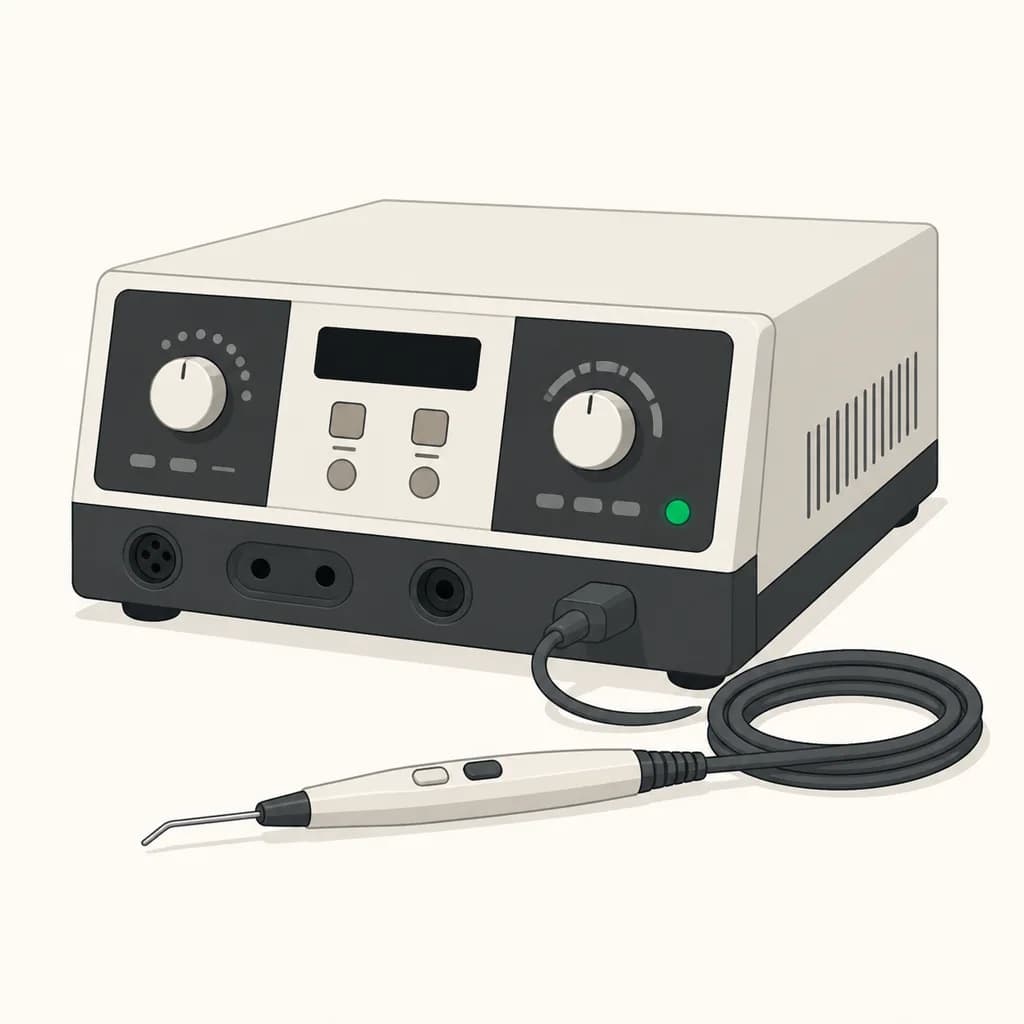
An electrosurgical unit is a device that supplies controlled electrical energy through a handpiece. Tissue resistance changes that energy into heat, allowing a clinician to cut, coagulate bleeding, or destroy a carefully selected superficial area. A hyfrecator or diathermy unit may be used for particular settings. The device is not a diagnosis: the clinician decides what tissue is appropriate to treat.
How is it used?
After examining and cleaning the area, the clinician may numb the skin with local anaesthetic. The electrode is applied briefly or moved across the planned site, while smoke or vapour may be removed. You may hear a buzzing sound and notice warmth or a sharp smell. Electrosurgical techniques are used in procedures such as electrosurgery and curettage and cautery, depending on the tissue and treatment aim.
What are its limits?
Electrical heat is suited to selected superficial targets, not every lump, rash, or changing pigmented mark. It cannot replace examination or laboratory analysis when a diagnosis is uncertain. Depth and spread of heat must be controlled, and healing varies by site, skin type, wound care, and health conditions. A clinician may choose another method when tissue preservation or a specimen is a priority.
What alternatives may be considered?
Depending on the problem, alternatives include a scalpel procedure, curettage, cryotherapy, laser treatment, topical medicine, or observation. The choice depends on whether tissue must be removed, sampled, or only reduced, as well as the site and expected wound care. Ask what will happen to removed tissue if testing is needed.
What does this mean for a patient?
Before treatment, tell the clinician about implanted electrical devices, medicines that affect bleeding, poor wound healing, or a tendency to form raised scars. Clarify whether you will leave with a scab or an open wound, how to clean it, and when normal activity can resume. Do not pick a crust while the surface is repairing.
Safety and aftercare
Expected effects can include local redness, tenderness, swelling, a small scab, or temporary pigment change. Infection, prolonged bleeding, delayed healing, and scarring are possible. The treatment room should use appropriate grounding and fire precautions, especially around oxygen or flammable products. Seek clinical advice for worsening pain, pus, fever, or bleeding that does not stop with firm pressure.
Find care
General Clinics & Polyclinics in Abu Dhabi
Licensed general clinics & polyclinics listed in Abu Dhabi, for the reader who wants this looked at in person.
27 Ar Ruwwad St - Shakhbout City - MSH4 - Abu Dhabi - United Arab Emirates
Accepts: Daman, Thiqa, Cigna, MetLife +20 more
Al Ruwais, Al Dhafrah
Accepts: Daman, Thiqa, AXA, Cigna +16 more
Al Bahyah - Al Bahyah Old - Abu Dhabi - United Arab Emirates
Accepts: Daman, Thiqa, Cigna, Allianz Care +18 more
Abu Dhabi
Accepts: Daman, Thiqa, AXA, Cigna +27 more
Ordered by verification status and how complete each clinic's public record is, then alphabetically. This is a directory listing, not a ranking — Zavis does not rate or recommend providers.
A factual listing drawn from the DHA, DOH and MOHAP licence registers. It is not a referral, an endorsement, or advice that any of these providers is right for you.
Questions people ask
Will I feel the electrical energy?
Local anaesthetic may reduce sharp sensations; buzzing, warmth, or a brief smell can still occur.
Does electrosurgery always leave a scar?
Healing varies. The treated depth, body site, aftercare, and individual scarring tendency influence the final mark.
Related
Related reading
Keep reading
Medical disclaimer. This page is general health information, not medical advice, and it cannot diagnose you. Always consult a licensed healthcare provider about your own symptoms and treatment. In an emergency in the UAE, call 998 for an ambulance.