
What should you know about surtron electrosurgical unit?
Short answer
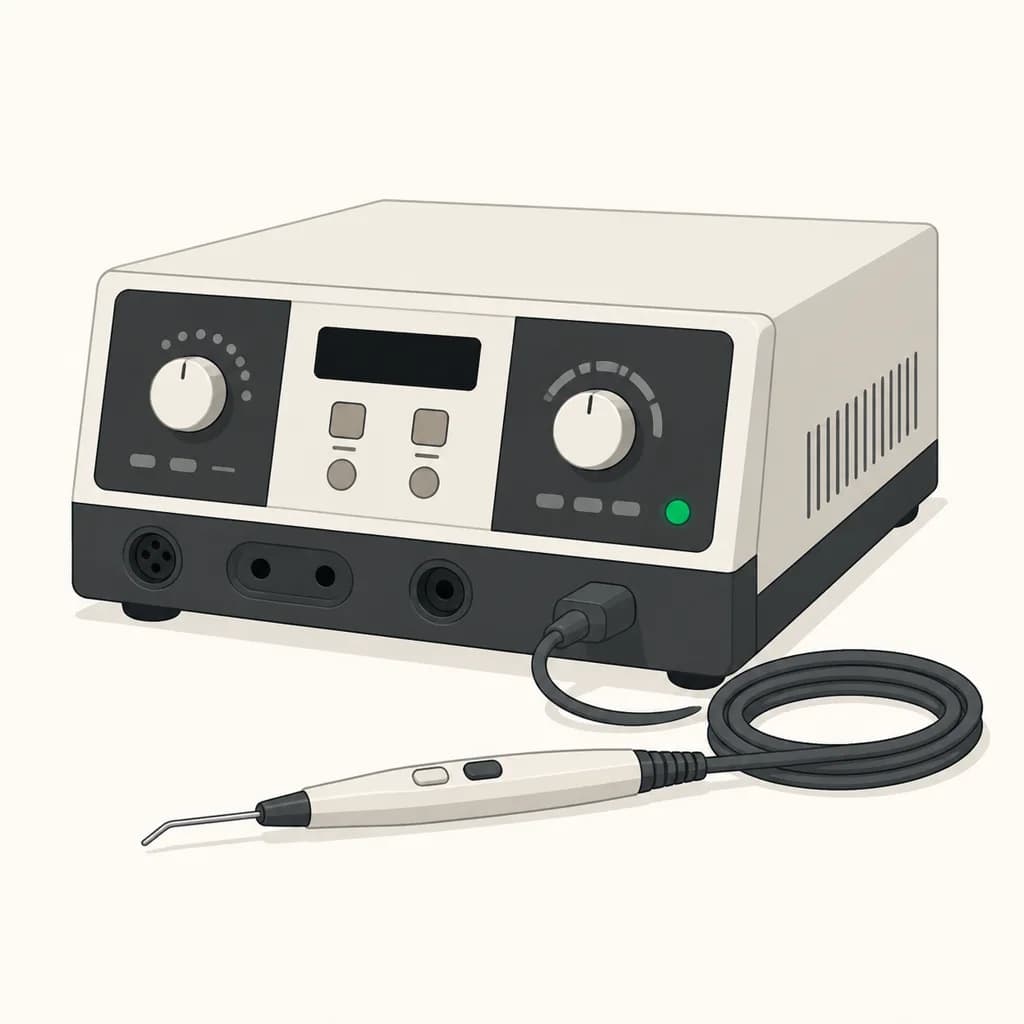
A Surtron electrosurgical unit gives a clinician controlled energy to cut tissue or control bleeding during selected skin procedures.
This answers one question. It is not a diagnosis and does not replace an assessment by a licensed doctor.
At a glance
- Main role
- Cutting or coagulating selected tissue
- Related procedures
- Electrosurgery and curettage with cautery
- Before treatment
- Report implanted devices and relevant medicines
How the unit is used
The unit powers a hand-held electrode selected for the procedure. Depending on the setting, energy can cut, dry, or coagulate tissue. A clinician may use it during electrosurgery or curettage and cautery, where scraping and heat are combined for a suitable lesion. The equipment is a treatment tool, not proof of what a growth is. A suspicious or changing lesion may need a separate biopsy or removal planned around diagnosis and margins.
What to discuss before treatment
Give a complete history of pacemakers, defibrillators, metal implants, pregnancy, diabetes, bleeding problems, allergies, and medicines such as anticoagulants. Do not stop a prescribed medicine without instructions. Ask about local anaesthetic, smoke or odour during the procedure, wound dressings, and whether removed tissue will be examined. Afterward, wash the site only as advised, keep dressings in place, and avoid rubbing or picking. Healing can include a scab, mild soreness, and temporary pigment change.
When the wound needs review
Contact the treating clinic if the area becomes increasingly red, hot, swollen, or painful, or if drainage smells unpleasant. Fever, wound separation, or bleeding that does not settle with firm pressure needs prompt assessment. Get urgent help for breathing difficulty, severe swelling, fainting, or a widespread allergic reaction. A site that does not heal or a lesion that returns should be reassessed.
Questions for your doctor
What is the purpose of energy treatment in my procedure? Which electrode and setting will you use? Could my implanted device or medicines affect the plan? Will the tissue be sent for testing? What wound changes are expected, and who should I contact if they occur?
Find care
General Clinics & Polyclinics in Abu Dhabi
That answer is general. If you want it applied to your own case, these are licensed general clinics & polyclinics listed in Abu Dhabi.
27 Ar Ruwwad St - Shakhbout City - MSH4 - Abu Dhabi - United Arab Emirates
Accepts: Daman, Thiqa, Cigna, MetLife +20 more
Al Ruwais, Al Dhafrah
Accepts: Daman, Thiqa, AXA, Cigna +16 more
Al Bahyah - Al Bahyah Old - Abu Dhabi - United Arab Emirates
Accepts: Daman, Thiqa, Cigna, Allianz Care +18 more
Abu Dhabi
Accepts: Daman, Thiqa, AXA, Cigna +27 more
Ordered by verification status and how complete each clinic's public record is, then alphabetically. This is a directory listing, not a ranking — Zavis does not rate or recommend providers.
A factual listing drawn from the DHA, DOH and MOHAP licence registers. It is not a referral, an endorsement, or advice that any of these providers is right for you.
Questions people ask
Is an electrosurgical unit the same as a biopsy?
No. It delivers treatment energy; a biopsy is a tissue-sampling procedure used to help establish a diagnosis.
Can the treated area change colour?
Yes, temporary pigment change can occur during healing, especially after a scab forms, but persistent or worsening changes need review.
Related
Related reading
Keep reading
Medical disclaimer. This page is general health information, not medical advice, and it cannot diagnose you. Always consult a licensed healthcare provider about your own symptoms and treatment. In an emergency in the UAE, call 998 for an ambulance.