
What should you know about a sinus MRI scan?
Short answer
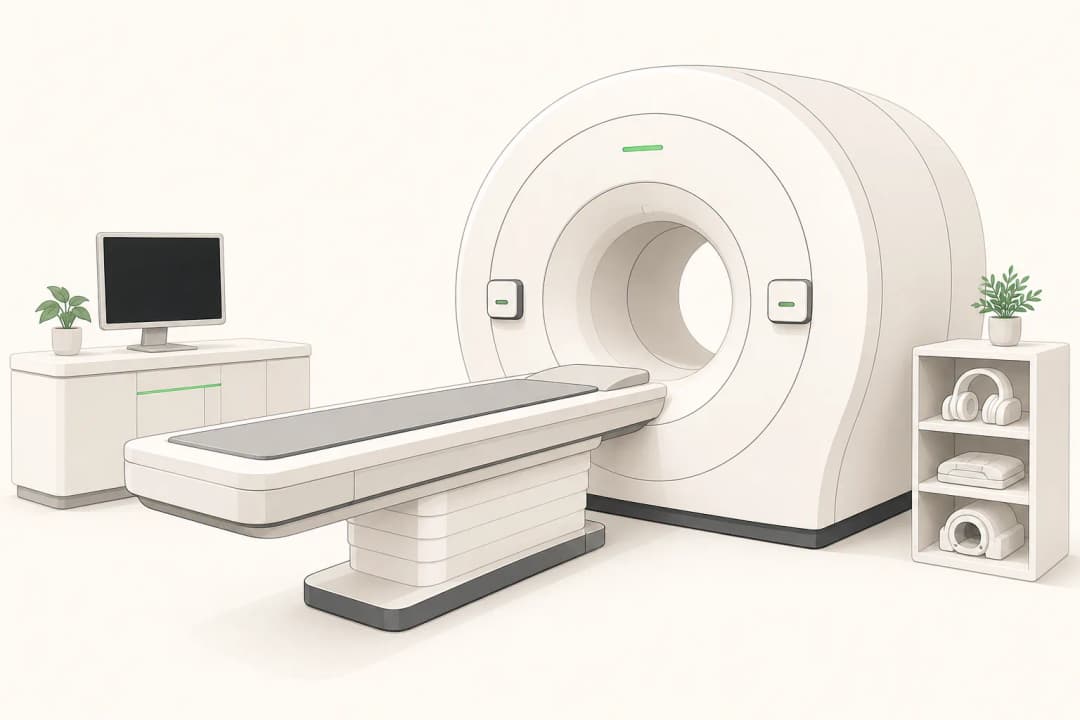
A sinus MRI scan uses magnetic fields and radio waves to create detailed images of the sinuses, nearby soft tissues, and structures around the eyes and brain.
This answers one question. It is not a diagnosis and does not replace an assessment by a licensed doctor.
At a glance
- Imaging method
- Magnetic fields and radio waves
- Radiation
- MRI does not use X-rays
- Before the scan
- Report implants, metal, kidney problems, and prior contrast reactions
The short answer
A clinician may request it when symptoms persist, when an examination raises a concern, or when more detail is needed about inflammation, blockage, a growth, or nearby tissue. The scan helps guide assessment; it does not by itself establish that a finding is cancer.
What the scan can show
MRI creates slices of the head and face without using X-rays. It can show the air-filled sinus spaces, their lining, fluid or thickening, and soft tissue beside the sinuses. Images may also help a specialist examine the eye sockets, skull base, nerves, and tissues near the brain.
Some examinations use an injected contrast agent to make particular tissues or blood vessels easier to distinguish. The imaging team will ask about kidney problems, previous reactions to contrast, pregnancy, and medicines or implants before deciding whether contrast is suitable.
How to prepare
Follow the imaging centre’s instructions about eating, drinking, and medicines. Tell staff about a pacemaker, cochlear implant, metal fragments, surgical clips, braces, or any other device or metal in your body. Remove jewellery, watches, cards, hearing aids, and other metal items before entering the scan room.
The scanner is a short tunnel, and it makes loud knocking sounds while images are taken. You will need to lie still; keeping your eyes closed and using the provided hearing protection may make the experience easier. Tell the team beforehand if enclosed spaces cause distress, because they can discuss suitable support.
When to seek care
Contact a clinician promptly for sinus symptoms that persist, repeatedly return, or are accompanied by facial swelling, recurrent nosebleeds, or a change in vision. These symptoms have several possible causes, so they need assessment rather than self-diagnosis.
Seek urgent medical help for rapidly worsening swelling around an eye, new vision loss or double vision, confusion, a severe headache unlike your usual headaches, a stiff neck, or high fever with marked illness. Do not wait for a routine scan appointment when these symptoms are severe or sudden.
Questions for your doctor
Ask what the scan is intended to clarify, whether contrast is planned, and whether you need to change any medicines or eating habits. You can also ask how and when the result will be explained, and whether an ear, nose and throat specialist or another clinician will review it.
Questions people ask
Is a sinus MRI the same as a regular MRI scan?
It uses the same MRI technology, but the images and positioning are selected to examine the sinuses and nearby structures.
Does a sinus MRI prove that a sinus problem is cancer?
No. MRI can identify and describe an area that needs assessment, but the result must be interpreted with your symptoms and examination, and further tests may be needed.
What if I feel anxious inside the scanner?
Tell the imaging team before the appointment. They can explain the process, provide communication during the scan, and discuss appropriate support.
Related
Related reading
Keep reading
Cancer care in the UAE
Hospitals & Medical Centers in Abu Dhabi
Most UAE cancer care is delivered inside hospital services rather than by standalone oncology clinics, so these are licensed hospitals & medical centers listed in Abu Dhabi. Confirm the specific cancer service exists before you travel, and know that asking for a second opinion is routine.
Ahalia Hospital Musaffah Building - Musaffah - Musaffah Industrial - Abu Dhabi - United Arab Emirates
Accepts: Daman, Thiqa, AXA, Cigna +26 more
Al Ruwais Industrial City - Abu Dhabi - United Arab Emirates
Accepts: Daman, Thiqa, AXA, Cigna +30 more
Abu Dhabi, Abu Dhabi
Accepts: Daman, Thiqa, AXA, Cigna +30 more
Second opinions are routine in cancer care and asking for one does not affect your treatment. How to arrange a second opinion in the UAE.
Ordered by verification status and how complete each clinic's public record is, then alphabetically. This is a directory listing, not a ranking — Zavis does not rate or recommend providers.
A factual listing drawn from the DHA, DOH and MOHAP licence registers. It is not a referral, an endorsement, or advice that any of these providers is right for you.
Medical disclaimer. This page is general health information, not medical advice, and it cannot diagnose you. Always consult a licensed healthcare provider about your own symptoms and treatment. In an emergency in the UAE, call 998 for an ambulance.