
MRI Scan
Updated
At a glance
- Method
- Strong magnetic field and radio waves
- Radiation
- No ionising radiation
- Main preparation
- Implant and metal safety screening
What is an MRI scan?
An MRI scan uses magnets and radio waves to create detailed images, helping clinicians assess disease and plan next steps.
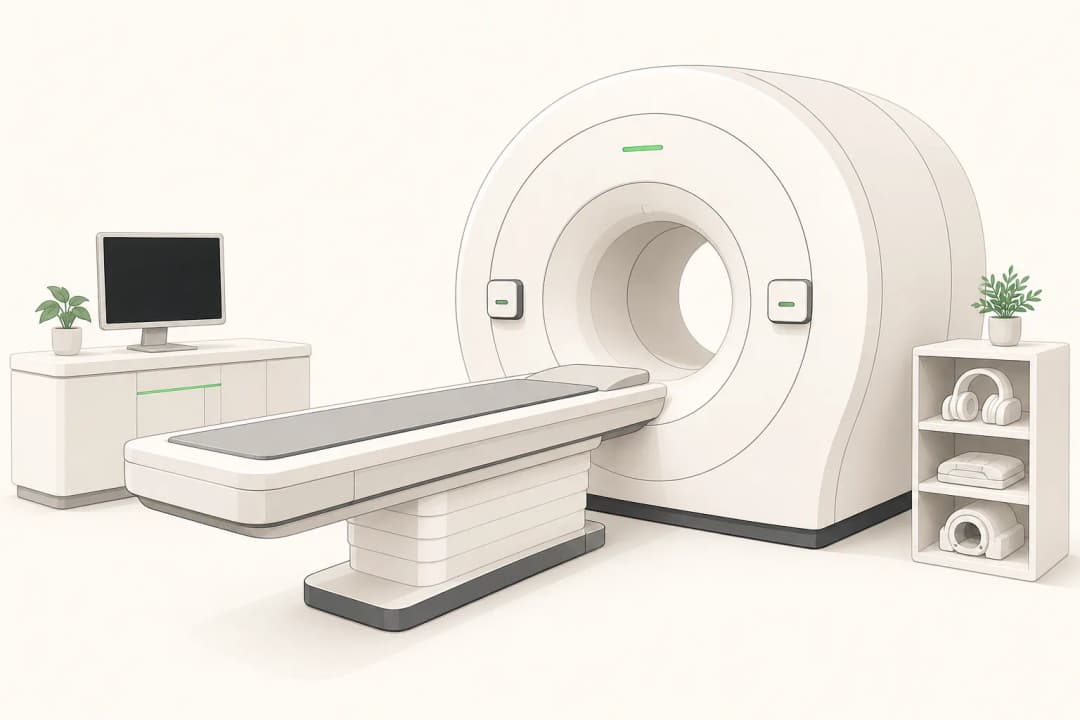
Magnetic resonance imaging creates detailed pictures of parts of the body using a strong magnetic field and radio waves. It does not use ionising radiation. Images can show soft tissues, the brain, spinal cord, organs, joints, and structures around a tumour. A radiographer operates the scanner while a radiologist interprets the images and sends a report to the clinician who requested the test.
What does the test involve?
Before scanning, staff ask about metal in or on your body, implanted devices, kidney problems, allergies, pregnancy, and anxiety in enclosed spaces. You may change clothes and remove jewellery, cards, and electronic items. Some scans use an injected contrast agent. You lie on a moving table, and the body part being examined is positioned inside the scanner. The machine makes loud knocking sounds; ear protection is provided. Staying still and following breathing instructions helps produce clear images.
Is it safe, and how accurate is it?
MRI does not use ionising radiation, but the magnet means safety screening is essential. Certain implants, fragments of metal, or devices may require special checks or mean another test is safer. Contrast is not needed for every scan and may be unsuitable for some people with severe kidney disease or a previous reaction. MRI can show important detail, but image findings are interpreted with symptoms, examination, and other tests; an image alone does not establish a cancer diagnosis.
What happens if the result is abnormal?
An abnormal image does not automatically mean cancer. It may show inflammation, a benign change, scar tissue, or an area that needs a closer look. The requesting clinician explains the report and may compare it with older images, arrange another scan, use a different test, or recommend a biopsy. Ask when and how you will receive the result, and who will explain any recommended next step.
Key facts
MRI is particularly useful when detailed soft-tissue images are needed. The scan is non-invasive, but preparation and implant screening matter.
Who may need an MRI?
A clinician may request MRI to investigate symptoms, characterise a known abnormality, assess the brain or spine, examine organs or soft tissues, monitor a condition, or help plan treatment. It can be used in some cancer pathways, including assessment of a brain tumour or selected prostate concerns. The reason for the scan should be explained when it is booked.
Steps on the day
Arrive in time for the safety questionnaire and changing if needed. Remove metal and leave valuables outside the scan room. Staff position you on the table and provide ear protection and an alarm button. The table moves into the scanner; you can speak with the team through an intercom. Remain still while sequences are taken, and follow any breathing instructions. Contrast, if needed, is given according to the scan plan.
After the scan
Most people return to ordinary activities after an MRI. If contrast was used, staff may ask you to wait briefly so they can check how you feel. Tell the team promptly about rash, swelling, breathing difficulty, or feeling faint. The scan images are reviewed after the appointment, so the radiographer may not be able to give an immediate interpretation.
Risks and limitations
Risks mainly relate to unsuitable metal or implants, movement that reduces image quality, noise, enclosed-space distress, and occasional contrast reactions. MRI may be difficult for people unable to keep still. Some findings are unclear and need another test; a normal scan also does not answer every clinical question.
Possible alternatives
Depending on the question, alternatives may include ultrasound, CT, X-ray, nuclear imaging, or tissue sampling. Each test shows different features and has different preparation and safety considerations. A biopsy examines cells or tissue directly when a diagnosis requires it, while imaging helps locate or describe an area.
Arranging an MRI scan
Use the imaging service named on your referral or ask the requesting clinic which centre can perform the required type of MRI. Before booking, tell staff about implants, metal fragments, pregnancy, kidney disease, previous contrast reactions, or severe claustrophobia. Confirm whether fasting, contrast, or medication changes are needed.
Questions people ask
Is an MRI scan painful?
The scan itself is not usually painful, although lying still in one position and the enclosed space may feel uncomfortable.
Can I have an MRI with a pacemaker or implant?
Some devices are compatible under specific conditions and others are not; provide exact device details before the appointment so the team can check.
Will I get my MRI result immediately?
Usually the images are reviewed and reported after the appointment, then the requesting clinician discusses what they mean and what happens next.
Related
Related reading
Keep reading
Cancer care in the UAE
Hospitals & Medical Centers in Abu Dhabi
Most UAE cancer care is delivered inside hospital services rather than by standalone oncology clinics, so these are licensed hospitals & medical centers listed in Abu Dhabi. Confirm the specific cancer service exists before you travel, and know that asking for a second opinion is routine.
Ahalia Hospital Musaffah Building - Musaffah - Musaffah Industrial - Abu Dhabi - United Arab Emirates
Accepts: Daman, Thiqa, AXA, Cigna +13 more
Al Ruwais Industrial City - Abu Dhabi - United Arab Emirates
Accepts: Daman, Thiqa, AXA, Cigna +18 more
Abu Dhabi, Abu Dhabi
Accepts: Daman, Thiqa, AXA, Cigna +21 more
Second opinions are routine in cancer care and asking for one does not affect your treatment. How to arrange a second opinion in the UAE.
Ordered by verification status and how complete each clinic's public record is, then alphabetically. This is a directory listing, not a ranking — Zavis does not rate or recommend providers.
A factual listing drawn from the UAE health regulators' public licence registers. It is not a referral, an endorsement, or advice that any of these providers is right for you.
Medical disclaimer. This page is general health information, not medical advice, and it cannot diagnose you. Always consult a licensed healthcare provider about your own symptoms and treatment. In an emergency in the UAE, call 998 for an ambulance.