
What should you know about a severe asthma attack?
Short answer
A severe asthma attack is a rapid worsening of airway narrowing that can prevent normal breathing and requires urgent action.
This answers one question. It is not a diagnosis and does not replace an assessment by a licensed doctor.
At a glance
- First position
- Sit upright
- Bring to review
- Your inhalers and written action plan
What happens during an attack
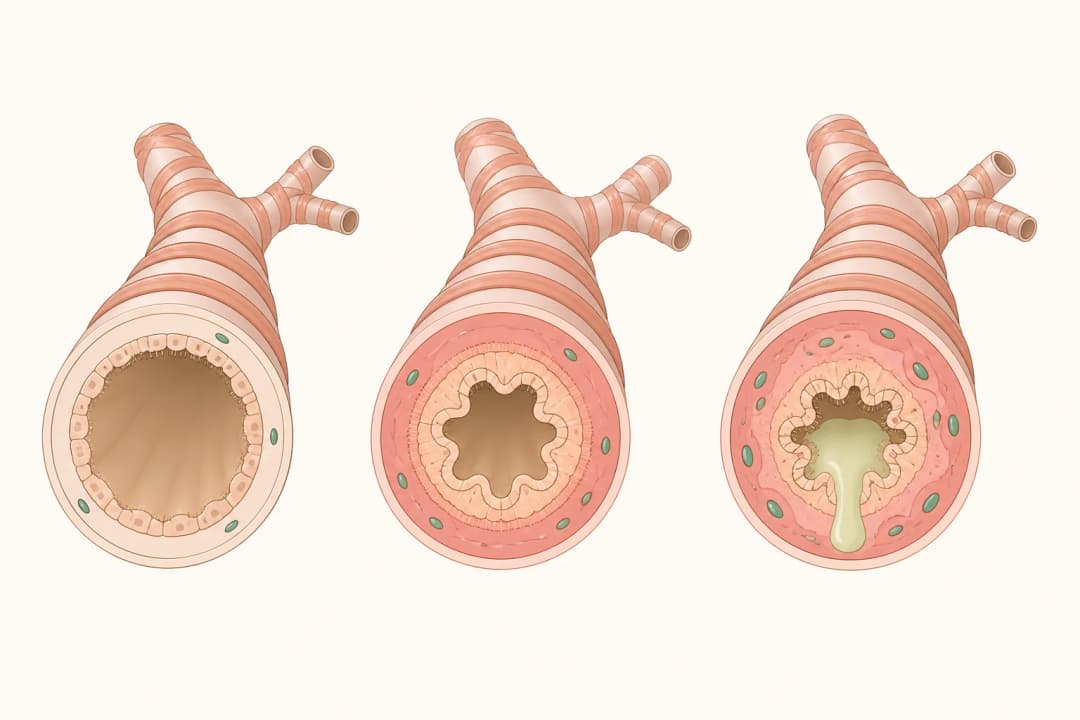
During an attack, inflamed airways tighten and produce more mucus, so air has difficulty moving in and out. You may notice intense breathlessness, wheezing, cough, chest tightness, fast breathing, or difficulty speaking. The person may look exhausted or frightened, but appearance alone does not show how serious the attack is.
A severe attack can happen even in someone whose symptoms were quiet earlier. Infection, allergens, smoke, exercise, missed preventer doses, or an unknown trigger may contribute. The episode is an asthma emergency, not simply a troublesome cough.
What to do immediately
Help the person sit upright and stay with them. Follow their written asthma action plan and help them take their prescribed reliever as directed. Remove smoke or another obvious trigger if this can be done safely. Call emergency services promptly when symptoms are severe, worsening, or not improving with the action plan. Keep the person calm and do not make them lie flat or drive them to care yourself.
When emergency help is needed
Call for emergency help if the person cannot finish sentences, is struggling to breathe, becomes drowsy or confused, develops blue or grey lips, or has little improvement after rescue medicine. Emergency clinicians may give oxygen, inhaled treatment through a nebuliser, steroids, and observation. Even after improvement, arrange a review to identify why the attack happened and strengthen the action plan.
After the attack: questions to ask
Ask what likely triggered the episode, how to recognise your personal early warning signs, how many reliever doses your plan allows, and whether your preventer treatment or inhaler technique needs changing.
Find care
General Clinics & Polyclinics in Abu Dhabi
That answer is general. If you want it applied to your own case, these are licensed general clinics & polyclinics listed in Abu Dhabi.
27 Ar Ruwwad St - Shakhbout City - MSH4 - Abu Dhabi - United Arab Emirates
Accepts: Daman, Thiqa, Cigna, MetLife +20 more
Al Ruwais, Al Dhafrah
Accepts: Daman, Thiqa, AXA, Cigna +16 more
Al Bahyah - Al Bahyah Old - Abu Dhabi - United Arab Emirates
Accepts: Daman, Thiqa, Cigna, Allianz Care +18 more
Abu Dhabi
Accepts: Daman, Thiqa, AXA, Cigna +27 more
Ordered by verification status and how complete each clinic's public record is, then alphabetically. This is a directory listing, not a ranking — Zavis does not rate or recommend providers.
A factual listing drawn from the DHA, DOH and MOHAP licence registers. It is not a referral, an endorsement, or advice that any of these providers is right for you.
Questions people ask
Should someone with a severe attack lie down?
No. Sitting upright usually makes it easier to use the breathing muscles while help is arranged.
Can symptoms return after an attack settles?
Yes. Follow the action plan and obtain medical review, particularly if symptoms recur or reliever medicine is needed repeatedly.
Related
Related reading
Keep reading
Medical disclaimer. This page is general health information, not medical advice, and it cannot diagnose you. Always consult a licensed healthcare provider about your own symptoms and treatment. In an emergency in the UAE, call 998 for an ambulance.