
What should you know about organizing pneumonia?
Updated
Short answer
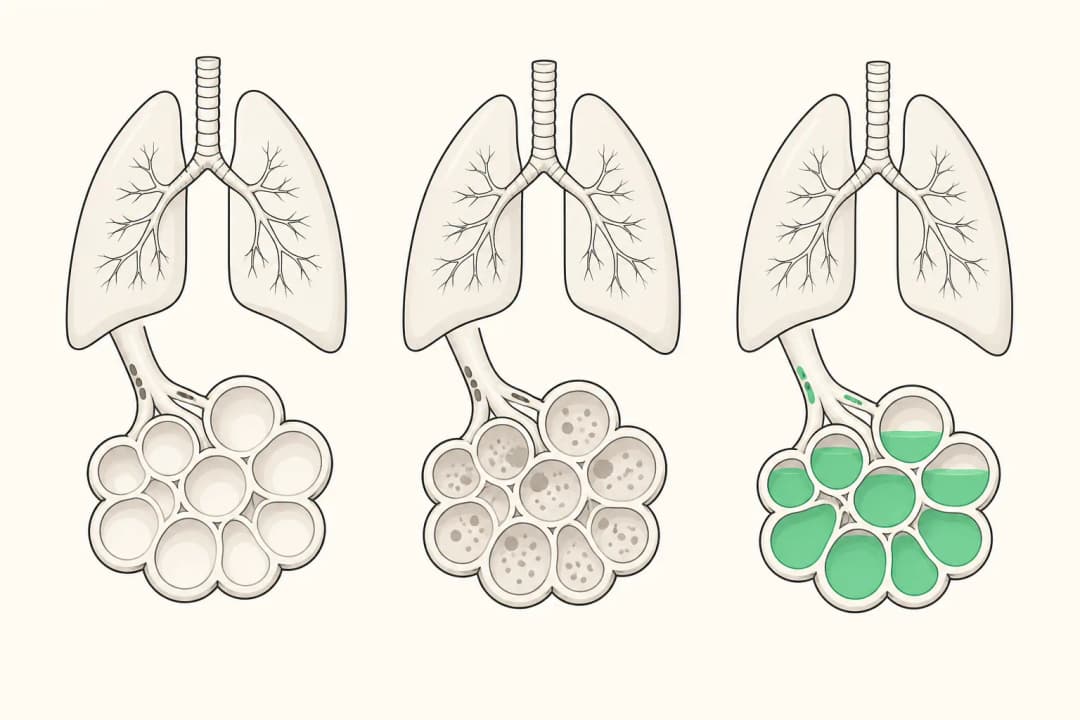
Organizing pneumonia is lung inflammation in which injured air sacs become filled with repair tissue, causing cough, breathlessness, fever, or tiredness.
This answers one question. It is not a diagnosis and does not replace an assessment by a licensed doctor.
At a glance
- Main system
- Lungs and air sacs
- Typical concern
- Persistent cough or breathlessness
- Assessment
- Examination, oxygen check, and chest imaging
What organizing pneumonia means
Despite its name, organizing pneumonia is not the same as a typical infection and is not necessarily caused by bacteria. It may appear after a respiratory infection, exposure to an irritant, a medicine, an autoimmune illness, or another lung problem; sometimes no trigger is found. Symptoms can build gradually and may resemble Pneumonia, Influenza, or COVID-19. A dry cough, reduced exercise tolerance, fever, chills, and chest discomfort can occur. A clinician may use an examination, oxygen measurement, chest imaging, and selected blood tests to distinguish it from other causes. Imaging can suggest the pattern, but the diagnosis and treatment plan depend on the full clinical picture.
What you can do next
Arrange a medical assessment if a cough, fever, or breathlessness persists or returns after an illness. Bring a list of medicines, recent infections, workplace or home exposures, and any history of autoimmune disease. Follow the prescribed plan carefully; treatment may involve an anti-inflammatory medicine and monitoring, rather than antibiotics alone. Rest, avoid smoke and other lung irritants, drink to thirst, and use any prescribed inhaler or oxygen exactly as directed. Do not stop a steroid medicine suddenly without medical advice, because the dose may need to be reduced gradually.
When to seek urgent care
Seek urgent help for severe or rapidly worsening breathlessness, blue or grey lips, confusion, fainting, new severe chest pain, or difficulty speaking in full sentences. Prompt assessment is also needed if you cough up blood, cannot keep fluids down, or have a high fever with marked weakness. These signs can reflect a serious lung problem or Sepsis and should not be judged by symptom duration alone.
Questions for your doctor
Ask what findings support organizing pneumonia, whether another condition needs to be excluded, what monitoring is required, and how to recognise a relapse. Clarify the expected treatment course, medicine side effects, activity limits, and when repeat imaging or lung-function testing is appropriate.
Find care
General Clinics & Polyclinics in Dubai
That answer is general. If you want it applied to your own case, these are licensed general clinics & polyclinics listed in Dubai.
The Court Residence, 39B Street, Jumeirah 1, Dubai
Accepts: Tabby, Tamara
Elite Business Bay Residence - Shop 03 & 04, 34 Marasi Dr - Business Bay - Dubai - United Arab Emirates
Accepts: Tabby
Airport View Building, Al Garhoud, Dubai
Accepts: Daman, Thiqa, AXA, Cigna +25 more
IBIS Building, 5th Floor, Unit 5003, Deira, Dubai
Accepts: AXA, Cigna, MetLife, Allianz Care +18 more
Ordered by verification status and how complete each clinic's public record is, then alphabetically. This is a directory listing, not a ranking — Zavis does not rate or recommend providers.
A factual listing drawn from the UAE health regulators' public licence registers. It is not a referral, an endorsement, or advice that any of these providers is right for you.
Questions people ask
Is organizing pneumonia the same as an ordinary chest infection?
No. It is an inflammatory repair pattern in the lungs; an infection may be a trigger, but antibiotics are not automatically the whole treatment.
Can organizing pneumonia come back?
It can recur in some people, particularly during or after treatment, so report returning cough, fever, or breathlessness and attend planned follow-up.
Medical disclaimer. This page is general health information, not medical advice, and it cannot diagnose you. Always consult a licensed healthcare provider about your own symptoms and treatment. In an emergency in the UAE, call 998 for an ambulance.