
What should you know about an Olympus electrosurgical unit?
Short answer
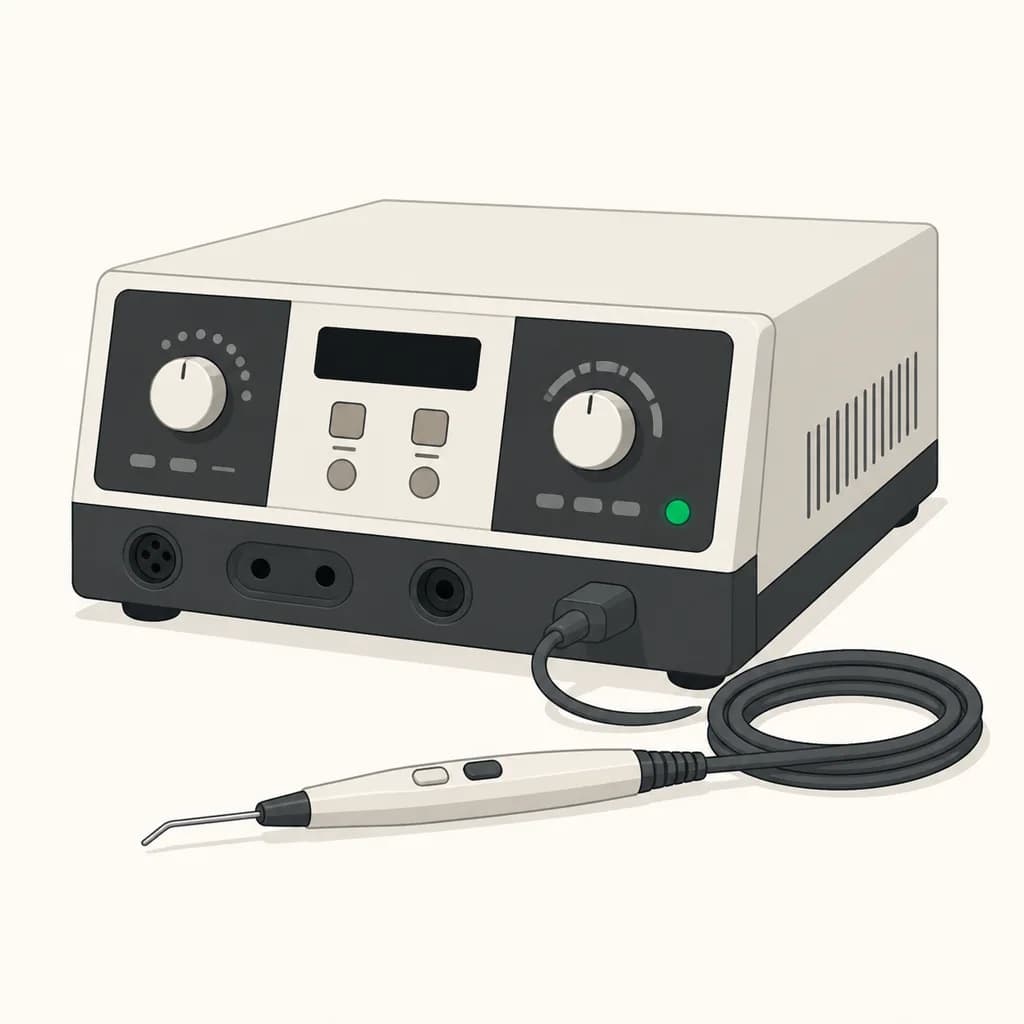
An Olympus electrosurgical unit is a medical device that delivers controlled electrical energy for cutting tissue or controlling bleeding during selected procedures.
This answers one question. It is not a diagnosis and does not replace an assessment by a licensed doctor.
At a glance
- Energy type
- Controlled electrical energy
- Possible roles
- Cutting tissue or controlling bleeding
- Before treatment
- Report implanted devices and medicines
What the device does
An electrosurgical unit converts electrical energy into heat at a treatment tip. Depending on the setting and technique, a clinician may cut, coagulate, dry or destroy a small area of tissue. The device is used with compatible electrodes, cables and safety equipment; it is not itself a diagnosis or a treatment plan.
In dermatology, the technology may support [Electrosurgery](/treatments/surgical-dermatology/electrosurgery/) or [Curettage And Cautery](/treatments/surgical-dermatology/curettage-and-cautery/). The exact method depends on the lesion, its location, its depth and whether tissue needs to be sent for examination.
What to tell the treatment team
Before treatment, mention pacemakers or implanted electrical devices, pregnancy, bleeding disorders, allergies to dressings or antiseptics, medicines that affect clotting, and any history of poor wound healing or raised scars. Ask whether the area needs a biopsy, local anaesthetic or a different procedure.
Afterward, keep the site clean and follow the dressing instructions. A small scab, tenderness or mild redness can occur. Avoid picking the crust and protect healed skin from sunlight to reduce lingering colour change. Do not apply household electrical devices to a treatment area.
When to seek medical advice
Call the clinic if bleeding continues despite the advised pressure, pain is worsening, or redness spreads beyond the expected treatment area. Pus, increasing warmth, fever, a foul smell or wound separation can indicate infection or delayed healing. Seek urgent care for uncontrolled bleeding, breathing difficulty or a severe reaction after a medicine or dressing.
Questions for your doctor
Ask what lesion or problem is being treated, why electrosurgery is suitable, whether a sample will be examined, which energy mode is planned, what scar or pigment changes are possible, and how to care for the wound.
Find care
General Clinics & Polyclinics in Abu Dhabi
That answer is general. If you want it applied to your own case, these are licensed general clinics & polyclinics listed in Abu Dhabi.
27 Ar Ruwwad St - Shakhbout City - MSH4 - Abu Dhabi - United Arab Emirates
Accepts: Daman, Thiqa, Cigna, MetLife +20 more
Al Ruwais, Al Dhafrah
Accepts: Daman, Thiqa, AXA, Cigna +16 more
Al Bahyah - Al Bahyah Old - Abu Dhabi - United Arab Emirates
Accepts: Daman, Thiqa, Cigna, Allianz Care +18 more
Abu Dhabi
Accepts: Daman, Thiqa, AXA, Cigna +27 more
Ordered by verification status and how complete each clinic's public record is, then alphabetically. This is a directory listing, not a ranking — Zavis does not rate or recommend providers.
A factual listing drawn from the DHA, DOH and MOHAP licence registers. It is not a referral, an endorsement, or advice that any of these providers is right for you.
Questions people ask
Is an electrosurgical unit the same as a diagnosis?
No. It is equipment used during a selected procedure; the clinician still needs to identify the condition and choose the right technique.
Why might tissue be sent for examination?
A sample can help confirm what a lesion is, especially when the diagnosis is uncertain or the lesion has changed.
Related
Related reading
Keep reading
Medical disclaimer. This page is general health information, not medical advice, and it cannot diagnose you. Always consult a licensed healthcare provider about your own symptoms and treatment. In an emergency in the UAE, call 998 for an ambulance.