
What should you know about human head lice?
Short answer
Human head lice are small insects living close to the scalp, and treatment requires confirming live lice, treating appropriately, and checking close contacts.
This answers one question. It is not a diagnosis and does not replace an assessment by a licensed doctor.
At a glance
- Confirmation
- Live lice are stronger evidence of active infestation than loose flakes or old nits.
- Spread
- Close head-to-head contact is the main route of transmission.
What head lice are
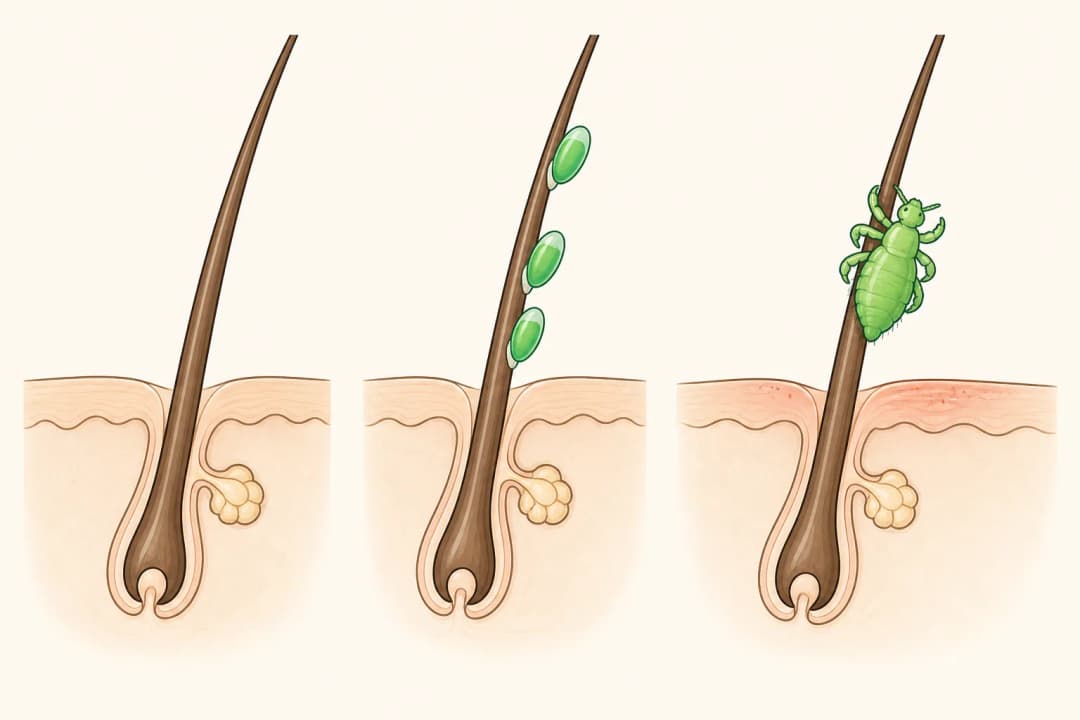
Head lice feed near the scalp and attach their eggs, called nits, to individual hairs. They spread mainly through close head-to-head contact; they do not indicate poor hygiene. Itching can be intense, especially at night, but some people have few symptoms. An itchy scalp alone does not confirm lice, because dandruff and irritation can look similar.
A fine-toothed comb and good lighting can help identify moving lice or firmly attached nits close to the scalp. Finding live lice is more useful for confirming an active infestation than finding empty egg cases.
Steps that help
Use a recommended head-lice treatment exactly as directed, including any repeat application advised on the product or by a clinician. Comb wet, conditioned hair in sections to remove lice and nits, and repeat checks over the following days. Examine household members and close contacts, treating people with confirmed live lice according to professional advice.
Avoid sharing combs, brushes, hats, pillows, or towels while treatment is underway. Wash recently used bedding and clothing as advised, but do not rely on extensive home spraying. Do not layer different insecticide products or apply household chemicals to the scalp.
When to seek care promptly
Arrange a GP consultation if you cannot tell whether the scalp finding is lice, if treatment has not worked as directed, or if the scalp has broken skin, pus, spreading redness, or significant soreness. Seek help promptly for a child who is very young, someone pregnant, or anyone with a skin condition or medicine allergy before using a product.
Questions for your doctor
Ask how to distinguish live lice from dandruff, which treatment suits the person’s age and health, whether a repeat application is needed, and how to manage contacts. Ask what to do if itching continues after live lice are gone.
Find care
General Clinics & Polyclinics in Abu Dhabi
That answer is general. If you want it applied to your own case, these are licensed general clinics & polyclinics listed in Abu Dhabi.
27 Ar Ruwwad St - Shakhbout City - MSH4 - Abu Dhabi - United Arab Emirates
Accepts: Daman, Thiqa, Cigna, MetLife +20 more
Al Ruwais, Al Dhafrah
Accepts: Daman, Thiqa, AXA, Cigna +16 more
Al Bahyah - Al Bahyah Old - Abu Dhabi - United Arab Emirates
Accepts: Daman, Thiqa, Cigna, Allianz Care +18 more
Abu Dhabi
Accepts: Daman, Thiqa, AXA, Cigna +27 more
Ordered by verification status and how complete each clinic's public record is, then alphabetically. This is a directory listing, not a ranking — Zavis does not rate or recommend providers.
A factual listing drawn from the DHA, DOH and MOHAP licence registers. It is not a referral, an endorsement, or advice that any of these providers is right for you.
Questions people ask
Are head lice caused by poor hygiene?
No. Head lice can affect clean or unclean hair and are mainly spread through close contact.
Does an itchy scalp always mean lice?
No. Itching has many causes; live lice should be found before treatment is chosen.
Related
Related reading
Keep reading
Medical disclaimer. This page is general health information, not medical advice, and it cannot diagnose you. Always consult a licensed healthcare provider about your own symptoms and treatment. In an emergency in the UAE, call 998 for an ambulance.