
How is head lice treated?
Short answer
Head lice is treated with a lice-killing product, careful wet combing, and a repeat check or treatment when directed.
This answers one question. It is not a diagnosis and does not replace an assessment by a licensed doctor.
At a glance
- Main aim
- Remove live lice and prevent newly hatched lice from continuing the cycle.
- Check
- Inspect household members and close contacts for live lice.
What treatment involves
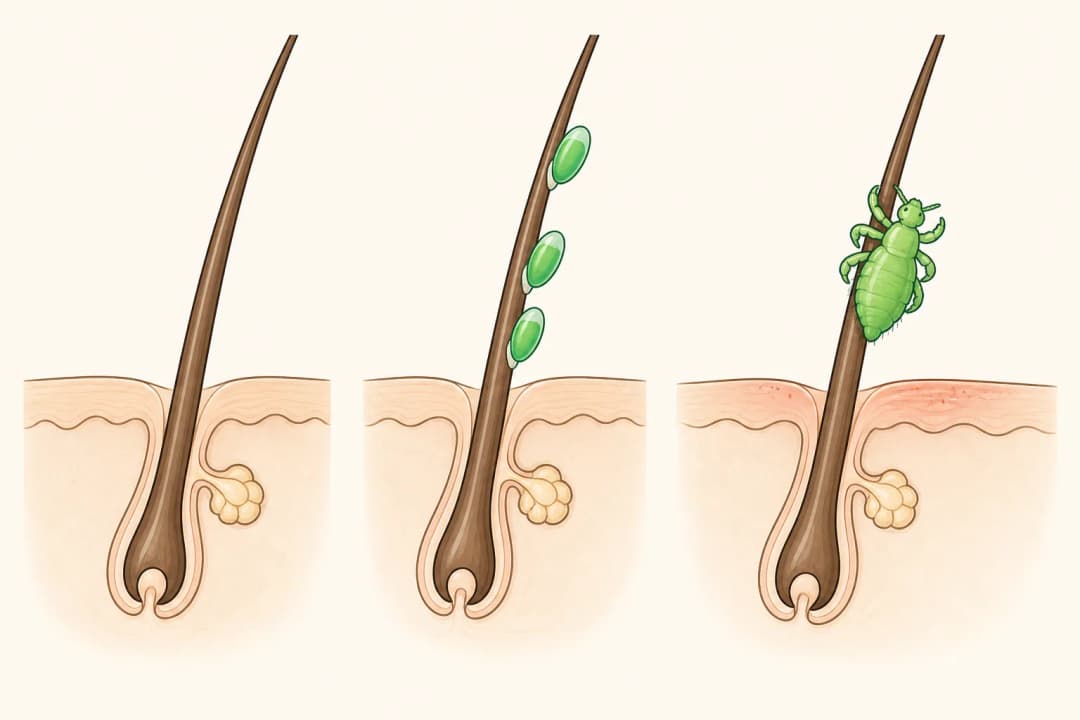
Head lice are tiny insects that live close to the scalp and attach eggs, called nits, to hair shafts. Treatment works by removing live lice and newly hatched lice before they can continue the cycle. A pharmacist or clinician can help choose a product suitable for the person’s age, pregnancy or breastfeeding status, and hair or scalp condition. Products differ in how they are applied, so follow the package or prescription instructions rather than combining medicines.
Wet combing with a fine-toothed lice comb can remove live lice and nits. It is most useful when the hair is wet and covered with conditioner, with the comb drawn from the scalp to the ends in small sections. Itching can continue briefly after successful treatment because the scalp may remain irritated.
What to do at home
Check everyone in the household and close contacts who have shared a bed, comb, brush, hat, or hair accessory. Treat people with live lice according to the product instructions, and repeat the inspection on the schedule advised. Wash or heat-dry recently used pillowcases, towels, hats, and bedding; items that cannot be washed can be sealed aside for a short period. Avoid spraying insecticide around the home, because head lice live on people rather than carpets or furniture.
Do not share combs, brushes, hair coverings, or headphones until treatment and checking are complete. Read the label carefully, keep the product away from the eyes, and stop if marked irritation occurs. See [Head Lice Treatment](/treatments/medical-dermatology/head-lice-treatment/) for clinician-led options and [GP Consultation](/treatments/consultations-and-assessment/gp-consultation/) when diagnosis or product choice is uncertain.
When to seek care
Arrange medical advice if live lice remain after the full treatment instructions have been followed, if the scalp has open sores or spreading redness, or if scratching has caused pus, crusting, or increasing tenderness. A child who is very young, a person who is pregnant or breastfeeding, or anyone with a scalp condition should get product advice before treatment. An itchy scalp can have causes other than lice; compare symptoms with [Itchy Scalp](/symptoms/itchy-scalp/) or [Itching Worse At Night](/symptoms/itching-worse-at-night/).
Questions for your doctor
Which product is appropriate for my age, scalp, and other medicines? How should I comb and when should I repeat treatment? Does anyone I live with need treatment, and could another scalp problem explain the itching?
Find care
General Clinics & Polyclinics in Abu Dhabi
That answer is general. If you want it applied to your own case, these are licensed general clinics & polyclinics listed in Abu Dhabi.
27 Ar Ruwwad St - Shakhbout City - MSH4 - Abu Dhabi - United Arab Emirates
Accepts: Daman, Thiqa, Cigna, MetLife +20 more
Al Ruwais, Al Dhafrah
Accepts: Daman, Thiqa, AXA, Cigna +16 more
Al Bahyah - Al Bahyah Old - Abu Dhabi - United Arab Emirates
Accepts: Daman, Thiqa, Cigna, Allianz Care +18 more
Abu Dhabi
Accepts: Daman, Thiqa, AXA, Cigna +27 more
Ordered by verification status and how complete each clinic's public record is, then alphabetically. This is a directory listing, not a ranking — Zavis does not rate or recommend providers.
A factual listing drawn from the DHA, DOH and MOHAP licence registers. It is not a referral, an endorsement, or advice that any of these providers is right for you.
Questions people ask
Can itching continue after treatment?
Yes. Scalp irritation may last briefly, but live lice should be checked for rather than judging treatment by itching alone.
Do I need to fumigate my home?
No. Focus on recently used personal items and avoid insecticide sprays around living spaces.
Related
Related reading
Keep reading
Medical disclaimer. This page is general health information, not medical advice, and it cannot diagnose you. Always consult a licensed healthcare provider about your own symptoms and treatment. In an emergency in the UAE, call 998 for an ambulance.