
What should you know about head lice infection?
Short answer
A head-lice infection is an infestation of the scalp by live lice, confirmed by finding a louse rather than itching alone.
This answers one question. It is not a diagnosis and does not replace an assessment by a licensed doctor.
At a glance
- Best confirmation
- A live louse found by inspection or combing
- Common symptom
- Itchy scalp, sometimes worse at night
How infection develops
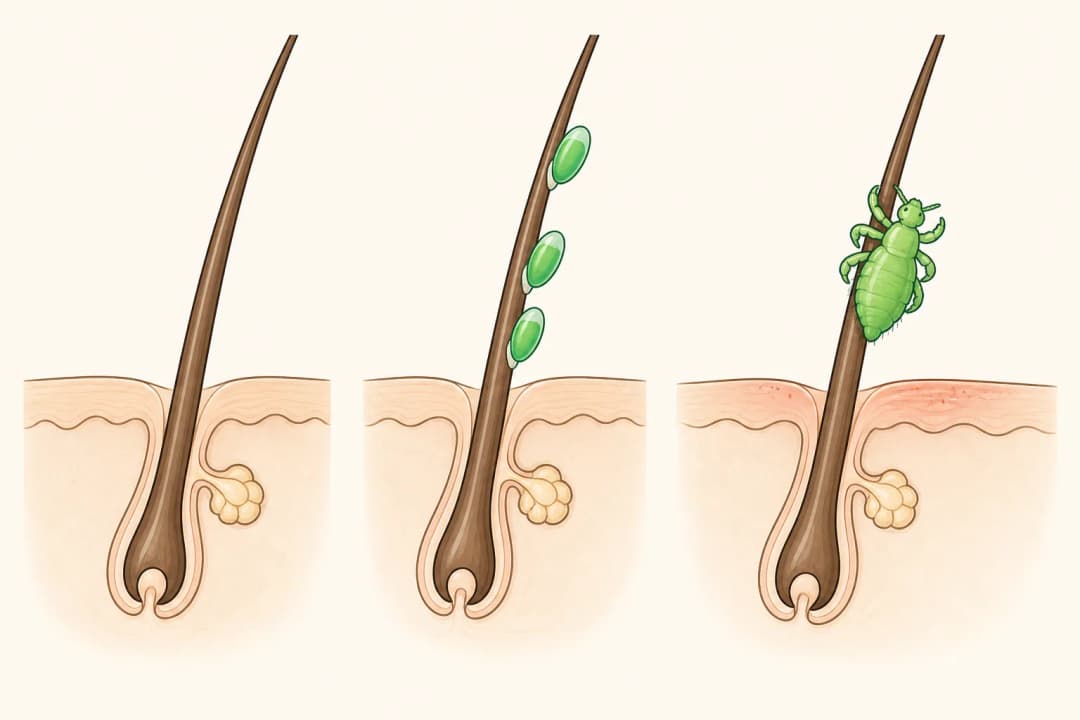
Adult lice and younger lice stay close to scalp hair, where they feed. Eggs, called nits, are attached to hairs and may remain after live lice have been removed. Transmission usually follows close contact between heads; sharing brushes, hats, or bedding is less common but should be avoided during management.
Many people develop an itchy scalp, and itching may be more noticeable at night. Scratching can break the skin and allow irritation or a secondary infection. Compare symptoms with [Itchy Scalp](/symptoms/itchy-scalp/) and [Head Lice](/conditions/head-lice/).
What to do next
Confirm the finding with bright light and a fine detection comb, concentrating behind the ears and at the nape. Once live lice are found, use a suitable treatment exactly as directed. Combing can remove lice and eggs, but the method must be repeated according to the chosen plan because newly hatched lice may be missed.
Check people who have had close contact and treat only confirmed infestations unless a clinician gives different advice. Clean or set aside recently used combs, hats, pillowcases, and towels. Read about [Head Lice Treatment](/treatments/medical-dermatology/head-lice-treatment/).
When to seek care
Contact a clinician through a [GP Consultation](/treatments/consultations-and-assessment/gp-consultation/) when the diagnosis remains unclear, lice persist after careful treatment, or the scalp becomes painful, swollen, crusted, or oozing. Get urgent help for breathing difficulty or swelling after applying a product.
Questions for your doctor
Ask how to distinguish active infection from empty nits, whether household contacts need checking, how to use the recommended product safely, and when persistent itching needs another diagnosis.
Find care
General Clinics & Polyclinics in Abu Dhabi
That answer is general. If you want it applied to your own case, these are licensed general clinics & polyclinics listed in Abu Dhabi.
27 Ar Ruwwad St - Shakhbout City - MSH4 - Abu Dhabi - United Arab Emirates
Accepts: Daman, Thiqa, Cigna, MetLife +20 more
Al Ruwais, Al Dhafrah
Accepts: Daman, Thiqa, AXA, Cigna +16 more
Al Bahyah - Al Bahyah Old - Abu Dhabi - United Arab Emirates
Accepts: Daman, Thiqa, Cigna, Allianz Care +18 more
Abu Dhabi
Accepts: Daman, Thiqa, AXA, Cigna +27 more
Ordered by verification status and how complete each clinic's public record is, then alphabetically. This is a directory listing, not a ranking — Zavis does not rate or recommend providers.
A factual listing drawn from the DHA, DOH and MOHAP licence registers. It is not a referral, an endorsement, or advice that any of these providers is right for you.
Questions people ask
Is itching enough to diagnose infection?
No. Several scalp conditions itch, so active lice should be found or confirmed clinically.
Do nits always mean live lice remain?
No. Empty or old nits can stay attached after the infestation has cleared.
Related
Related reading
Keep reading
Medical disclaimer. This page is general health information, not medical advice, and it cannot diagnose you. Always consult a licensed healthcare provider about your own symptoms and treatment. In an emergency in the UAE, call 998 for an ambulance.