
Can fibroids cause irregular periods?
Short answer
Fibroids can make periods heavier or longer, but irregular timing also has other possible causes such as ovulation changes, perimenopause, or PCOS.
This answers one question. It is not a diagnosis and does not replace an assessment by a licensed doctor.
At a glance
- Fibroid pattern
- Fibroids more often affect flow, duration, pain, or spotting than menstrual timing alone.
- Other causes
- Ovulation changes, PCOS, perimenopause, and ovarian insufficiency can alter cycle timing.
- Tracking
- Dates, flow, pain, and spotting help a clinician interpret the pattern.
How fibroids affect periods
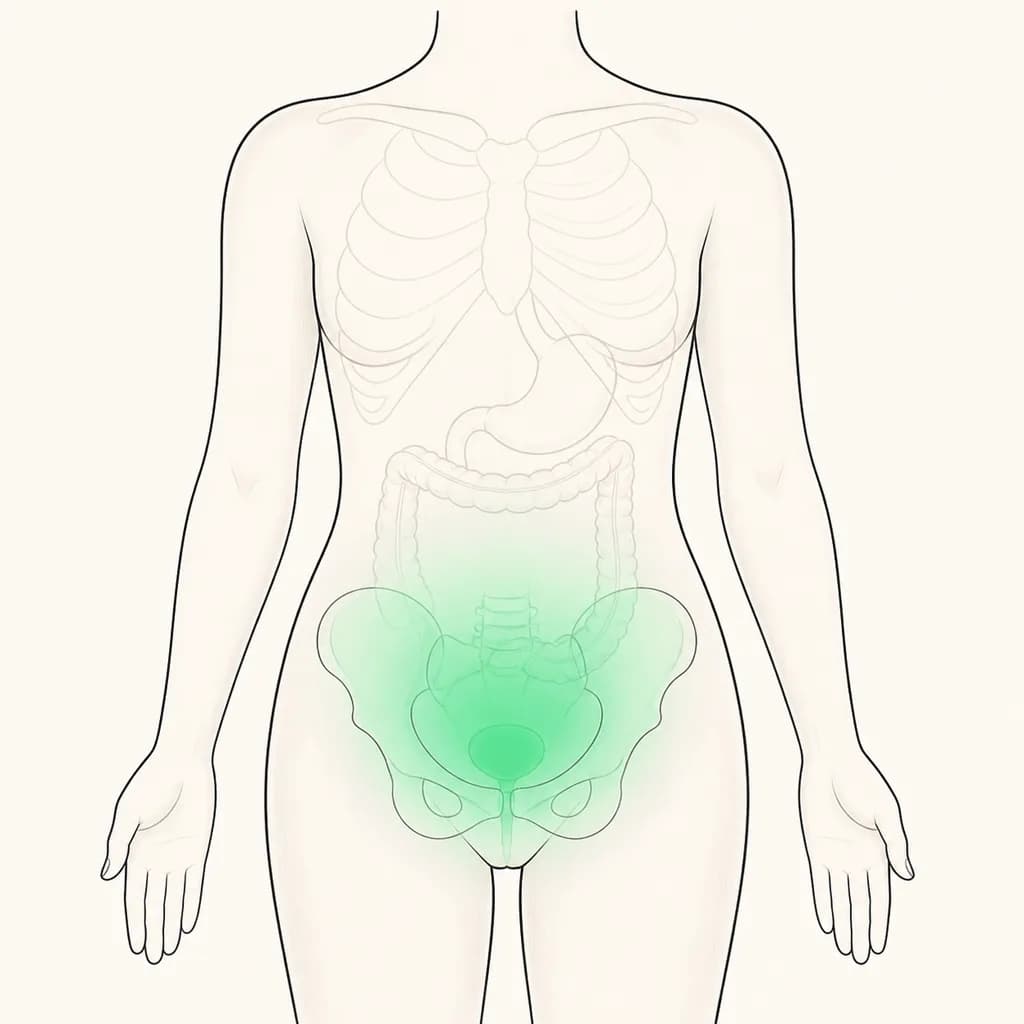
Fibroids are growths in the womb muscle. Their location can affect the womb's shape and surface, leading to heavier flow, longer bleeding, cramping, or spotting. Irregular periods mainly means that bleeding comes at an unpredictable time, lasts an unusual length, or varies between cycles. That pattern may occur when ovulation is inconsistent, including with Anovulation, Polycystic Ovary Syndrome, Perimenopause, or Premature Ovarian Insufficiency. A fibroid can coexist with one of these causes, so the pattern alone cannot identify the reason.
Track and arrange a review
Record the first and last day of bleeding, spotting, flow changes, clots, pain, and medicines or contraception. Arrange a review if irregularity is new, persistent, troublesome, or accompanied by pelvic pressure, unusual discharge, or possible pregnancy. A clinician may discuss pregnancy testing, blood tests, examination, and ultrasound. Treatment depends on the cause and may include managing a fibroid, addressing ovulation, or using a Combined Pill when clinically suitable.
When to seek urgent care
Seek urgent help for very heavy bleeding with dizziness or faintness, severe pelvic pain, fever, or bleeding during a possible pregnancy. Prompt assessment is also needed for bleeding after menopause or a rapidly changing pattern. These symptoms are reasons to seek care because of their potential seriousness, not because they confirm that fibroids are responsible.
Questions for your doctor
Ask whether your pattern suggests a fibroid, irregular ovulation, PCOS, or a menopause-related change; whether an ultrasound or blood test is useful; and which treatments fit your health and pregnancy plans. If PCOS is suspected, ask when Metformin for PCOS may be considered.
Find care
General Clinics & Polyclinics in Abu Dhabi
That answer is general. If you want it applied to your own case, these are licensed general clinics & polyclinics listed in Abu Dhabi.
27 Ar Ruwwad St - Shakhbout City - MSH4 - Abu Dhabi - United Arab Emirates
Accepts: Daman, Thiqa, Cigna, MetLife +20 more
Al Ruwais, Al Dhafrah
Accepts: Daman, Thiqa, AXA, Cigna +16 more
Al Bahyah - Al Bahyah Old - Abu Dhabi - United Arab Emirates
Accepts: Daman, Thiqa, Cigna, Allianz Care +18 more
Abu Dhabi
Accepts: Daman, Thiqa, AXA, Cigna +27 more
Ordered by verification status and how complete each clinic's public record is, then alphabetically. This is a directory listing, not a ranking — Zavis does not rate or recommend providers.
A factual listing drawn from the DHA, DOH and MOHAP licence registers. It is not a referral, an endorsement, or advice that any of these providers is right for you.
Questions people ask
Do irregular periods usually mean fibroids?
No. Fibroids are one possible cause, while ovulation changes, PCOS, and perimenopause can also affect timing.
Can treatment make periods more predictable?
Some treatments can regulate bleeding when clinically suitable, but the choice depends on the cause, health, and pregnancy plans.
Related
Related reading
Keep reading
Medical disclaimer. This page is general health information, not medical advice, and it cannot diagnose you. Always consult a licensed healthcare provider about your own symptoms and treatment. In an emergency in the UAE, call 998 for an ambulance.