
What should you know about eye MRI scan?
Short answer
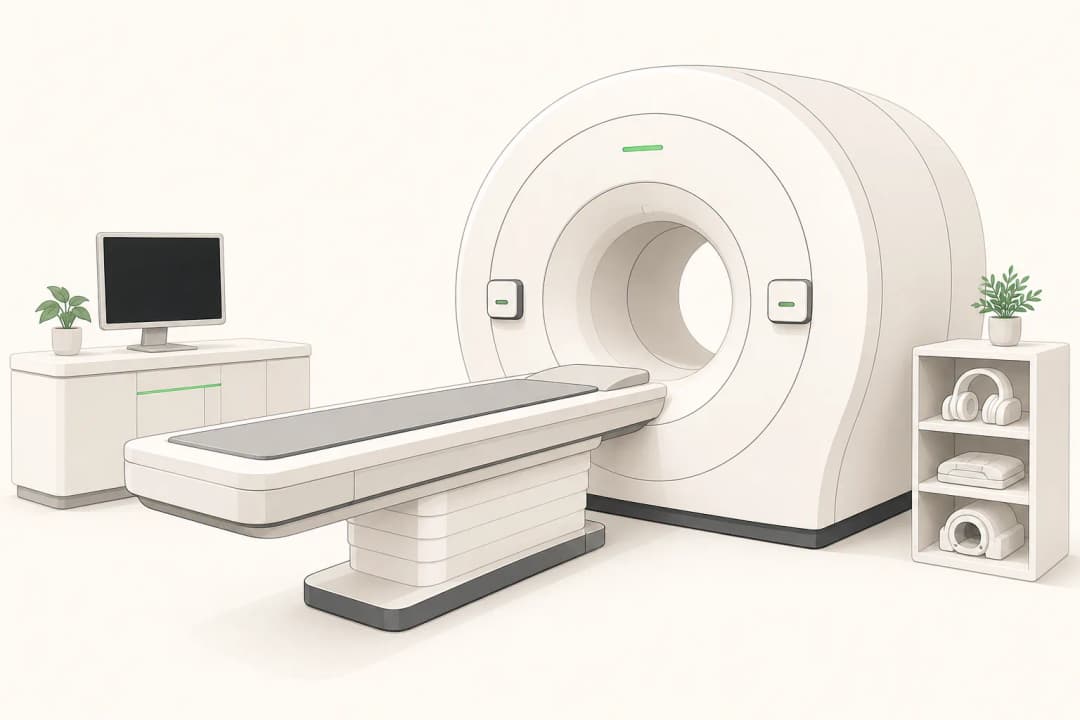
An eye MRI scan uses magnetic fields to create detailed images of the eye socket, optic nerve, and nearby tissues.
This answers one question. It is not a diagnosis and does not replace an assessment by a licensed doctor.
At a glance
- Method
- Magnetic fields and radio waves
- Area
- Eye socket, optic nerve, nearby tissues
- Tell staff
- About implants, metal, pregnancy, or kidney problems
What the scan can show
MRI can help clinicians assess a lump, swelling, inflammation, injury, changes around the optic nerve, or spread of disease into nearby structures. It uses no ionising radiation. The scan usually involves lying still while a scanner makes loud knocking sounds; ear protection is provided. Some examinations use contrast through a vein to make particular tissues easier to distinguish. MRI pictures are interpreted alongside your symptoms, eye examination, and any earlier imaging. A scan alone does not establish every diagnosis.
The scanner is a strong magnet. Metal fragments in the eye, some implants, implanted pumps, certain clips, and some electronic devices may make MRI unsafe or require special checks. Tell the team about pregnancy, kidney problems, allergies, anxiety in enclosed spaces, and anything metal in or on your body.
How to prepare
Follow the imaging centre's instructions about eating, drinking, and medicines. Wear simple clothing and remove jewellery, watches, cards, piercings, hearing aids, and removable dental items if asked. Complete the safety questionnaire accurately, including previous operations and metal injuries. During the scan, use the call button if you feel unwell or distressed. Staying still helps produce clearer images. Ask when and how the result will be shared; the radiologist's report is sent to the clinician who requested the test.
When to seek help
Tell staff immediately if you develop breathing difficulty, facial swelling, widespread itching, faintness, or severe discomfort during or soon after contrast. Contact your care team for worsening eye pain, sudden vision loss, new weakness, confusion, or a severe headache after the scan. These symptoms need assessment regardless of whether the MRI was reassuring.
Questions for your doctor
What question is this MRI intended to answer? Will contrast be used, and do I need kidney tests beforehand? When should I expect the report? Could I need another test, such as a biopsy, if the images show an area that needs clarification?
Questions people ask
Is an eye MRI painful?
The scan itself is not usually painful, but lying still and being inside the scanner can feel uncomfortable for some people.
Can I have an MRI with a metal implant?
Some implants are compatible and others are not, so the imaging team must check the exact device before scanning.
Related
Related reading
Keep reading
Cancer care in the UAE
Hospitals & Medical Centers in Abu Dhabi
Most UAE cancer care is delivered inside hospital services rather than by standalone oncology clinics, so these are licensed hospitals & medical centers listed in Abu Dhabi. Confirm the specific cancer service exists before you travel, and know that asking for a second opinion is routine.
Ahalia Hospital Musaffah Building - Musaffah - Musaffah Industrial - Abu Dhabi - United Arab Emirates
Accepts: Daman, Thiqa, AXA, Cigna +26 more
Al Ruwais Industrial City - Abu Dhabi - United Arab Emirates
Accepts: Daman, Thiqa, AXA, Cigna +30 more
Abu Dhabi, Abu Dhabi
Accepts: Daman, Thiqa, AXA, Cigna +30 more
Second opinions are routine in cancer care and asking for one does not affect your treatment. How to arrange a second opinion in the UAE.
Ordered by verification status and how complete each clinic's public record is, then alphabetically. This is a directory listing, not a ranking — Zavis does not rate or recommend providers.
A factual listing drawn from the DHA, DOH and MOHAP licence registers. It is not a referral, an endorsement, or advice that any of these providers is right for you.
Medical disclaimer. This page is general health information, not medical advice, and it cannot diagnose you. Always consult a licensed healthcare provider about your own symptoms and treatment. In an emergency in the UAE, call 998 for an ambulance.