
What should you know about electrosurgery in veterinary care?
Short answer
Veterinary electrosurgery uses a controlled electrical current to cut or treat selected tissue while a veterinary professional monitors the animal.
This answers one question. It is not a diagnosis and does not replace an assessment by a licensed doctor.
At a glance
- Who performs it
- A trained veterinary team
- What affects the plan
- Species, surgical site, coat, and health history
- Home priority
- Protect the incision and follow veterinary instructions
What veterinary electrosurgery involves
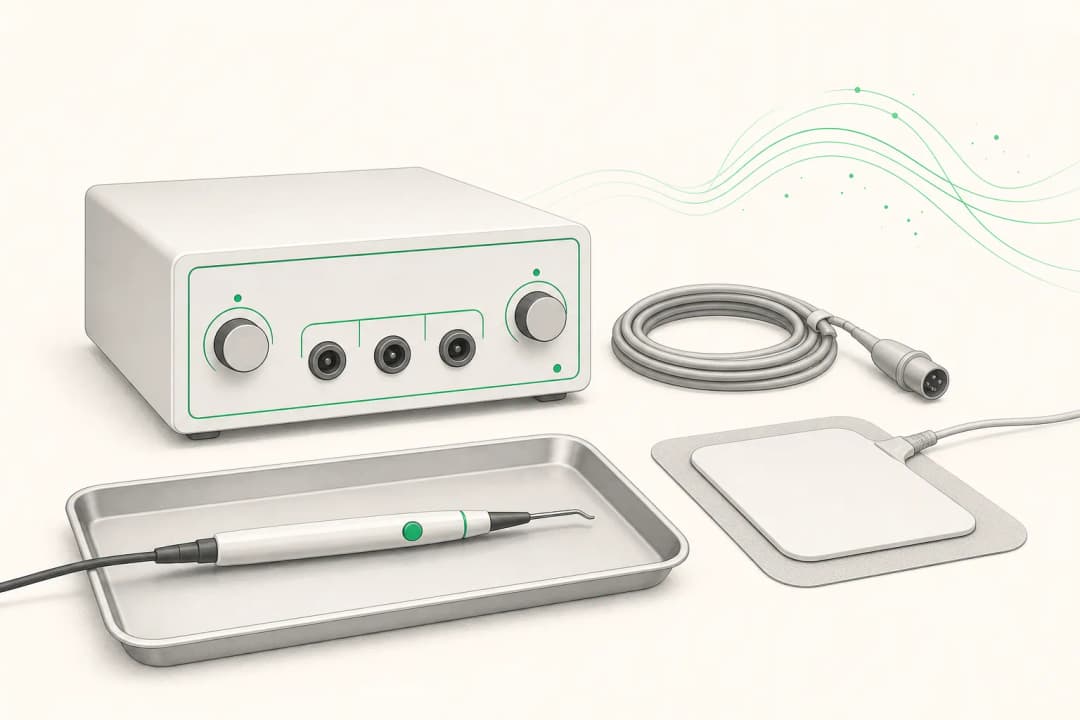
A veterinary team may use a generator, handpiece, electrode, and return accessory during a procedure. The technique can help cut tissue or control bleeding in selected operations. The animal’s species, size, coat, skin condition, surgical site, and general health affect the equipment and plan. Anaesthesia or sedation is selected by the veterinary team, with monitoring throughout the procedure.
For a pet owner, the key point is that electrosurgery is a method, not a diagnosis. A lump or skin change still needs examination, and the veterinarian may recommend sampling before or during removal. Human pages about the Electrosurgical Unit and Electrosurgery explain the general technology, but your pet’s plan must come from its veterinary team.
Preparing your pet and managing recovery
Give the veterinarian an accurate history of medicines, previous anaesthetic reactions, heart or breathing problems, and allergies. Follow fasting and arrival instructions exactly. After surgery, keep the incision dry and stop licking or chewing with the collar or protective garment recommended by the team. Restrict running or jumping as instructed, check the site once or twice daily, and give medicines on schedule. Do not apply human creams or change a dressing without veterinary guidance.
When the veterinary clinic should know
Contact the clinic if your pet becomes unusually quiet, refuses food or water, seems increasingly painful, or repeatedly interferes with the wound. Also report spreading redness, marked swelling, discharge, bad smell, wound separation, or bleeding that does not settle with gentle pressure. Seek emergency veterinary help for collapse, breathing difficulty, pale gums, or heavy bleeding.
Questions for the veterinarian
Ask why electrosurgery is suitable, whether tissue will be examined, which anaesthetic monitoring is planned, and whether your pet needs a grounding or return pad. Clarify fasting, medicine timing, pain control, incision care, activity limits, collar use, and the exact signs that require an urgent call.
Find care
General Clinics & Polyclinics in Abu Dhabi
That answer is general. If you want it applied to your own case, these are licensed general clinics & polyclinics listed in Abu Dhabi.
27 Ar Ruwwad St - Shakhbout City - MSH4 - Abu Dhabi - United Arab Emirates
Accepts: Daman, Thiqa, Cigna, MetLife +20 more
Al Ruwais, Al Dhafrah
Accepts: Daman, Thiqa, AXA, Cigna +16 more
Al Bahyah - Al Bahyah Old - Abu Dhabi - United Arab Emirates
Accepts: Daman, Thiqa, Cigna, Allianz Care +18 more
Abu Dhabi
Accepts: Daman, Thiqa, AXA, Cigna +27 more
Ordered by verification status and how complete each clinic's public record is, then alphabetically. This is a directory listing, not a ranking — Zavis does not rate or recommend providers.
A factual listing drawn from the DHA, DOH and MOHAP licence registers. It is not a referral, an endorsement, or advice that any of these providers is right for you.
Questions people ask
Can I use a human electrosurgery device on my pet?
No. Equipment choice, settings, anaesthesia, monitoring, and wound care require veterinary expertise.
Is a skin lump automatically suitable for electrosurgery?
No. The veterinarian first assesses the lump and may recommend a sample or another treatment.
Related
Related reading
Keep reading
Medical disclaimer. This page is general health information, not medical advice, and it cannot diagnose you. Always consult a licensed healthcare provider about your own symptoms and treatment. In an emergency in the UAE, call 998 for an ambulance.