
What should you know about an electrosurgery unit?
Short answer
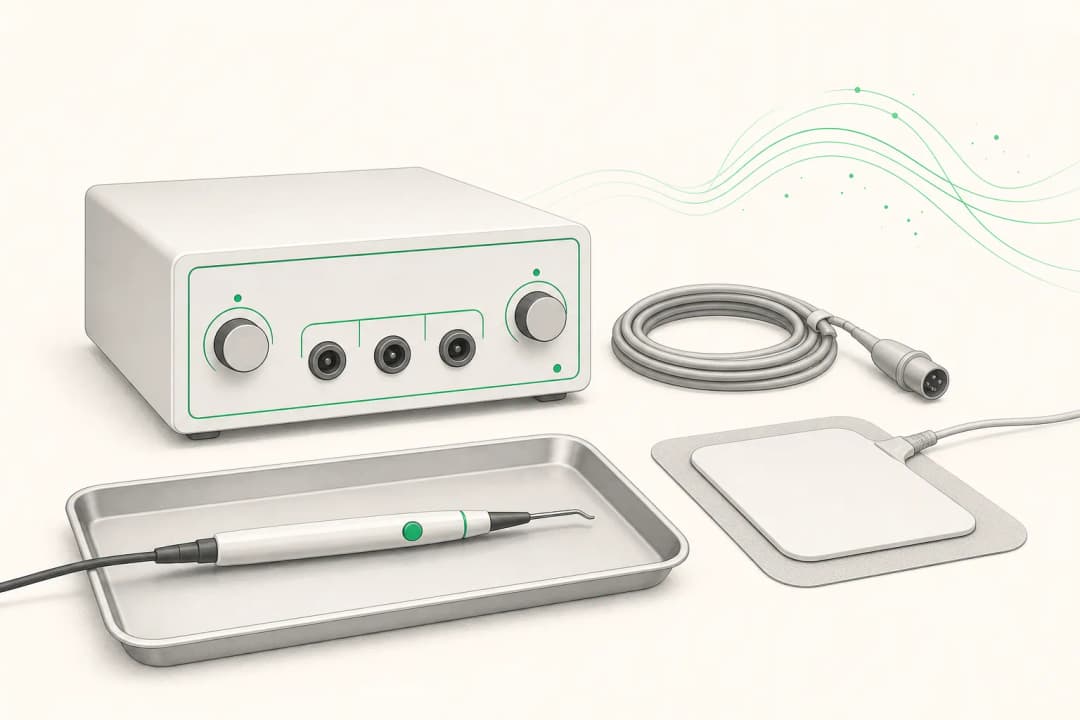
An electrosurgery unit is a clinical device that converts electrical energy into controlled heat for selected cutting or tissue treatment.
This answers one question. It is not a diagnosis and does not replace an assessment by a licensed doctor.
At a glance
- What it is
- A generator-based clinical treatment device
- What guides use
- The lesion, treatment goal, and patient history
- Key recovery step
- Follow site-specific wound-care instructions
How the unit is used
An electrosurgery unit usually combines a generator, controls, cables, a handpiece, and interchangeable electrodes. The clinician selects a technique based on the tissue and intended result. A fine electrode can focus treatment, while a broader contact arrangement can support coagulation. The unit may be used in surgical dermatology for carefully selected lesions and procedures, including treatment of Genital Warts in appropriate cases.
The device does not replace diagnosis. A new, changing, bleeding, or uncertain growth may need a clinical examination and sometimes a sample before treatment. The clinician also considers the body site, depth, skin type, medical history, and possibility of scarring or colour change.
Preparing for a unit-based procedure
Give a complete list of medicines and mention implanted electronic devices, bleeding tendencies, allergies, pregnancy when relevant, and previous problems with wound healing or anaesthetic. Follow instructions about washing the area and stopping products. During treatment, local anaesthetic may be offered. Afterwards, clean the site as directed, keep hands away from any crust, and protect healing skin from friction and strong sunlight. Do not use antiseptics or antibiotic creams unless the treating team recommends them.
Signs that need review
Ask the clinic for advice if pain becomes stronger, bleeding continues, redness spreads, swelling increases, or the wound develops warmth, cloudy fluid, or an unpleasant smell. Urgent assessment is appropriate for heavy bleeding, fainting, breathing difficulty, or a rapidly spreading reaction. Keep the procedure instructions because the expected appearance differs between treatment sites.
Questions to take along
Ask which electrode and mode are planned, whether the area will be numbed, whether tissue will be sent for assessment, and how the unit is adapted to your medical history. Confirm the cleaning routine, likely healing changes, sun protection, activity limits, and the symptoms that should prompt a review.
Find care
General Clinics & Polyclinics in Abu Dhabi
That answer is general. If you want it applied to your own case, these are licensed general clinics & polyclinics listed in Abu Dhabi.
27 Ar Ruwwad St - Shakhbout City - MSH4 - Abu Dhabi - United Arab Emirates
Accepts: Daman, Thiqa, Cigna, MetLife +20 more
Al Ruwais, Al Dhafrah
Accepts: Daman, Thiqa, AXA, Cigna +16 more
Al Bahyah - Al Bahyah Old - Abu Dhabi - United Arab Emirates
Accepts: Daman, Thiqa, Cigna, Allianz Care +18 more
Abu Dhabi
Accepts: Daman, Thiqa, AXA, Cigna +27 more
Ordered by verification status and how complete each clinic's public record is, then alphabetically. This is a directory listing, not a ranking — Zavis does not rate or recommend providers.
A factual listing drawn from the DHA, DOH and MOHAP licence registers. It is not a referral, an endorsement, or advice that any of these providers is right for you.
Questions people ask
Is an electrosurgery unit the same as electrosurgery?
The unit is the device; electrosurgery is the procedure or treatment technique using controlled electrical energy.
Can an electrosurgery unit diagnose a lesion?
No. Diagnosis requires clinical assessment and, when needed, laboratory examination of a tissue sample.
Related
Related reading
Keep reading
Medical disclaimer. This page is general health information, not medical advice, and it cannot diagnose you. Always consult a licensed healthcare provider about your own symptoms and treatment. In an emergency in the UAE, call 998 for an ambulance.