
Corticosteroids and asthma: what should you know?
Short answer
Corticosteroids reduce airway inflammation in asthma; using the prescribed inhaler correctly helps prevent symptoms, while severe attacks need urgent care.
This answers one question. It is not a diagnosis and does not replace an assessment by a licensed doctor.
At a glance
- Main purpose
- Reduce inflammation inside the airways
- Technique check
- Correct inhaler use affects how much medicine reaches the lungs
How corticosteroids work
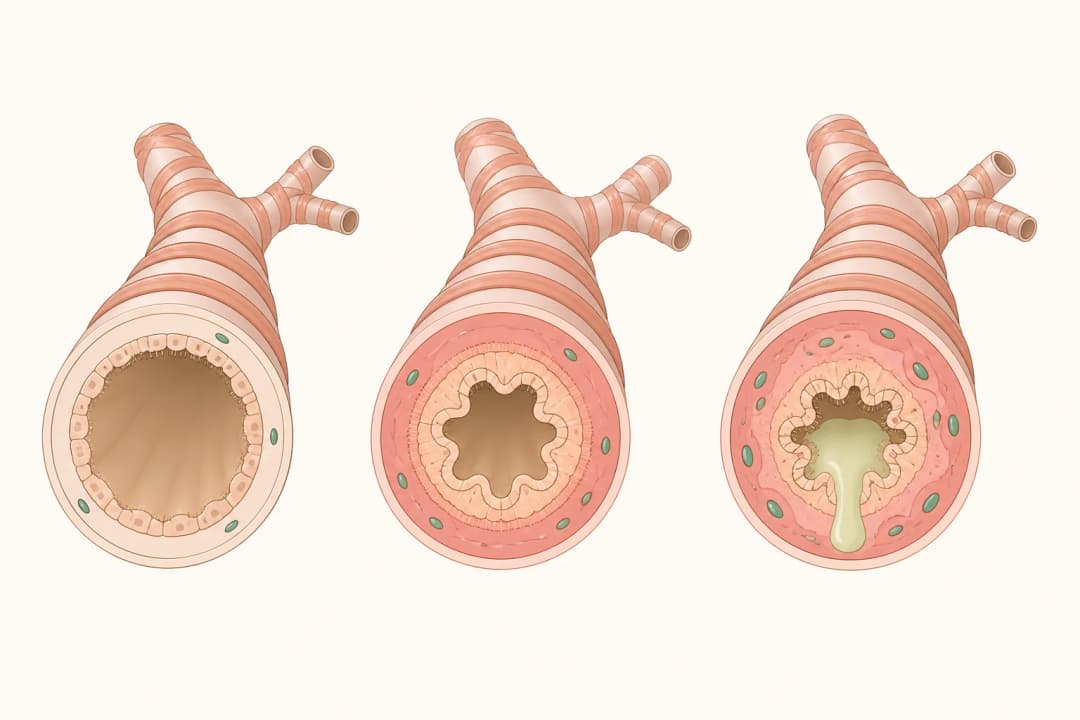
Asthma causes sensitive, inflamed airways that can narrow and produce wheezing, cough or chest tightness. Inhaled corticosteroids act mainly in the lungs to reduce this inflammation and lower the chance of symptoms. They are controller medicines, not a substitute for an urgent-relief plan during a severe attack.
Some people need a short course of oral corticosteroids during a significant flare. The choice depends on symptom pattern, lung function, triggers, age, other conditions and the treatments already used. Allergic Rhinitis or House Dust Mite Allergy can aggravate airway symptoms in some people.
Use treatment safely
Use the inhaled corticosteroid on the schedule prescribed, even when you feel well, and ask someone to check your technique. A spacer may improve delivery for some inhalers. Rinse your mouth and spit after use when advised, which can reduce local effects such as hoarseness or oral thrush.
Keep your reliever accessible and follow your written asthma action plan. Do not stop a regular corticosteroid suddenly or change the dose without clinical advice. Reduce avoidable triggers such as smoke and review persistent symptoms rather than repeatedly relying on rescue treatment.
When to seek medical help
Use your urgent asthma plan and seek emergency help if breathing is very difficult, you cannot speak comfortably, your lips look blue, you become drowsy or the reliever is not helping. Arrange a prompt review for frequent night symptoms, increasing wheezing, repeated flare-ups or needing more reliever medicine than advised.
Questions for your doctor
Ask which inhaler is the controller, how to use it with a spacer, when to rinse your mouth, how to recognise a flare and whether your action plan needs updating. Discuss hoarseness, thrush, repeated oral courses and any concerns about long-term treatment.
Find care
General Clinics & Polyclinics in Abu Dhabi
That answer is general. If you want it applied to your own case, these are licensed general clinics & polyclinics listed in Abu Dhabi.
27 Ar Ruwwad St - Shakhbout City - MSH4 - Abu Dhabi - United Arab Emirates
Accepts: Daman, Thiqa, Cigna, MetLife +20 more
Al Ruwais, Al Dhafrah
Accepts: Daman, Thiqa, AXA, Cigna +16 more
Al Bahyah - Al Bahyah Old - Abu Dhabi - United Arab Emirates
Accepts: Daman, Thiqa, Cigna, Allianz Care +18 more
Abu Dhabi
Accepts: Daman, Thiqa, AXA, Cigna +27 more
Ordered by verification status and how complete each clinic's public record is, then alphabetically. This is a directory listing, not a ranking — Zavis does not rate or recommend providers.
A factual listing drawn from the DHA, DOH and MOHAP licence registers. It is not a referral, an endorsement, or advice that any of these providers is right for you.
Questions people ask
Do corticosteroid inhalers work like reliever inhalers?
No. Corticosteroids control inflammation over time, while a reliever is used according to the asthma plan for sudden symptoms.
Should I stop my inhaler when asthma improves?
Do not stop or reduce it without advice; improvement may reflect that regular treatment is controlling airway inflammation.
Related
Related reading
Keep reading
Medical disclaimer. This page is general health information, not medical advice, and it cannot diagnose you. Always consult a licensed healthcare provider about your own symptoms and treatment. In an emergency in the UAE, call 998 for an ambulance.