
What should you know about a ConMed electrosurgical unit?
Short answer
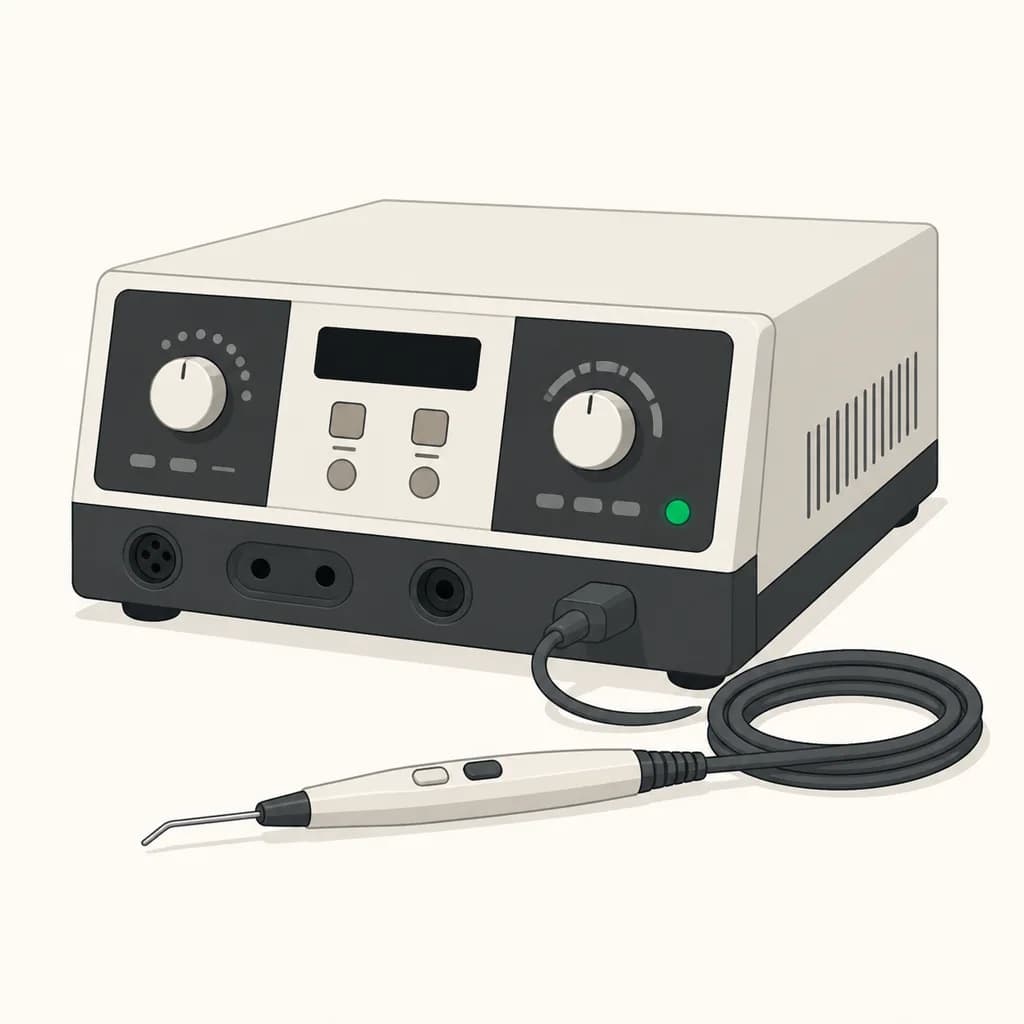
A ConMed electrosurgical unit delivers controlled electrical energy to cut tissue or cauterise selected areas during a procedure.
This answers one question. It is not a diagnosis and does not replace an assessment by a licensed doctor.
At a glance
- Energy
- Controlled electrical energy
- Possible actions
- Cutting or coagulation
- Setting
- A supervised clinical procedure
How an electrosurgical unit is used
The clinician chooses a mode and attaches an instrument suited to the task. Electrical energy can heat, cut, or coagulate tissue in a focused area. Some setups include a return electrode to complete the circuit safely. The unit itself is not a diagnosis and does not make a lesion harmless; examination determines what is being treated.
In skin care, the device may form part of electrosurgery or curettage and cautery. These procedures can remove or destroy selected superficial tissue, while the choice depends on the lesion, its position, and whether tissue needs laboratory assessment.
How to prepare
Give the clinician a full medicine list, including blood-thinning medicines, and mention implanted cardiac devices, metal implants, pregnancy, allergies, and past problems with local anaesthetic or scarring. Follow instructions about washing and products on the area. During treatment, remain still and report unusual heat, sharp discomfort, or anxiety so the team can respond.
For wound care, use the dressing or ointment advised, wash gently, and avoid picking a crust. Protect healing skin from friction and strong sun exposure. Keep the follow-up appointment if one is arranged, especially when a treated lesion needs reassessment.
When to seek care
Ask for prompt advice if the treated area becomes increasingly painful, hot, swollen, or wet, or if bleeding continues despite sustained pressure. Urgent assessment is needed for heavy bleeding, fainting, breathing trouble, or a rapidly spreading swelling or rash. A wound that worsens after initially settling should also be checked.
Questions for your doctor
What are you treating, and will tissue be tested? Which mode will you use? What protection is needed for my implanted device or other medical conditions? How should I care for the wound, and what change would mean I should call? Could another option, such as curettage and cautery, be more suitable?
Find care
General Clinics & Polyclinics in Abu Dhabi
That answer is general. If you want it applied to your own case, these are licensed general clinics & polyclinics listed in Abu Dhabi.
27 Ar Ruwwad St - Shakhbout City - MSH4 - Abu Dhabi - United Arab Emirates
Accepts: Daman, Thiqa, Cigna, MetLife +20 more
Al Ruwais, Al Dhafrah
Accepts: Daman, Thiqa, AXA, Cigna +16 more
Al Bahyah - Al Bahyah Old - Abu Dhabi - United Arab Emirates
Accepts: Daman, Thiqa, Cigna, Allianz Care +18 more
Abu Dhabi
Accepts: Daman, Thiqa, AXA, Cigna +27 more
Ordered by verification status and how complete each clinic's public record is, then alphabetically. This is a directory listing, not a ranking — Zavis does not rate or recommend providers.
A factual listing drawn from the DHA, DOH and MOHAP licence registers. It is not a referral, an endorsement, or advice that any of these providers is right for you.
Questions people ask
Does the unit work without an examination?
No. The clinician must assess the skin problem and select a safe, appropriate procedure before using the device.
What should I disclose before electrosurgery?
Mention implanted devices, medicines that affect bleeding, pregnancy, allergies, and any history of difficult wound healing or thick scars.
Related
Related reading
Keep reading
Medical disclaimer. This page is general health information, not medical advice, and it cannot diagnose you. Always consult a licensed healthcare provider about your own symptoms and treatment. In an emergency in the UAE, call 998 for an ambulance.