
What should you know about community acquired pneumonia pathophysiology?
Short answer
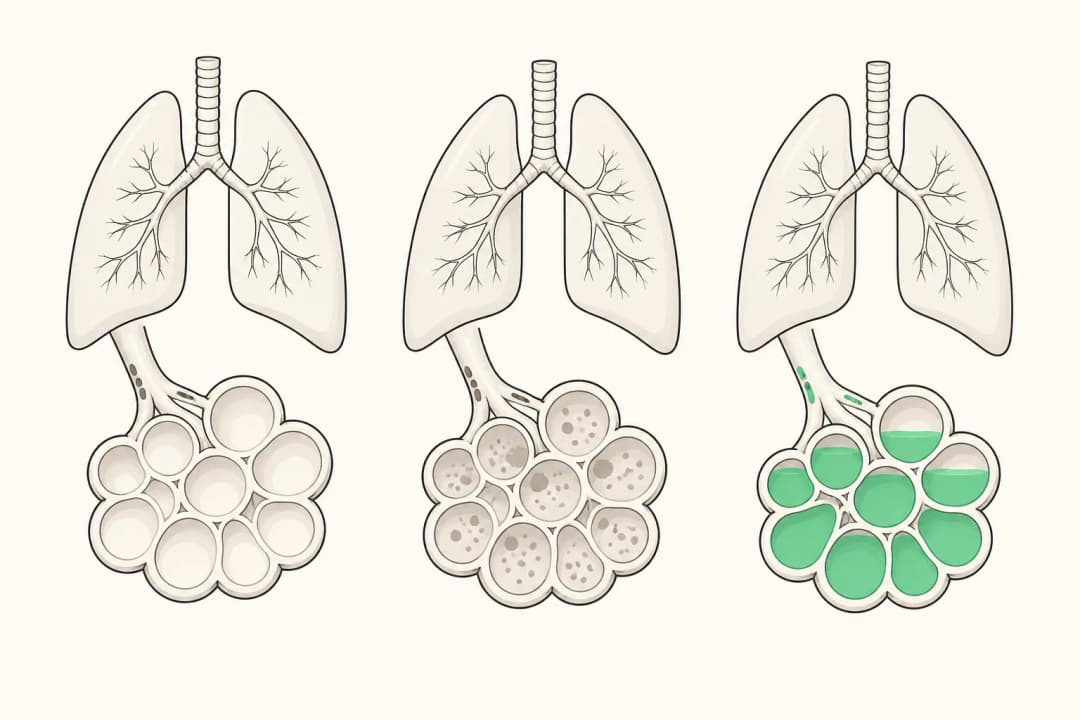
Community-acquired pneumonia occurs when germs inflame lung tissue and disrupt the air spaces used for oxygen exchange.
This answers one question. It is not a diagnosis and does not replace an assessment by a licensed doctor.
At a glance
- Main site
- The small air spaces and surrounding lung tissue
- What changes
- Inflammation and fluid can reduce efficient oxygen exchange
- Possible symptoms
- Cough, phlegm, fever, chills, and breathlessness
How pneumonia develops
Breathing normally moves air into tiny air sacs in the lungs. In pneumonia, bacteria or viruses reach the lower airways and trigger inflammation. The air sacs may collect fluid and immune cells, leaving less room for air and making oxygen movement less efficient. That process can produce cough, phlegm, fever, chills, faster breathing, and breathlessness.
The body's immune response helps contain infection but also contributes to swelling and tiredness. Influenza and COVID-19 may cause lung inflammation, while other infections can start in the airways and extend deeper. Pneumonia affects people differently, so symptoms alone cannot show how much lung tissue is involved.
What helps
A clinician can listen to your chest, assess breathing effort and oxygen level, and decide whether imaging or other tests are needed. Treatment targets the suspected cause and severity. Take prescribed medicine as directed, rest, drink fluids if safe for you, and avoid smoking. Gentle movement may help prevent prolonged inactivity, but stop if breathing becomes harder.
Record changes in breathlessness, fever, alertness, and ability to eat or drink. Improvement in one symptom does not cancel a deterioration in another. A review is sensible when recovery stalls or ordinary tasks remain unusually difficult.
When the response is dangerous
Get emergency help if you are struggling to breathe, become confused, faint, develop blue or grey lips, or cannot be woken normally. Seek urgent care for a rapid decline, severe chest pain, or inability to keep fluids down. Infection can spread into the bloodstream and cause sepsis, so a sudden change in overall condition needs immediate assessment.
Questions to bring
Ask what findings suggest pneumonia, whether your oxygen exchange needs monitoring, and which cause is being considered. Discuss how inflammation may explain your symptoms, how medicines work, and which changes mean you should seek urgent help.
Find care
General Clinics & Polyclinics in Abu Dhabi
That answer is general. If you want it applied to your own case, these are licensed general clinics & polyclinics listed in Abu Dhabi.
27 Ar Ruwwad St - Shakhbout City - MSH4 - Abu Dhabi - United Arab Emirates
Accepts: Daman, Thiqa, Cigna, MetLife +20 more
Al Ruwais, Al Dhafrah
Accepts: Daman, Thiqa, AXA, Cigna +16 more
Al Bahyah - Al Bahyah Old - Abu Dhabi - United Arab Emirates
Accepts: Daman, Thiqa, Cigna, Allianz Care +18 more
Abu Dhabi
Accepts: Daman, Thiqa, AXA, Cigna +27 more
Ordered by verification status and how complete each clinic's public record is, then alphabetically. This is a directory listing, not a ranking — Zavis does not rate or recommend providers.
A factual listing drawn from the DHA, DOH and MOHAP licence registers. It is not a referral, an endorsement, or advice that any of these providers is right for you.
Questions people ask
Why can pneumonia cause breathlessness?
Inflammation and fluid in the air spaces leave less room for normal air movement and can make oxygen exchange less efficient.
Can the infection affect the whole body?
Yes. The immune response can cause marked illness, and infection can sometimes spread beyond the lungs and lead to sepsis.
Medical disclaimer. This page is general health information, not medical advice, and it cannot diagnose you. Always consult a licensed healthcare provider about your own symptoms and treatment. In an emergency in the UAE, call 998 for an ambulance.