
What should you know about coltene electrosurgery?
Short answer
Coltene electrosurgery uses controlled electrical energy to treat selected skin lesions, with the technique chosen according to the diagnosis and treatment goal.
This answers one question. It is not a diagnosis and does not replace an assessment by a licensed doctor.
At a glance
- Energy
- Controlled high-frequency electrical energy
- Uses
- Selected lesion treatment and bleeding control
- Important check
- Confirm diagnosis and disclose implanted devices
What electrosurgery does
An electrosurgical unit sends high-frequency electrical energy through a medical instrument. Depending on the setting and tip, the clinician may cut tissue, stop small bleeding vessels, or destroy a superficial lesion. This is a procedure category, not a diagnosis, and the appropriate method depends on what is being treated and where it sits.
For a lesion such as a genital wart, the clinician should first confirm the diagnosis and discuss alternatives. Local anaesthetic may be used. The treated area can be tender, swollen, or crusted while it heals, and the final appearance can vary with depth, location, and individual healing.
Before and after the procedure
Tell the clinician about implanted electrical devices, pregnancy, medicines that affect bleeding, allergies to anaesthetic, and any history of thick scars. Ask whether tissue will be sent for examination when the diagnosis is uncertain. Keep the site clean and follow the dressing, washing, and pain-relief instructions. Avoid friction, picking, and sexual contact until the clinician says healing allows it when the treated area is genital.
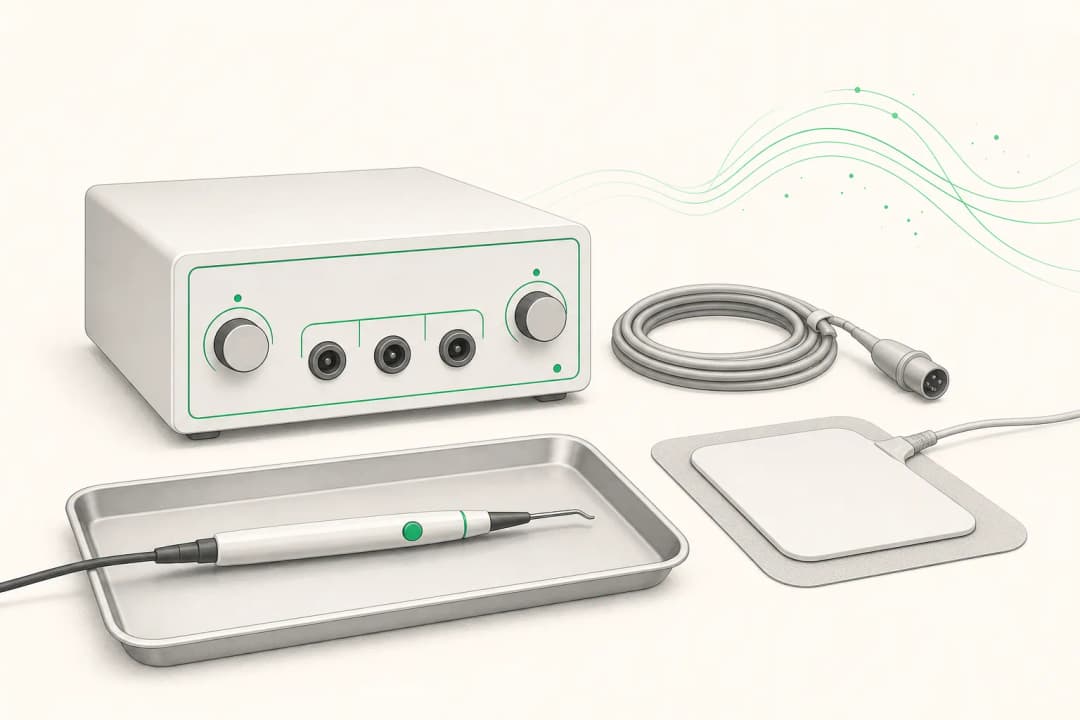
An electrosurgical unit and the handpiece are selected for the intended technique. Ask which device will be used and why it is suitable for your lesion.
When to seek medical care
Contact the clinic for bleeding that does not stop with firm pressure, worsening pain, spreading redness, pus, fever, or wound separation. Seek urgent help for heavy bleeding, faintness, breathing difficulty, or rapidly increasing swelling. A lesion that returns or fails to heal needs reassessment.
Questions to ask
What is the diagnosis, which electrosurgical technique will you use, and will a sample be examined? What healing changes are expected, how should I care for the wound, and when can I resume normal activity?
Find care
General Clinics & Polyclinics in Abu Dhabi
That answer is general. If you want it applied to your own case, these are licensed general clinics & polyclinics listed in Abu Dhabi.
27 Ar Ruwwad St - Shakhbout City - MSH4 - Abu Dhabi - United Arab Emirates
Accepts: Daman, Thiqa, Cigna, MetLife +20 more
Al Ruwais, Al Dhafrah
Accepts: Daman, Thiqa, AXA, Cigna +16 more
Al Bahyah - Al Bahyah Old - Abu Dhabi - United Arab Emirates
Accepts: Daman, Thiqa, Cigna, Allianz Care +18 more
Abu Dhabi
Accepts: Daman, Thiqa, AXA, Cigna +27 more
Ordered by verification status and how complete each clinic's public record is, then alphabetically. This is a directory listing, not a ranking — Zavis does not rate or recommend providers.
A factual listing drawn from the DHA, DOH and MOHAP licence registers. It is not a referral, an endorsement, or advice that any of these providers is right for you.
Questions people ask
Is Coltene electrosurgery a specific skin condition?
No. It refers to equipment or a device family used for procedures; the clinician still needs to identify the lesion and choose the technique.
Can electrosurgery treat genital warts?
It can be considered for selected genital warts after clinical assessment, with wound care and follow-up tailored to the treated area.
Related
Related reading
Keep reading
Medical disclaimer. This page is general health information, not medical advice, and it cannot diagnose you. Always consult a licensed healthcare provider about your own symptoms and treatment. In an emergency in the UAE, call 998 for an ambulance.