
Instruments used during a colposcopy
Short answer
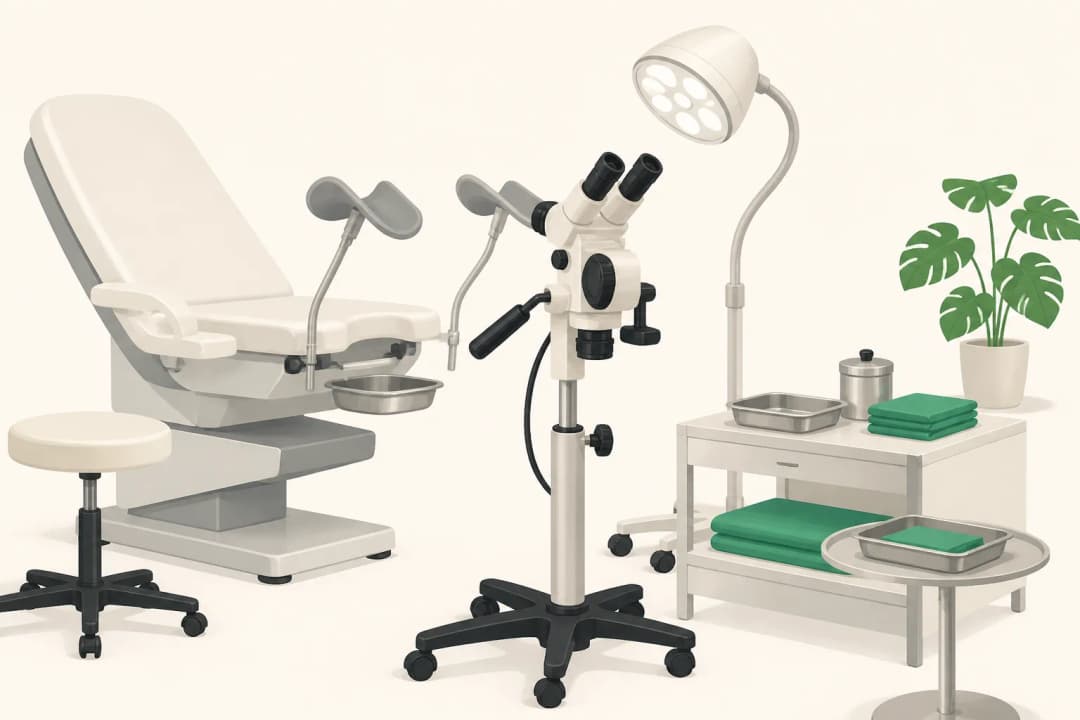
Colposcopy uses a speculum and an external magnifying colposcope, with small sampling instruments added only when tissue needs testing.
This answers one question. It is not a diagnosis and does not replace an assessment by a licensed doctor.
At a glance
- External equipment
- The colposcope stays outside the vagina.
- Internal instrument
- The speculum allows a clear view of the cervix.
- Sampling
- Biopsy forceps are used only if a tissue sample is indicated.
Which instruments are used?
A bright light is part of the colposcope, while swabs or applicators place examination liquids on the cervix. The exact setup depends on the reason for referral and what the clinician sees. Having biopsy instruments ready does not mean they will necessarily be used.
What you may feel
The colposcope does not touch you. Speculum insertion can cause pressure or stretching, and examination liquids may feel cool or briefly sting. A cervical biopsy can cause a short pinch or cramp. The clinician may use a solution afterward to limit bleeding, which can lead to dark or brown discharge.
Instruments help the clinician inspect a specific area and obtain a sample, but they do not determine the diagnosis on their own. If tissue is removed, its laboratory findings are combined with the visual examination and earlier cervical screening results.
Before and during the procedure
Check the clinic's preparation advice and tell the team about possible pregnancy, allergies, previous difficulty with pelvic examinations or medicines that affect bleeding. Do not stop prescribed medicine unless the clinician responsible for it advises you to do so. If you have your period or heavy bleeding, call ahead because visibility may affect the appointment.
You can ask to see an instrument before it is used, request a smaller speculum when appropriate, agree on a signal to pause and ask whether a biopsy is planned. Slow breathing and relaxing the legs and pelvic muscles may reduce tension during speculum placement.
Warning signs after sampling
Mild spotting or cramping can occur after a biopsy. Get advice promptly if bleeding becomes heavy or continues to increase, pain is severe or worsening, discharge develops a strong unpleasant smell, or fever and marked unwellness occur. Fainting, breathing difficulty, severe weakness or rapidly soaking menstrual protection warrants urgent medical care.
Questions about the procedure
Ask which instruments are expected, what sensations each may cause, how discomfort will be handled and whether you may stop the examination. If tissue is taken, clarify the aftercare restrictions, the expected type of discharge, when results will arrive and who will discuss them with you.
Find care
General Clinics & Polyclinics in Abu Dhabi
That answer is general. If you want it applied to your own case, these are licensed general clinics & polyclinics listed in Abu Dhabi.
27 Ar Ruwwad St - Shakhbout City - MSH4 - Abu Dhabi - United Arab Emirates
Accepts: Daman, Thiqa, Cigna, MetLife +20 more
Al Ruwais, Al Dhafrah
Accepts: Daman, Thiqa, AXA, Cigna +16 more
Al Bahyah - Al Bahyah Old - Abu Dhabi - United Arab Emirates
Accepts: Daman, Thiqa, Cigna, Allianz Care +18 more
Abu Dhabi
Accepts: Daman, Thiqa, AXA, Cigna +27 more
Ordered by verification status and how complete each clinic's public record is, then alphabetically. This is a directory listing, not a ranking — Zavis does not rate or recommend providers.
A factual listing drawn from the DHA, DOH and MOHAP licence registers. It is not a referral, an endorsement, or advice that any of these providers is right for you.
Questions people ask
Is the colposcope inserted into the body?
No. It remains outside and focuses through the opening created by the speculum.
Are biopsy instruments used at every colposcopy?
No. A biopsy is taken only when the clinician considers a tissue sample necessary for assessment.
Can I ask the clinician to pause?
Yes. You can request a pause at any stage and ask what an instrument is for before it is used.
Related
Related reading
Keep reading
Medical disclaimer. This page is general health information, not medical advice, and it cannot diagnose you. Always consult a licensed healthcare provider about your own symptoms and treatment. In an emergency in the UAE, call 998 for an ambulance.