
Asthma exacerbation explained
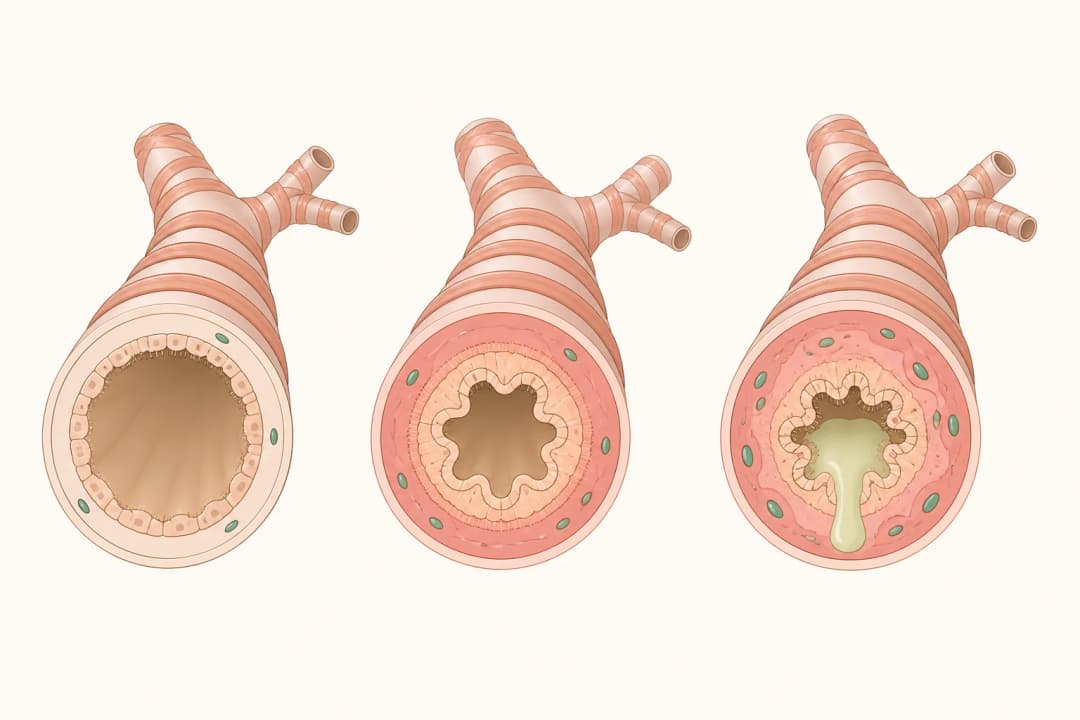
Short answer
An asthma exacerbation is a worsening of airway narrowing and inflammation that causes increasing breathing symptoms and requires prompt action.
This answers one question. It is not a diagnosis and does not replace an assessment by a licensed doctor.
At a glance
- Definition
- A noticeable worsening of asthma symptoms and airway narrowing
- First resource
- Your personalised written asthma action plan
- Follow-up focus
- Triggers, control, medicine use and inhaler technique
The short answer
It may develop quickly or build over time. Cough, wheezing, chest tightness, breathlessness, night waking and reduced ability to carry out normal activities can signal deterioration. The episode can become dangerous when breathing effort rises or prescribed reliever medicine provides inadequate relief.
What happens during an exacerbation
Airway muscles tighten while the airway lining swells and may produce more mucus, leaving less space for air to move. Respiratory infections, smoke, dust, allergens, cold air, exercise or missed controller treatment may contribute. Sometimes no single trigger is clear, so the change from your usual symptom pattern matters.
What to do when asthma worsens
Use your written asthma action plan as soon as symptoms worsen. Sit upright, stay away from an obvious trigger, and take prescribed reliever treatment according to the plan. Do not lie flat or wait for severe symptoms before acting. If the plan includes monitoring, record symptoms and readings without delaying care.
After an exacerbation, arrange follow-up to discuss the likely trigger, inhaler technique, controller use and whether the action plan needs updating. Do not make ongoing medicine changes without clinical guidance.
When an exacerbation is an emergency
Seek emergency medical help for severe or rapidly worsening breathlessness, inability to speak in full sentences, blue or grey lips, confusion, exhaustion, marked drowsiness, or reliever medicine that is not working as your plan describes. Continue the emergency actions in your plan while help is on the way, and do not drive yourself if breathing is severely impaired.
Questions after an exacerbation
Ask what may have triggered the episode, whether your daily control is adequate, and how to recognise early deterioration next time. Have the clinician observe your inhaler technique and clarify each action-plan instruction, including when to repeat reliever treatment and when to call emergency services.
Find care
General Clinics & Polyclinics in Abu Dhabi
That answer is general. If you want it applied to your own case, these are licensed general clinics & polyclinics listed in Abu Dhabi.
27 Ar Ruwwad St - Shakhbout City - MSH4 - Abu Dhabi - United Arab Emirates
Accepts: Daman, Thiqa, Cigna, MetLife +20 more
Al Ruwais, Al Dhafrah
Accepts: Daman, Thiqa, AXA, Cigna +16 more
Al Bahyah - Al Bahyah Old - Abu Dhabi - United Arab Emirates
Accepts: Daman, Thiqa, Cigna, Allianz Care +18 more
Abu Dhabi
Accepts: Daman, Thiqa, AXA, Cigna +27 more
Ordered by verification status and how complete each clinic's public record is, then alphabetically. This is a directory listing, not a ranking — Zavis does not rate or recommend providers.
A factual listing drawn from the DHA, DOH and MOHAP licence registers. It is not a referral, an endorsement, or advice that any of these providers is right for you.
Questions people ask
Is an asthma exacerbation the same as an asthma attack?
The terms are often used for a worsening episode. Exacerbation can describe a range of severity, while asthma attack is commonly used for a sudden or concerning episode.
Can an exacerbation happen without wheezing?
Yes. An asthma exacerbation may present with cough, chest tightness, breathlessness or reduced activity even when wheezing is not obvious.
Why is follow-up needed after symptoms settle?
A review can identify a trigger, uncover poor baseline control, correct inhaler technique and make the action plan clearer for future deterioration.
Related
Related reading
Keep reading
Medical disclaimer. This page is general health information, not medical advice, and it cannot diagnose you. Always consult a licensed healthcare provider about your own symptoms and treatment. In an emergency in the UAE, call 998 for an ambulance.