
Asthma attack causes: triggers and warning signs
Short answer
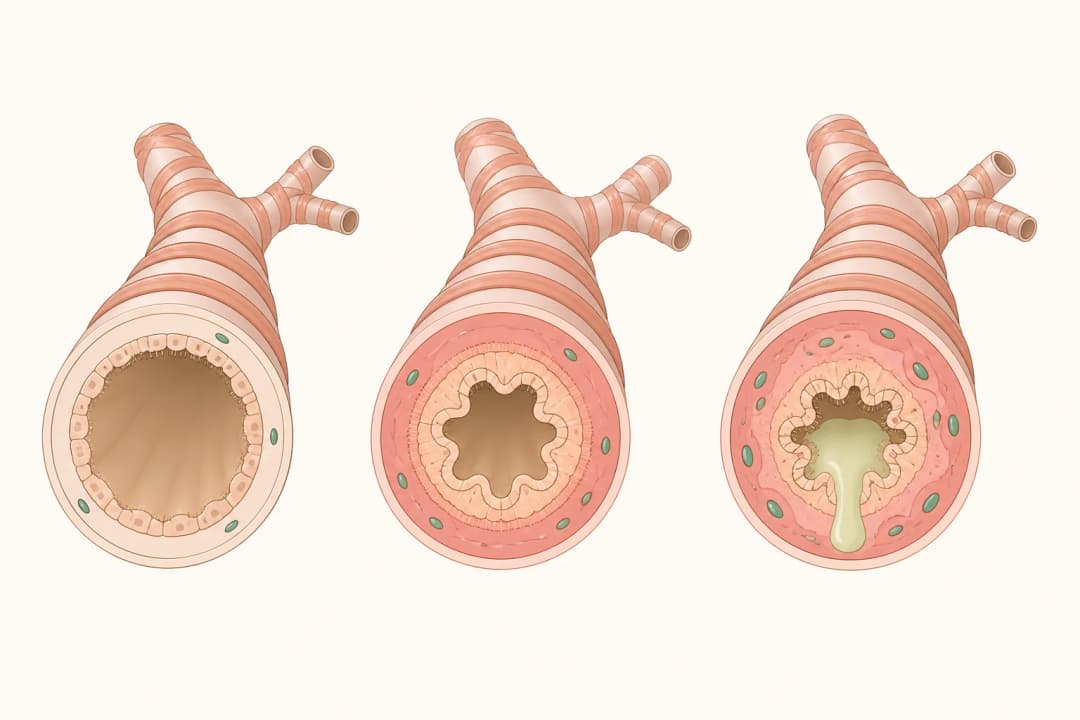
An asthma attack can begin when sensitive airways react to a trigger, becoming inflamed, narrow and clogged with extra mucus.
This answers one question. It is not a diagnosis and does not replace an assessment by a licensed doctor.
At a glance
- Airway change
- Swelling, muscle tightening and mucus restrict airflow.
- Useful preparation
- Keep prescribed reliever treatment accessible and follow a written action plan.
- Review clue
- Night waking or more frequent symptoms can signal poorer asthma control.
The short answer
Triggers differ between people and may include viral respiratory infections, smoke, dust mites, pollen, pets, strong fumes, cold air, exercise or emotional stress. Sometimes no single trigger is obvious.
What happens during an attack
Muscles around the breathing tubes tighten while the lining swells and produces mucus. Less air can move through, causing wheeze, cough, chest tightness or shortness of breath. Asthma commonly presents with these symptoms, but their intensity and combination can change from one episode to another.
An attack may follow several exposures rather than one event. For example, a respiratory infection can make the airways more sensitive, then smoke or exertion can worsen the narrowing.
What to do when symptoms start
Stop the activity, move away from smoke, fumes or another identifiable trigger, and sit upright. Follow your written asthma action plan and use your prescribed reliever exactly as directed. Stay with a child or anyone who is frightened or struggling to breathe.
Once breathing has settled, record where the episode occurred, recent illness, exposures and how the reliever worked. Repeated symptoms, night waking or increasing reliever use merit a clinical review of inhaler technique, treatment and trigger control.
When to seek urgent care
Call local emergency services now if the person is gasping, cannot speak comfortably, has blue or grey lips, becomes confused or drowsy, collapses, or is rapidly worsening. Urgent help is also needed when the prescribed reliever is unavailable, does not provide the expected relief, or symptoms return quickly after use.
Do not drive yourself during severe breathing difficulty. Continue the emergency steps in the person’s action plan while help is coming, and do not lie them flat.
Questions for your clinician
Ask which triggers fit your symptom pattern, whether your preventer needs adjustment, and how to recognise that an episode is becoming dangerous. Request a demonstration of inhaler and spacer technique and a written plan explaining daily treatment, worsening symptoms and emergency action.
Find care
General Clinics & Polyclinics in Abu Dhabi
That answer is general. If you want it applied to your own case, these are licensed general clinics & polyclinics listed in Abu Dhabi.
27 Ar Ruwwad St - Shakhbout City - MSH4 - Abu Dhabi - United Arab Emirates
Accepts: Daman, Thiqa, Cigna, MetLife +20 more
Al Ruwais, Al Dhafrah
Accepts: Daman, Thiqa, AXA, Cigna +16 more
Al Bahyah - Al Bahyah Old - Abu Dhabi - United Arab Emirates
Accepts: Daman, Thiqa, Cigna, Allianz Care +18 more
Abu Dhabi
Accepts: Daman, Thiqa, AXA, Cigna +27 more
Ordered by verification status and how complete each clinic's public record is, then alphabetically. This is a directory listing, not a ranking — Zavis does not rate or recommend providers.
A factual listing drawn from the DHA, DOH and MOHAP licence registers. It is not a referral, an endorsement, or advice that any of these providers is right for you.
Questions people ask
Can an asthma attack happen without a clear cause?
Yes. An exposure may be difficult to identify, and several minor triggers can combine. A symptom diary can help reveal patterns over time.
Can exercise trigger asthma symptoms?
Exercise can narrow sensitive airways, especially in cold or dry air. A clinician can help plan warm-up, prescribed treatment and safe activity rather than advising routine avoidance.
Why do colds make asthma worse?
A viral respiratory infection can inflame the airways and make them more reactive, so coughing, wheezing or breathlessness may intensify.
Related
Related reading
Keep reading
Medical disclaimer. This page is general health information, not medical advice, and it cannot diagnose you. Always consult a licensed healthcare provider about your own symptoms and treatment. In an emergency in the UAE, call 998 for an ambulance.