
Acute asthma exacerbation: recognising a flare
Short answer
An acute asthma exacerbation is a flare of worsening asthma symptoms and airflow limitation that needs early action based on a personal treatment plan.
This answers one question. It is not a diagnosis and does not replace an assessment by a licensed doctor.
At a glance
- Early clues
- Night waking, extra cough or increasing reliever need
- Core response
- Follow the written asthma action plan
- After a flare
- Review control, technique and triggers
The short answer
A flare may begin with more frequent cough, wheeze, night waking or reliever use before breathing becomes obviously difficult. Acting at those early changes can prevent further deterioration, but red-flag breathing symptoms require emergency help.
What changes during a flare
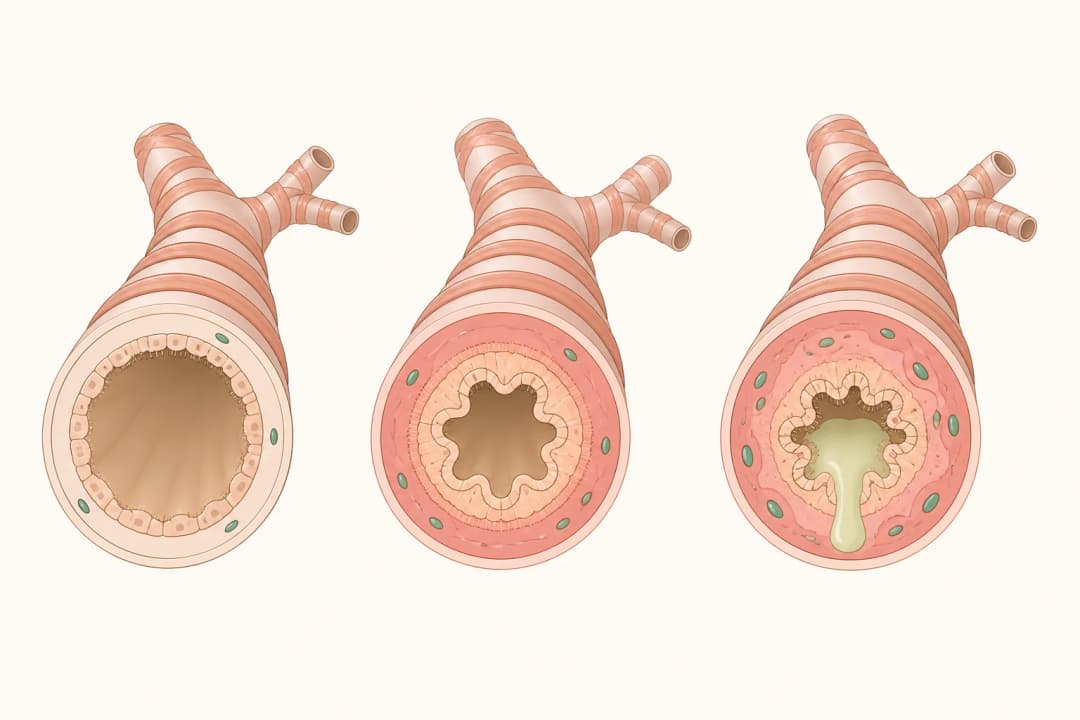
Inflammation and muscle tightening make the airways narrower than usual, so moving air out of the lungs takes more effort. An asthma exacerbation often presents with increasing wheeze, chest tightness, cough, breathlessness, reduced activity tolerance or disturbed sleep.
Some flares develop after a respiratory infection or exposure to smoke, dust mites, pollen or workplace irritants. Others follow missed controller doses or poor inhaler delivery. More than one factor may be involved, and the absence of a clear trigger does not make worsening breathing less significant.
Responding to early deterioration
Use the instructions in your current written asthma action plan, including the prescribed reliever and any clinician-directed adjustment to controller medicine. Check inhaler technique, use a spacer if advised, stay upright and stop exposure to an obvious irritant. Keep track of symptom progression and how long relief lasts.
Contact a clinician promptly if you need the reliever more often than your plan allows, symptoms interrupt sleep or usual activities, or the expected improvement does not occur. Do not start leftover antibiotics or oral steroids unless a clinician has specifically instructed you to do so for this flare.
Signs the flare is severe
Get emergency assistance for difficulty speaking, severe breathlessness at rest, blue or grey lips, exhaustion, confusion, fainting, a silent chest or rapidly worsening symptoms. Rescue medicine that brings little or only brief relief is another reason not to wait.
While waiting, remain upright and continue rescue steps from the action plan. After any urgent episode, clinical reassessment can confirm that breathing has stabilised and address the treatment gap or exposure that contributed to the exacerbation.
Topics for the follow-up review
Discuss which early changes marked this flare, whether your daily control medicine needs adjustment, and whether allergy or infection symptoms need separate management. Have the clinician watch you use each inhaler and confirm when your action plan tells you to escalate care.
Find care
General Clinics & Polyclinics in Abu Dhabi
That answer is general. If you want it applied to your own case, these are licensed general clinics & polyclinics listed in Abu Dhabi.
27 Ar Ruwwad St - Shakhbout City - MSH4 - Abu Dhabi - United Arab Emirates
Accepts: Daman, Thiqa, Cigna, MetLife +20 more
Al Ruwais, Al Dhafrah
Accepts: Daman, Thiqa, AXA, Cigna +16 more
Al Bahyah - Al Bahyah Old - Abu Dhabi - United Arab Emirates
Accepts: Daman, Thiqa, Cigna, Allianz Care +18 more
Abu Dhabi
Accepts: Daman, Thiqa, AXA, Cigna +27 more
Ordered by verification status and how complete each clinic's public record is, then alphabetically. This is a directory listing, not a ranking — Zavis does not rate or recommend providers.
A factual listing drawn from the DHA, DOH and MOHAP licence registers. It is not a referral, an endorsement, or advice that any of these providers is right for you.
Questions people ask
Is an asthma exacerbation the same as an asthma attack?
The terms overlap. Exacerbation can describe a range from a gradually worsening flare to a severe attack, so the person's breathing and response to treatment determine urgency.
Can a cold trigger an asthma flare?
Yes. Respiratory infections can inflame sensitive airways and asthma may then present with increased cough, wheeze or breathlessness. Use the action plan and monitor for deterioration.
Why does my reliever help only briefly during a flare?
A reliever can relax airway muscle, while continuing inflammation or mucus may keep narrowing the breathing tubes. Short-lived relief warrants prompt medical assessment.
Keep reading
Medical disclaimer. This page is general health information, not medical advice, and it cannot diagnose you. Always consult a licensed healthcare provider about your own symptoms and treatment. In an emergency in the UAE, call 998 for an ambulance.