
Facet Joint Injection: Procedure, Benefits, and Recovery
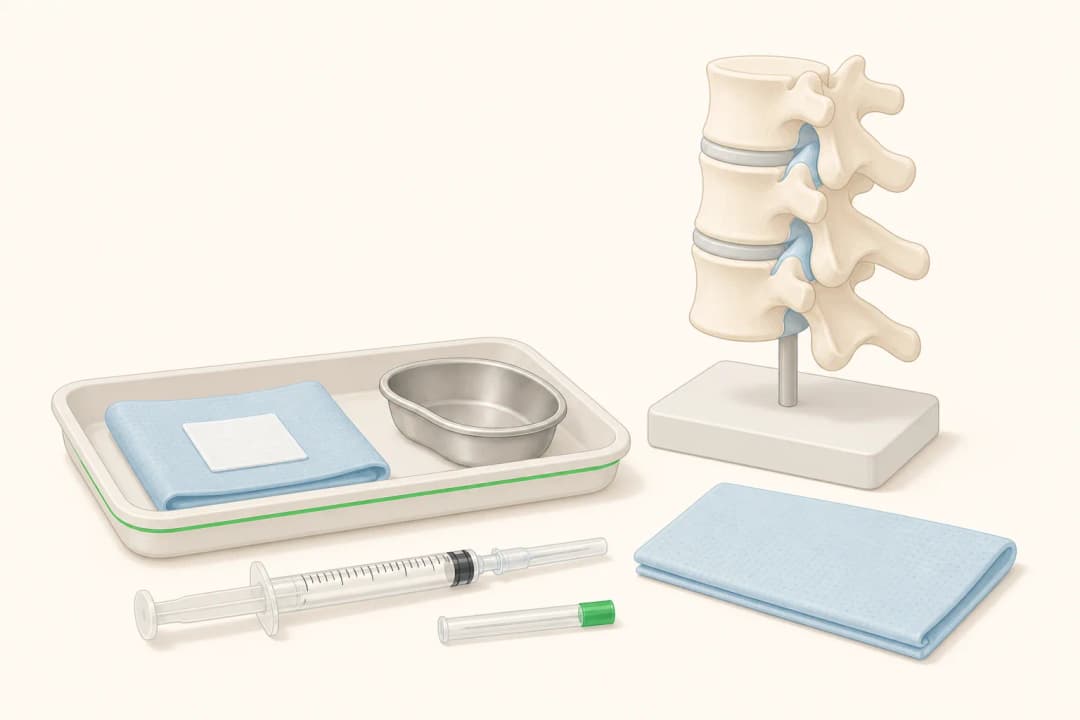
At a glance
- Target
- A selected facet joint in the neck or back
- Medicines
- Local anaesthetic, with corticosteroid in some plans
- Guidance
- Needle placement is checked with imaging
Find care
Radiology & Imaging in Dubai
Licensed radiology & imaging listed in Dubai. Appearing here means a provider holds a UAE licence in this category — not that it offers facet joint injection: procedure, benefits, and recovery, which is worth confirming with the clinic before you book.
First Gulf Real Estate Building, Amman Street, AL NAHDA FIRST, Dubai
Accepts: Daman, Thiqa, AXA, Cigna +28 more
LEADER, 3 Street 99, DUBAI INVESTMENT PARK FIRST, Dubai
Accepts: Daman, Thiqa, AXA, Cigna +29 more
villa, Al Wasl Road, JUMEIRAH FIRST, Dubai
Accepts: Daman, Thiqa, AXA, Cigna +16 more
Aletihad Diagnostic Center, Alwasl Road, AL SAFFA SECOND, Dubai
Accepts: AXA, Cigna, MetLife, Allianz Care +17 more
Moza Suwaidan Saeed Building, 45b Street 27, AL MURQABAT, Dubai
Accepts: Thiqa, AXA, Cigna, MetLife +25 more
Rdk1, 70 Street, DUBAI INVESTMENT PARK FIRST, Dubai
Accepts: Daman, AXA, Cigna, MetLife +20 more
Ordered by verification status and how complete each clinic's public record is, then alphabetically. This is a directory listing, not a ranking — Zavis does not rate or recommend providers.
A factual listing drawn from the DHA, DOH and MOHAP licence registers. It is not a referral, an endorsement, or advice that any of these providers is right for you.
What is a facet joint injection?
A facet joint injection delivers local anaesthetic, sometimes with corticosteroid, into or around a spinal facet joint under image guidance.
Facet joints sit at the back of the spine and help guide movement between neighbouring vertebrae. The injection may be considered when pain seems to arise from these joints and simpler care has not provided enough relief. The anaesthetic can provide short-term numbing; the corticosteroid is intended to calm local inflammation. Read more about [Corticosteroid](/materials/corticosteroid/) and [Local Anaesthetic](/materials/local-anaesthetic/).
How fast will I feel a difference?
Numbing from the local anaesthetic may be noticed during or soon after the procedure, but that early change can be temporary. The steroid component, when used, may take longer to have an effect. Pain can fluctuate during the first part of recovery, so record both relief and movement rather than judging the result from one short period.
What are the side effects?
The injection site may be tender, and some people experience a temporary increase in pain, flushing, dizziness, or altered sensation. Infection, bleeding, nerve irritation, or a reaction to the medicines are uncommon but important possibilities. Tell the team about blood-thinning medicines, diabetes, allergies, infection, or pregnancy before the procedure.
How long will I be on it?
A facet joint injection is a procedure rather than a daily treatment course. Its benefit, if it occurs, may last for a variable period and does not repair every cause of spinal pain. Your clinician will review the response and decide whether to focus on rehabilitation, another diagnostic step, or a different treatment.
Key facts
The injection is targeted to a suspected pain source, not to every structure in the spine. Imaging helps the clinician position the needle and limit unnecessary tissue contact. Relief after the numbing medicine can also provide information about whether the facet joint contributes to your symptoms, although it does not prove that it is the only cause.
Who may be considered for it?
It may be discussed for selected neck or back pain when examination and imaging suggest facet involvement. Conditions such as [Facet Joint Syndrome](/conditions/facet-joint-syndrome/), [Cervical Spondylosis](/conditions/cervical-spondylosis/), or [Lumbar Spondylosis](/conditions/lumbar-spondylosis/) can be part of that assessment. A clinician will also check whether infection, fracture, nerve compression, or another diagnosis needs different care.
How the procedure is performed
You lie in a position that allows access to the chosen spinal level. After the skin is cleaned and numbed, the clinician guides a fine needle using imaging, places the medicine, and removes the needle. A dressing is applied and you are observed before leaving. Tell the team immediately if you feel severe pain, weakness, faintness, or a new unusual sensation.
Recovery timeline
Follow the discharge instructions about driving, strenuous activity, bathing, and medicines. Arrange help if sedation has been used or if your clinician advises it. Keep a simple record of pain, mobility, and the activities you can do in the following days; this helps the review distinguish short-lived numbness from a broader change.
Risks and warning signs
Contact the treating service urgently for fever, increasing redness or drainage, severe or persistent headache, new leg or arm weakness, loss of bladder or bowel control, or rapidly worsening pain. Emergency assessment is needed for sudden major weakness, difficulty breathing, or collapse. The team can explain how your personal medicines and health conditions alter preparation.
Alternatives to consider
Options depend on the suspected pain source and may include physiotherapy, activity changes, medicines, education, or a different image-guided procedure. If a diagnostic injection gives useful but temporary information, [Radiofrequency Ablation](/treatments/spine-care/radiofrequency-ablation/) may be discussed in selected situations. The choice should follow an examination and a review of your response.
Finding a provider
Choose a clinician experienced in image-guided spine procedures and ask which spinal level is being targeted, what medicine is planned, and how benefit will be assessed. Share scans, prior treatments, allergies, current medicines, and any bleeding or infection concerns before scheduling.
Questions people ask
Will I be awake?
Many people remain awake while the area is numbed; sedation depends on the setting and your clinical plan.
Can I drive afterwards?
Follow the service instructions, and do not drive if sedation, weakness, or impaired sensation makes it unsafe.
Does the injection cure back pain?
It may reduce pain or help identify a source, but it does not correct every cause of neck or back pain.
Related
Related reading
Keep reading
Medical disclaimer. This page is general health information, not medical advice, and it cannot diagnose you. Always consult a licensed healthcare provider about your own symptoms and treatment. In an emergency in the UAE, call 998 for an ambulance.