
Strength Training Rehabilitation
Updated
At a glance
- Main aim
- Build usable strength and movement capacity
- Common tools
- Body weight, bands, weights or machines
- Plan style
- Gradual, reviewed and tailored to your goals
Find care
General Clinics & Polyclinics in Dubai
Licensed general clinics & polyclinics listed in Dubai. Appearing here means a provider holds a UAE licence in this category — not that it offers strength training rehabilitation, which is worth confirming with the clinic before you book.
The Court Residence, 39B Street, Jumeirah 1, Dubai
Accepts: Tabby, Tamara
Elite Business Bay Residence - Shop 03 & 04, 34 Marasi Dr - Business Bay - Dubai - United Arab Emirates
Accepts: Tabby
Airport View Building, Al Garhoud, Dubai
Accepts: Daman, Thiqa, AXA, Cigna +25 more
IBIS Building, 5th Floor, Unit 5003, Deira, Dubai
Accepts: AXA, Cigna, MetLife, Allianz Care +18 more
- Aarna Elite Medical CenterVerified
Madeira Building, Shop 1 & 2, Al Jadaf, Dubai, UAE
- 515 Medical & Training ClinicVerified
Villa 991, Al Wasel Road, next to J3 Mall, Al Manara, Dubai, United Arab Emirates
Accepts: Thiqa, AXA, Cigna, Allianz Care +12 more
Ordered by verification status and how complete each clinic's public record is, then alphabetically. This is a directory listing, not a ranking — Zavis does not rate or recommend providers.
A factual listing drawn from the UAE health regulators' public licence registers. It is not a referral, an endorsement, or advice that any of these providers is right for you.
What is strength training rehabilitation?
Strength training rehabilitation is a supervised programme that gradually increases muscle and tendon capacity for safer movement and everyday activities.
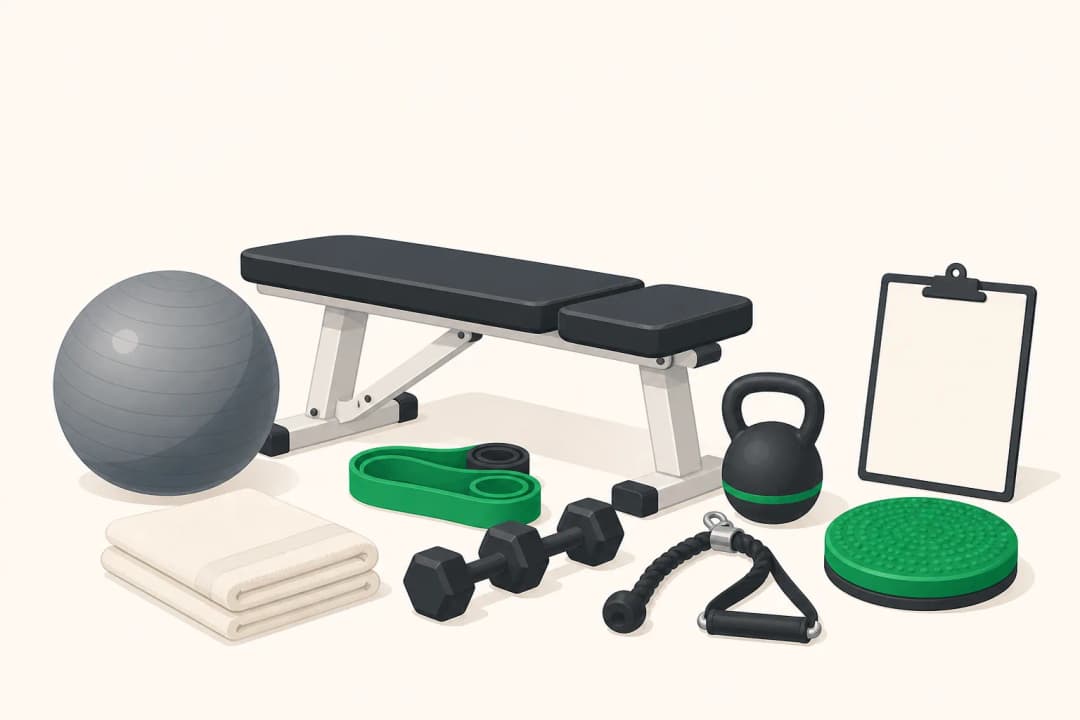
A physiotherapist may use body weight, resistance bands, weights, machines or controlled functional tasks. The starting load depends on your symptoms, movement quality, current strength and the demands you want to resume. Exercises can be adjusted for pain, balance, joint stiffness and confidence.
How fast will I feel a difference?
Some people notice an early change in control, confidence or ease of movement before measurable strength has fully returned. Progress depends on the injured area, how long it has been underused, sleep, health conditions and how consistently the programme is followed. A temporary increase in muscle effort is different from sharp pain, swelling or a loss of function; report those changes so the load can be reviewed.
What are the side effects?
Common responses include muscle tiredness, stiffness and soreness after a new or harder exercise. These should settle as your body adapts. Poorly matched loading can aggravate a tendon or joint, especially when technique, rest or progression is not addressed. Stop an exercise and seek clinical advice for sudden severe pain, marked swelling, new weakness or altered sensation.
How long will I be on it?
The programme may last from several appointments to a longer period of independent practice. It usually changes as your goals change: early sessions may focus on activation and control, followed by heavier resistance and tasks such as stairs, lifting, running or work movements. Your clinician can reduce supervision when you can perform the exercises safely and adjust them yourself.
Key facts
Strength work is not limited to athletes. It can help address deconditioning, reduced muscle mass, tendon load intolerance and weakness after time away from normal activity. The aim is useful capacity, not simply lifting a heavier weight.
Who may benefit?
A clinician may recommend this approach for people recovering from injury, surgery or prolonged rest, or for those with weakness affecting walking, stairs, lifting or sport. It is also used alongside care for Achilles Tendinitis, Gluteal Tendinopathy, Patellar Tendinitis, Tendinopathy, Osteopenia, Sarcopenia or Hypermobility Syndrome. Muscle Weakness that is new, worsening or unexplained needs assessment before starting a demanding plan.
What happens in a session?
Your physiotherapist identifies a safe starting point, demonstrates the movement and watches how you perform it. You then practise a set of exercises with planned rests. The clinician records your response, gives home instructions and decides whether the next session should increase, maintain or reduce the challenge. Do not add extra load simply because an exercise feels easy on one day.
How progress is monitored
Progress is judged through practical changes such as steadier walking, easier transfers, improved reach, better tolerance of stairs or a return to a chosen activity. A slow, steady response can be appropriate. Flare-ups may mean the recent load was too much, rather than that strengthening is unsuitable; your plan can be modified.
Risks and precautions
Resistance exercise is generally adaptable, but it is not appropriate to push through every symptom. Tell the clinician about recent surgery, fractures, neurological symptoms, heart or breathing problems, osteoporosis concerns and medicines that affect exercise tolerance. Good setup, gradual progression and rest help limit avoidable aggravation.
Other ways to build capacity
Depending on your assessment, treatment may also include mobility work, balance practice, education, aerobic conditioning, activity modification or hands-on techniques. These approaches can complement strengthening, but the choice should match the structure involved and the task you need to regain.
Finding suitable rehabilitation care
Look for a licensed physiotherapist who regularly treats your injury or activity goal. Ask how progress will be measured, how home exercises will be changed, and what symptoms should prompt contact. Bring details about your usual activities and any previous treatment so the starting plan is realistic.
Questions people ask
Can I do rehabilitation exercises at home?
Often yes, once a clinician has shown you the movements, starting load, rest pattern and signs that mean you should pause.
Should exercise hurt?
Effort and mild muscle soreness can occur, but sharp pain, increasing swelling or new weakness should be discussed with your clinician.
Is strength training only for muscle problems?
No. Carefully selected loading can support tendon, bone, joint and whole-body function as well as muscle capacity.
Related
Related reading
Keep reading
Medical disclaimer. This page is general health information, not medical advice, and it cannot diagnose you. Always consult a licensed healthcare provider about your own symptoms and treatment. In an emergency in the UAE, call 998 for an ambulance.