
Gluteal Tendinopathy: Symptoms, Causes and Treatment
At a glance
- Also known as
- Gluteus medius tendinopathy
- Common areas
- Outer hip and buttock
- Typical focus
- Load management and progressive strengthening
What is gluteal tendinopathy?
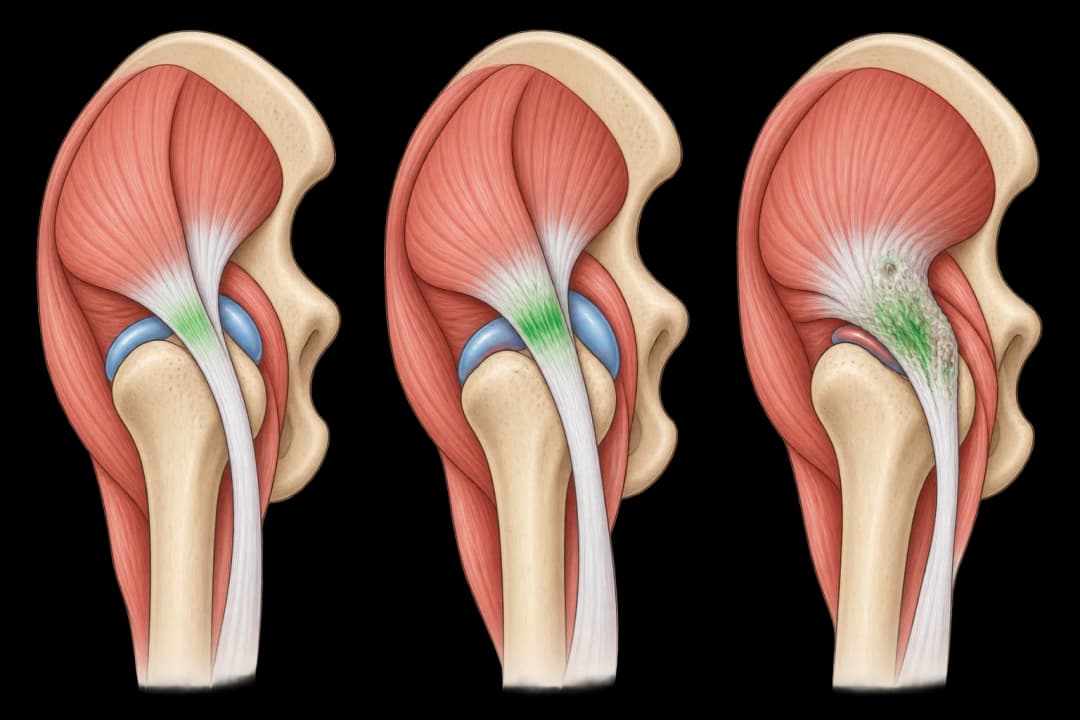
Gluteal tendinopathy is an overload-related problem of the tendons that connect the buttock muscles to the outer hip.
It is also called gluteus medius tendinopathy. The tendon may become sensitive when it is repeatedly compressed or asked to produce more force than it currently tolerates. Pain can be felt over the outer hip or deep in the buttock, and it may affect sleep, stairs, walking or exercise.
Symptoms and common patterns
Buttock pain is a common presentation of gluteal tendinopathy, and hip pain is also common. Symptoms often sit on one side over the bony outer hip and may spread into the upper outer thigh.
Pain can increase when lying on the affected side, crossing the legs, climbing stairs, standing on one leg, rising from a chair or walking uphill. Tenderness when the outer hip is pressed is another useful clue. Pain does not by itself confirm the diagnosis, because nearby joints and the lower back can produce similar symptoms.
Causes and contributing factors
A sudden increase in walking, running, stair use or strength training can exceed tendon capacity. A change in footwear, terrain, work demands or training volume may contribute. Tendons can also become less tolerant after a period of inactivity, so returning quickly to a previous routine may provoke symptoms.
Hip muscle weakness, altered movement control and sustained positions that press the outer hip can add load. Often there is no single injury; symptoms build as repeated loading outpaces recovery.
How it can change over time
Symptoms may fluctuate with activity and sleep position. Continuing to provoke pain can make everyday loading harder, while gradual, well-paced strengthening can improve tolerance. Progress is usually tracked by easier walking, better sleep and the ability to perform exercises with less discomfort rather than by a single test.
Factors that can raise tendon load
Risk can increase with a rapid activity change, repeated hills or stairs, occupations involving prolonged standing, reduced hip strength, or regular side-lying on a sensitive hip. Previous episodes and a long break from exercise may also affect load tolerance. These factors do not make the condition inevitable.
How clinicians diagnose it
A clinician asks where the pain is, when it started, which activities change it and whether sleep is affected. They examine hip movement, strength, tenderness and single-leg control, while screening the back and hip joint for other explanations.
Imaging is not always needed. Ultrasound or magnetic resonance imaging may be considered when the diagnosis is uncertain, symptoms persist despite a suitable plan, or another injury needs checking.
Treatment options
Management usually combines activity adjustment with progressive rehabilitation. Physiotherapy can reduce aggravating compression, restore hip control and set an exercise load that increases gradually. Strength Training Rehabilitation may target the gluteal muscles, trunk and legs, beginning with tolerable positions and advancing toward stairs, running or work tasks.
Shockwave Therapy may be discussed as an adjunct when symptoms remain persistent; suitability depends on the assessment. A clinician can also help with sleep positioning, temporary changes to walking routes and a staged return to sport.
Living with symptoms
Keep moving within a tolerable range rather than stopping all activity. Avoid resting directly on the painful side; a pillow between the knees can reduce hip compression during side-lying. Record which loads help or flare symptoms so your rehabilitation plan can be adjusted.
When symptoms need another review
Persistent pain can lead to reduced activity, sleep disruption and loss of confidence with stairs or exercise. New weakness, pain after a significant fall, fever, marked swelling, numbness or rapidly worsening symptoms need prompt medical assessment because they may indicate a different problem.
Reducing future flare-ups
Increase walking, running and strengthening gradually, with recovery between demanding sessions. Maintain hip and leg strength, vary prolonged positions and avoid sudden changes in hills or stair volume. If symptoms return, reduce the provoking load early and rebuild it progressively.
Finding suitable care
A physiotherapist or musculoskeletal clinician can assess outer-hip pain and design a progressive plan. Bring details about your activity changes, sleep position, work demands and the movements that reproduce pain. Seek medical review if symptoms are severe, follow an injury or do not improve with sensible load changes.
Questions people ask
Is gluteal tendinopathy the same as hip arthritis?
No. Gluteal tendinopathy affects the tendons around the outer hip, while arthritis affects the joint. An examination helps distinguish them.
Can I exercise with gluteal tendinopathy?
Often yes, with exercise selected and progressed to match your current tolerance. Painful hills, side-lying pressure and sudden increases in load may need temporary modification.
Related
Related reading
Keep reading
Find care
Physiotherapy & Rehabilitation in Dubai
Where gluteal tendinopathy: symptoms, causes and treatment is assessed depends on what is causing it. These are licensed physiotherapy & rehabilitation listed in Dubai.
Office 1510, SIT Tower, Dubai Silicon Oasis, Dubai, United Arab Emirates
Accepts: Daman, Thiqa, AXA, Cigna +23 more
- Physio Expert DubaiVerified
Renew and Revive Polyclinic, Al Wasl Rd, opposite J3 Mall, Umm Suqeim 2, Dubai, United Arab Emirates
Accepts: Insurance accepted
Kent Healthcare LLC, Nashwan Building - 208C Al Mankhool Rd, Al Raffa, Dubai, United Arab Emirates
Accepts: Thiqa, AXA, Cigna, MetLife +23 more
Index Building, Nad Al Hamar Road, Dubai Festival City, Dubai
Accepts: Thiqa, AXA, Cigna, MetLife +30 more
Ordered by verification status and how complete each clinic's public record is, then alphabetically. This is a directory listing, not a ranking — Zavis does not rate or recommend providers.
A factual listing drawn from the DHA, DOH and MOHAP licence registers. It is not a referral, an endorsement, or advice that any of these providers is right for you.
Medical disclaimer. This page is general health information, not medical advice, and it cannot diagnose you. Always consult a licensed healthcare provider about your own symptoms and treatment. In an emergency in the UAE, call 998 for an ambulance.