
PEEK Spinal Cage: Uses, Properties, and Patient Questions
Updated
At a glance
- Material
- Polyether ether ketone (PEEK)
- Placement
- Between selected vertebrae
- Main goal
- Disc-space support during fusion
What a PEEK spinal cage is
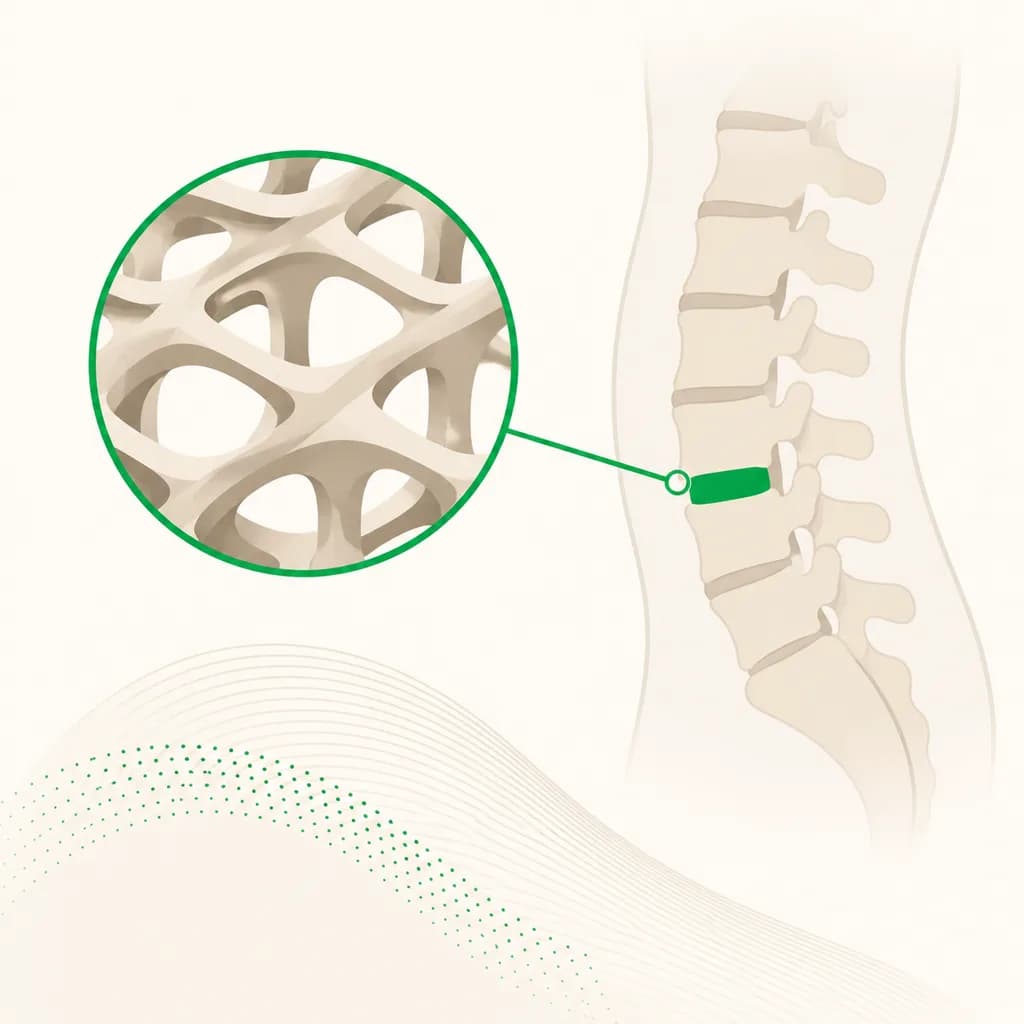
PEEK means polyether ether ketone, a strong medical-grade polymer used in some spinal implants. A spinal cage is shaped to fit between vertebrae after a damaged disc is removed or prepared. It helps maintain space and alignment while bone grows across the treated segment.
The cage may be used with bone graft material and additional fixation, such as plates, rods, or screws. It is not a replacement for the entire spine or a guarantee that fusion will occur.
Properties of PEEK
PEEK is relatively light and radiolucent, meaning it creates less obstruction on many X-rays than metal. This can help clinicians assess the surrounding bone and the progress of fusion. Its stiffness and surface design are engineered to work with the surrounding vertebral structures, while the implant’s exact behaviour depends on its design and placement.
Where PEEK cages are used
PEEK cages are used in selected spinal fusion operations in the neck or lower back. In cervical fusion, a cage may be placed between neck vertebrae after disc removal to help restore disc height and support fusion. Read about [Cervical Fusion](/treatments/spine-care/cervical-fusion/) and [Spinal Fusion](/treatments/spine-care/spinal-fusion/).
Alternatives to a PEEK cage
Other choices include cages made from titanium or different polymers, bone graft without a cage in selected situations, or a non-fusion procedure when the diagnosis allows it. The surgeon weighs anatomy, bone quality, alignment, the level treated, and the need for additional fixation when selecting an implant.
What this means for a patient
The cage is an internal support used while the treated vertebrae heal together. Recovery instructions may include wound care, movement limits, physiotherapy, and follow-up imaging. Ask what material and graft are planned, whether a plate or screws will be added, and how the team will check healing.
Longevity and safety
A cage is generally intended to remain in place after a successful fusion. Possible problems include infection, movement or sinking into bone, nerve symptoms, swallowing difficulty after some neck operations, or failure of the bones to join. Fever, wound drainage, new weakness, severe pain, or difficulty breathing or swallowing should receive prompt medical attention.
Find care
General Clinics & Polyclinics in Dubai
Licensed general clinics & polyclinics listed in Dubai, for the reader who wants this looked at in person.
The Court Residence, 39B Street, Jumeirah 1, Dubai
Accepts: Tabby, Tamara
Elite Business Bay Residence - Shop 03 & 04, 34 Marasi Dr - Business Bay - Dubai - United Arab Emirates
Accepts: Tabby
Airport View Building, Al Garhoud, Dubai
Accepts: Daman, Thiqa, AXA, Cigna +25 more
IBIS Building, 5th Floor, Unit 5003, Deira, Dubai
Accepts: AXA, Cigna, MetLife, Allianz Care +18 more
Ordered by verification status and how complete each clinic's public record is, then alphabetically. This is a directory listing, not a ranking — Zavis does not rate or recommend providers.
A factual listing drawn from the UAE health regulators' public licence registers. It is not a referral, an endorsement, or advice that any of these providers is right for you.
Questions people ask
Can a PEEK cage be seen on an X-ray?
The polymer itself is radiolucent, so clinicians use markers and surrounding bone changes to assess position and healing.
Is a PEEK cage used without bone graft?
It may be paired with graft material or another fusion-supporting substance, depending on the operation and the surgeon’s plan.
Related
Related reading
Keep reading
Medical disclaimer. This page is general health information, not medical advice, and it cannot diagnose you. Always consult a licensed healthcare provider about your own symptoms and treatment. In an emergency in the UAE, call 998 for an ambulance.