
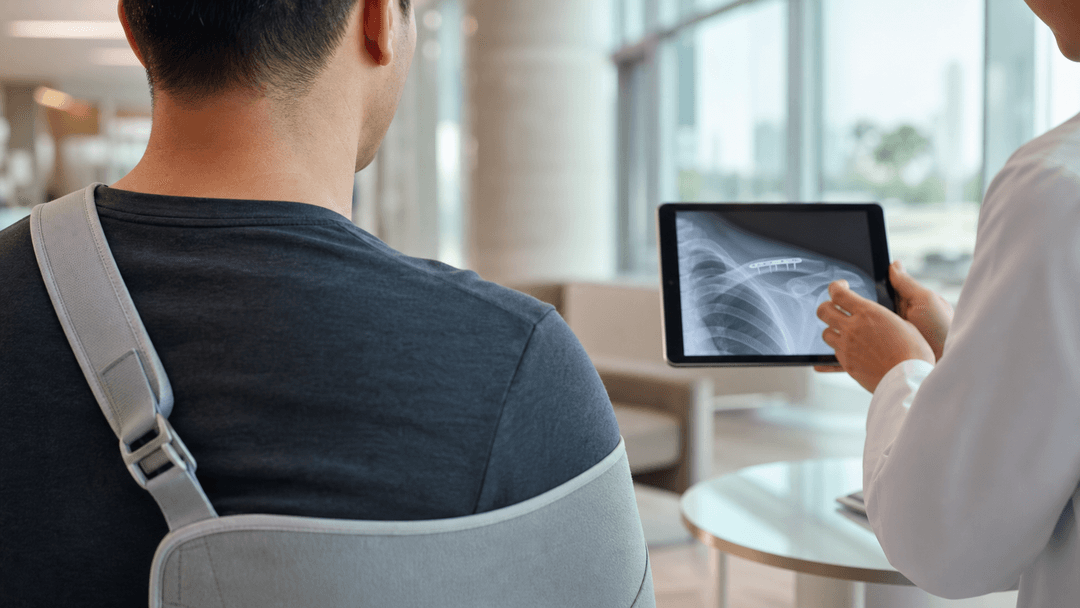
Pogačar clavicle surgery puts UAE sports-injury clinics on a 6-week recovery clock
Pogačar’s Vuelta crash shows how clavicle surgery moves from emergency care to payer approval, rehab and return-to-sport decisions in the UAE.
How Zavis verifies this coverage
Editorial standards, source rules, methodology, and review provenance are public.
Tadej Pogačar underwent successful surgery on his fractured left clavicle on 31 August 2026 after a crash on stage 8 of the Vuelta a España, according to Cycling Weekly.
The story matters in Dubai because cycling, triathlon and padel injuries now feed a predictable commercial pathway: emergency imaging, orthopaedic review, possible open reduction and internal fixation, insurer approval, physiotherapy and return-to-sport clearance. The highest-stakes readers are clinic COOs, CFOs and insurers. Each decision affects theatre utilisation, denial risk and patient out-of-pocket exposure.
What happened
UAE Team Emirates-XRG said Pogačar had a concussion, a displaced left clavicle fracture, a stable C7 cervical fracture and multiple abrasions after the crash. Surgery was delayed for concussion precautions, then performed after medical clearance. Cycling Weekly reported that he would remain in hospital for several days after the operation.
For UAE clinics, the clinical sequence is familiar. A displaced clavicle fracture can be treated with a sling or surgery, depending on alignment, skin risk, neurovascular findings, athlete demands and associated injuries. The presence of a concussion and a C7 fracture changes triage. It requires documented neurological assessment before any elective operating list is confirmed.
Dubai providers fall under the Dubai Health Authority (DHA), Abu Dhabi and Al Ain providers under the Department of Health Abu Dhabi (DOH Abu Dhabi), and many providers in the northern emirates under the Ministry of Health and Prevention (MOHAP). For operators, the regulator determines licensing scope, facility permissions, professional privileges and complaint handling.
What it costs in the UAE
Public UAE price information for clavicle fixation is uneven. International medical-travel platforms list broad UAE fracture-treatment estimates of about $8,500 to $18,500, equal to roughly AED 31,200 to AED 68,000 at a 3.67 exchange rate, but those figures are indicative and may bundle items differently. A self-pay patient should ask for an itemised estimate before admission.
- Emergency assessment: confirm whether ambulance, emergency consultation, X-ray, CT or MRI are billed separately.
- Surgery: ask whether the quote includes surgeon, anaesthesia, implants, theatre, ward stay and medicines.
- Rehabilitation: ask how many physiotherapy sessions are approved and when new approval is needed.
- Follow-up imaging: confirm X-ray timing and whether it is under the surgery package or outpatient benefits.
Insurance is the larger P&L issue. Dubai’s mandatory insurance system includes the Essential Benefits Plan, which DHA defines as minimum cover for eligible residents through participating insurers. Some plans require referral routes, network use and pre-authorisation for non-emergency inpatient care. Emergency stabilisation is different from planned fixation after stabilisation.
For Abu Dhabi, Daman manages major health schemes and the Thiqa programme covers eligible UAE nationals and those of similar status. Thiqa says the programme has a broad Abu Dhabi network, but eligibility and private-sector coverage rules should be checked before scheduling surgery. For Dubai corporate plans, insurers such as Sukoon publish network and emergency-cover terms, but the patient’s policy wording controls the claim.
What clinics should do now
Sports-injury clinics can use this case to tighten a common workflow. The operational risk is delay between emergency diagnosis and definitive treatment. A patient with a displaced clavicle fracture may be discharged with a sling, then lose days while imaging, specialist review and payer approval move through separate systems.
A practical Dubai pathway should assign ownership within 24 hours of diagnosis: orthopaedic surgeon review, insurer documentation, implant availability, theatre slot and physiotherapy booking. For Abu Dhabi and the northern emirates, the same checklist applies, with DOH Abu Dhabi or MOHAP licensing scope checked before advertising sports-trauma packages.
Patients should verify two points before choosing a provider: the surgeon’s licence and the facility’s licence for the service. In Dubai, use the DHA Dubai Medical Registry. For MOHAP-regulated providers, use the MOHAP medical facilities directory and MOHAP professionals directory. For broader searches, the UAE government directs residents to official healthcare provider lists through UAE healthcare providers.
The next commercial test is rehabilitation capacity. Clavicle fixation is a short hospital episode, but recovery can run for six weeks or more before unrestricted sport is considered, depending on imaging and surgeon clearance. Clinics that coordinate orthopaedics, physiotherapy and insurer approvals will have the stronger patient offer. Patients can also use the UAE Open Healthcare Directory and the regulator directories above to find licensed clinics and providers before booking.
Zavis Intelligence
Healthcare Industry Desk
Contributing to UAE healthcare industry coverage
Related coverage


FAQ
What is happening in UAE healthcare industry?
Pogačar’s Vuelta crash shows how clavicle surgery moves from emergency care to payer approval, rehab and return-to-sport decisions in the UAE.