
Congo Ebola deaths hit 317 in 7 days, raising UAE emergency screening risk
Congo's Ebola toll is rising fast. UAE clinics, insurers and patients should check travel triage, isolation routes and emergency cover.
How Zavis verifies this coverage
Editorial standards, source rules, methodology, and review provenance are public.
Congo recorded 317 Ebola deaths in the seven days to 22 August 2026, taking the outbreak to 5,514 cases and 2,642 deaths, according to Associated Press reporting based on Ministry of Health data carried by Gulf Coast News and Weather.
For the UAE, the immediate operational issue sits with emergency departments, urgent-care clinics and travel medicine teams in Dubai, then Abu Dhabi and the northern emirates. A febrile patient with recent travel to the Democratic Republic of the Congo, Uganda or South Sudan needs a different front-desk workflow from a routine influenza or malaria presentation. Dubai Health Authority (DHA) regulates Dubai providers, Department of Health Abu Dhabi (DOH) regulates Abu Dhabi and Al Ain, and Ministry of Health and Prevention (MOHAP) covers federal health policy and the northern emirates.
What changed in Congo
The outbreak is caused by Bundibugyo virus, a rare Ebola species. The World Health Organization (WHO) reported 4,665 confirmed cases and 2,184 deaths as of 12 August 2026, before the latest Congolese government update lifted the death toll above 2,600. WHO said cases had reached 54 health zones across six provinces, with Ituri accounting for 85% of confirmed cases at that date.
AP reported that the case fatality rate stood at 47.9% overall, with 68.6% in North Kivu. The clinical risk is compounded by weak contact tracing. WHO said on 12 August that 17,460 of 20,740 contacts had been seen in the prior 24 hours, a follow-up rate of 84.2%. That is high for a conflict zone, but it leaves a measurable gap in a disease with an incubation period of two to 21 days.
Congo received 16,250 doses of the Ervebo vaccine on 22 August 2026, AP reported. WHO has cautioned that Ervebo is licensed for Zaire ebolavirus, while this outbreak is Bundibugyo virus. Operators should therefore treat vaccination news as a containment signal, rather than proof that importation risk has ended.
Why UAE providers should review triage now
The UAE has already moved at the travel-advisory level. On 30 May 2026, the UAE Ministry of Foreign Affairs advised UAE nationals and residents against travel to Congo, Uganda and South Sudan unless necessary. MOHAP's public Ebola guidance also directs residents to follow that advisory.
"advises UAE nationals and residents against travel"
UAE Ministry of Foreign Affairs, 30 May 2026
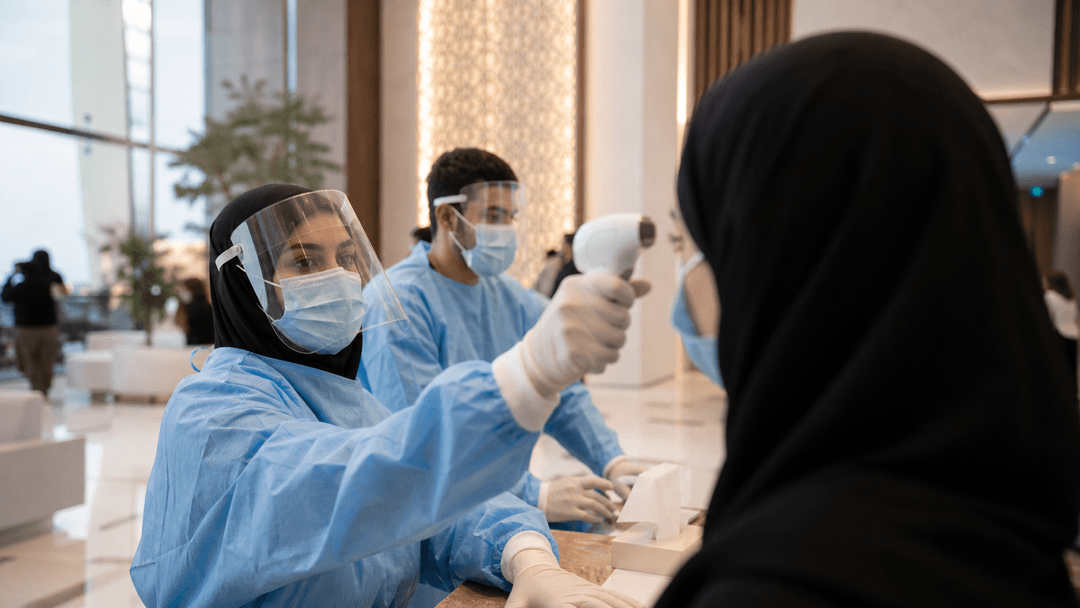
The operational reader is the COO of an emergency department or multi-site clinic group. A Dubai clinic does not need to become an Ebola treatment centre. It does need a clear script for reception, nursing triage, isolation, notification and ambulance handover. The same applies in Abu Dhabi under DOH and in Sharjah, Ajman, Ras Al Khaimah, Fujairah and Umm Al Quwain under MOHAP-linked licensing and Emirates Health Services pathways.
- Ask travel history at first contact: DRC, Uganda or South Sudan travel within the prior 21 days should trigger escalation for fever, vomiting, diarrhoea, unexplained bleeding or severe weakness.
- Separate before testing: WHO says Ebola transmission occurs after symptom onset through body fluids and contaminated materials, so the first control is distance, PPE and restricted movement.
- Use regulator channels: Dubai providers should follow DHA communicable-disease reporting routes, Abu Dhabi providers should follow DOH reporting, and northern-emirate providers should follow MOHAP and Emirates Health Services instructions.
- Do not quote fixed prices: emergency charges and patient co-payments depend on facility tariff, network status and policy terms. Finance teams should check live payer portals for Daman, Thiqa, Sukoon and other contracted insurers before advising patients.
Insurer and patient exposure
For insurers and TPAs, the near-term exposure is triage leakage, avoidable admissions and disputed emergency bills. Ebola itself is unlikely to become a high-volume UAE claims event. The larger cost risk is a suspected case that moves through a waiting area, outpatient lab or imaging unit before isolation. That can create staff exposure reviews, decontamination costs, cancelled appointments and reputational damage.
Patients should be told one practical rule: call ahead or use emergency services before walking into a clinic after relevant travel and symptoms. UAE residents returning from affected countries should keep travel dates, flight details and accommodation records for 21 days. That is the window public health teams use to assess exposure risk.
For CEOs and medical directors, the question is whether the facility can prove its process. A one-page Ebola triage drill, dated after 24 August 2026, is more useful than a generic infection-control policy. Dubai groups should align the drill with DHA expectations; Abu Dhabi groups should align it with DOH standards for emergency and urgent care; northern-emirate operators should check MOHAP updates.
Operators and patients can find licensed emergency care providers through the UAE Open Healthcare Directory, which lists 12,385+ licensed providers across all seven emirates and is sourced from official UAE healthcare licensing data.
Zavis Intelligence
Healthcare Industry Desk
Contributing to UAE healthcare industry coverage
Related coverage


FAQ
What is happening in UAE healthcare industry?
Congo's Ebola toll is rising fast. UAE clinics, insurers and patients should check travel triage, isolation routes and emergency cover.