
Thalassaemia: symptoms, testing and care
Updated
At a glance
- Type
- Inherited haemoglobin condition
- Main effect
- May cause anaemia
- Assessment
- Blood tests and sometimes genetic testing
What thalassaemia is
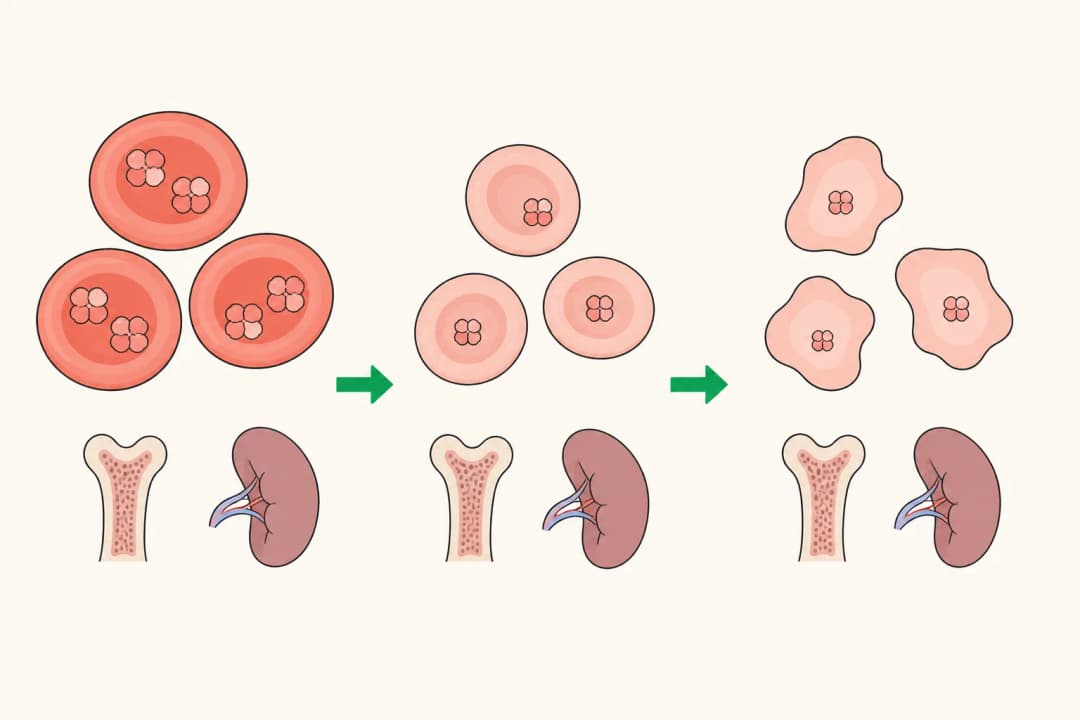
Thalassaemia is an inherited blood condition in which the body makes haemoglobin differently, sometimes leading to anaemia.
Haemoglobin carries oxygen in red blood cells. The effects vary widely: some people carry a gene change without needing treatment, while others have more significant anaemia and need regular specialist care. It is passed through families and is not caused by diet or by anything a person has done.
Possible symptoms
Fatigue and pale skin are common presentations of thalassaemia when anaemia is present. A person may also notice reduced exercise tolerance, breathlessness on exertion, dizziness, or a fast heartbeat. People with a trait often have no symptoms at all.
Symptoms can develop gradually. A new marked change in energy, shortness of breath at rest, fainting, chest pain, or severe weakness needs prompt medical assessment.
Why it happens
Genes inherited from one or both parents affect how haemoglobin chains are made. The pattern of genes influences whether someone has a trait or a more severe form. A carrier can feel well yet still pass the gene change to a child.
How it can change over time
The course depends on the type of thalassaemia. Mild forms may be discovered only on a routine blood count. More severe forms can cause ongoing anaemia and may affect growth, bone health, or organs if not monitored. Care plans are adjusted to symptoms, blood results, and any treatments received.
Who may be affected
Anyone can inherit thalassaemia. It is more likely to be considered when relatives have thalassaemia or unexplained small red blood cells, or when both prospective parents may be carriers. Knowing family history before pregnancy can help families discuss testing choices.
How doctors check for it
A clinician starts with symptoms, family background, and a blood count. Further blood testing can look at haemoglobin types and help distinguish thalassaemia from other causes of anaemia. Genetic testing may be offered to clarify an inherited pattern or support family planning.
Do not start iron supplements solely because red blood cells are small. Iron deficiency and thalassaemia can overlap, and a clinician can check iron stores before advising treatment.
Treatment and monitoring
A thalassaemia trait commonly needs explanation and follow-up rather than active treatment. For more severe forms, a specialist may use transfusions, medicines that help manage iron, and monitoring for treatment effects. The right approach is individual and can change over time.
Living with thalassaemia
Keep a record of your diagnosis and blood results, especially when seeing a new clinician. A balanced diet, planned activity within your energy level, and attending scheduled reviews support day-to-day health. Tell the clinical team about pregnancy plans, because partner testing and counselling may be relevant.
Possible complications
Significant ongoing anaemia can strain the heart and limit activity. Repeated transfusions can lead to iron building up in the body, which is why specialist monitoring is important. Symptoms such as increasing breathlessness, palpitations, or abdominal swelling should be assessed rather than managed alone.
Planning ahead
Thalassaemia cannot be prevented after the genes are inherited. Carrier testing before pregnancy or marriage can clarify whether a couple could pass a more severe form to a child. A healthcare professional can explain what each result means for the family.
When to seek specialist care
A GP or haematology team can assess suspected thalassaemia, persistent anaemia, or a family history of the condition. Seek urgent care for severe breathlessness, fainting, chest pain, or sudden worsening weakness.
Questions people ask
Is thalassaemia the same as iron deficiency?
No. Both can cause anaemia or small red blood cells, but thalassaemia is inherited and iron deficiency relates to low iron stores. Testing helps tell them apart.
Can someone with thalassaemia trait pass it on?
Yes. A person with a trait can pass the gene change to a child, even when they feel well. Partner testing can help clarify family planning options.
Keep reading
Find care
General Clinics & Polyclinics in Dubai
Where thalassaemia: symptoms, testing and care is assessed depends on what is causing it. These are licensed general clinics & polyclinics listed in Dubai.
The Court Residence, 39B Street, Jumeirah 1, Dubai
Accepts: Tabby, Tamara
Elite Business Bay Residence - Shop 03 & 04, 34 Marasi Dr - Business Bay - Dubai - United Arab Emirates
Accepts: Tabby
Airport View Building, Al Garhoud, Dubai
Accepts: Daman, Thiqa, AXA, Cigna +25 more
IBIS Building, 5th Floor, Unit 5003, Deira, Dubai
Accepts: AXA, Cigna, MetLife, Allianz Care +18 more
Ordered by verification status and how complete each clinic's public record is, then alphabetically. This is a directory listing, not a ranking — Zavis does not rate or recommend providers.
A factual listing drawn from the UAE health regulators' public licence registers. It is not a referral, an endorsement, or advice that any of these providers is right for you.
Medical disclaimer. This page is general health information, not medical advice, and it cannot diagnose you. Always consult a licensed healthcare provider about your own symptoms and treatment. In an emergency in the UAE, call 998 for an ambulance.